MAIN ARTICLE
From a Bangladesh classroom to an Aomori farm
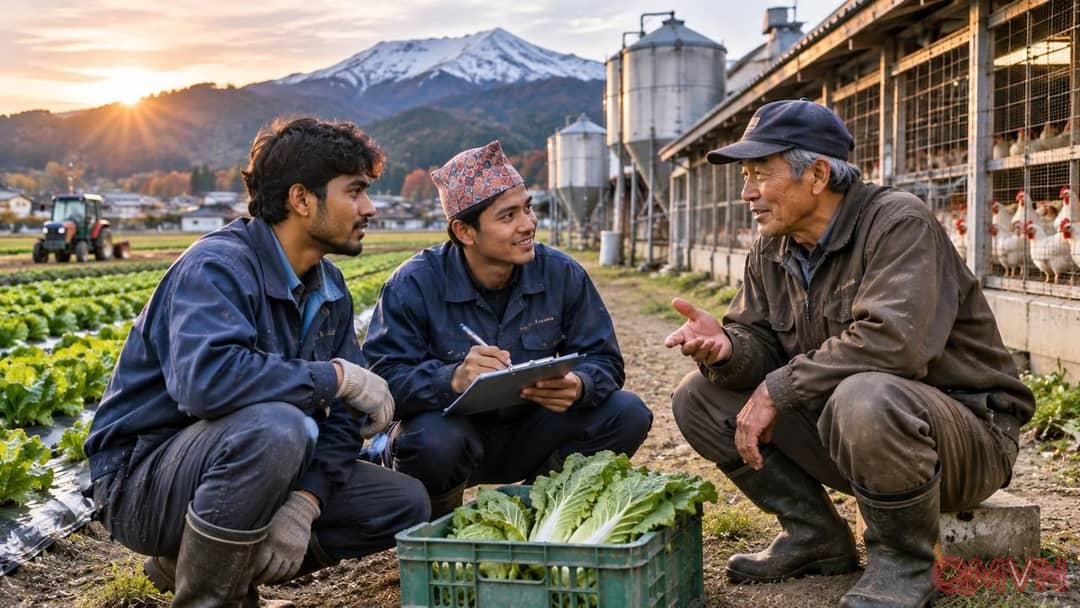
Muhammad Ahasan Habib, 21, from Mymensingh, and Siam Ur Rahman, 20, from Barisal, are preparing for more than an overseas job. They face a different language, climate and set of farming routines. After passing the agriculture skills examination in August, the two received offers from an agricultural business in Aomori, northeastern Japan. Their actual arrival still depends on travel and immigration arrangements.
Habib hopes to learn Japanese techniques and care properly for chickens. Rahman says he wants to work hard and is excited to experience snow. Their comments capture both sides of the journey: the prospect of gaining valuable skills and the daily challenge of adjusting to a place whose winters may be very different from home.
Tokyo-based training company Mirai operates through partner schools in Dhaka, Chittagong and Barisal. Instructor Nour Noby Noriko says cultural understanding is essential alongside language lessons. Predeparture training matters most when it continues through adequate housing assistance, workplace communication and practical help after workers arrive.
The labour map is changing, not simply reversing
Japan counted 44,050 Specified Skilled Worker (i) residents in agriculture in June 2026, a 26 percent annual increase. Indonesia led with 18,255 workers, up 45 percent.
Nepal’s total reached 916, a 30 percent rise; Sri Lanka’s reached 638, up 60 percent; and Bangladesh’s rose 127 percent to 334. Those eye-catching growth rates must be read alongside the small absolute figures. South Asia has not overtaken Southeast Asia in total farm labour supplied.
Yuji Nomura of Sustainable Holdings, Mirai’s parent company, points to changing economic incentives. As wages rise in Vietnam, the Philippines and other Southeast Asian economies, Japanese employers must compete harder to recruit workers. Bangladesh’s large population and agricultural base make it an increasingly interesting source of applicants, alongside Nepal and Sri Lanka.
The trend is not a wholesale replacement of one region by another. Indonesian recruitment continues to expand, and Vietnamese workers remain important. Exchange rates, real take-home pay, recruitment fees, housing costs and the possibility of career advancement all shape individual decisions. A successful recruitment pipeline is proved by arrivals, retention and fair outcomes, not applications alone.
Skills open the door, but protections sustain the journey
Japan’s Specified Skilled Worker (i) route requires a basic Japanese-language qualification, normally JLPT N4 or an accepted equivalent, as well as sector-specific examinations. The stay under this category is generally limited to five years. It offers a lawful pathway into agricultural work but cannot by itself solve language barriers or isolation in remote communities.
Receiving farms must provide clear instruction on machinery, animal care, safety practices, rest periods and emergency procedures. Migrants need to evaluate wages after deductions for accommodation, insurance and other costs. Without interpreters and credible grievance channels, small misunderstandings can develop into serious workplace disputes.
Sustainable Holdings says it provides tuition-free instruction at partner schools and helps candidates secure housing in Japan. Such arrangements can lower the initial barrier, although their effectiveness requires ongoing scrutiny. Foreign workers should not be treated as an inexhaustible substitute for mechanisation, productivity investment and policies that revitalise the countryside.
A two-way opportunity with long-term tests
Japanese farms can maintain harvests, livestock operations and skills transfer as their owners grow older. Migrants may gain savings and experience in agriculture and business management that serve them later, including if they return home. Yet mutual benefit depends on transparent contracts and employment conditions worthy of the work.
Sustainable recruitment requires published fees, reliable translation, clear living standards and accessible support when difficulties arise. Training institutions, employers and local governments should coordinate before departure rather than waiting until a crisis develops.
Habib and Rahman’s path to Aomori is therefore more than a story about filling two vacancies. It shows how an advanced economy increasingly relies on younger people from elsewhere. It also offers a simple test of modern labour policy: the dignity of workers must matter at least as much as the number of jobs filled.