MAIN STORY
Two cities under one heavy sky
Lahore’s AQI reading of 447 on IQAir’s scale illustrated the gravity of conditions early on November 3. Reuters said the city’s PM2.5 concentration was roughly 60 times the World Health Organization’s annual exposure guideline. That comparison offers a stark warning, although a short-term measurement should not be mistaken for a measurement of annual average exposure.
In Delhi, IQAir reported an AQI of 215, while India’s Central Pollution Control Board recorded 332, a level it classified as “very poor”. The readings are not directly interchangeable: different air quality indices apply different calculation methods, pollutant inputs and classification thresholds. What matters is the clear evidence of serious pollution rather than the appearance of a disagreement between two numbers.
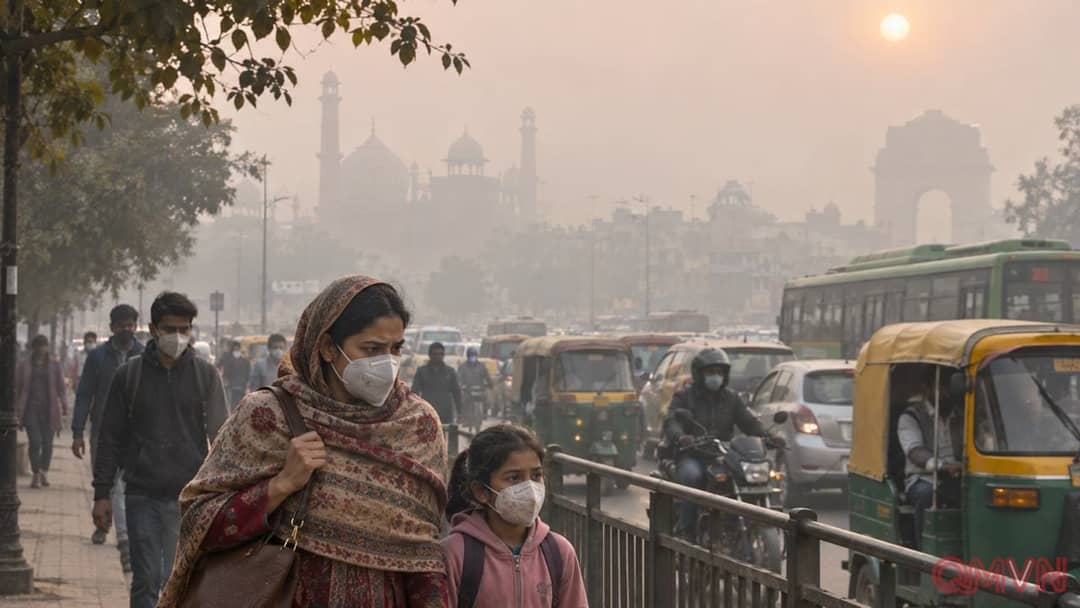
For people going to work, children commuting to school and roadside vendors spending entire days outdoors, smog is not an abstract chart. It reshapes daily routines and reveals inequality. A professional who can stay home behind filtered windows has options unavailable to a street seller or a construction worker whose income depends on being outside.