MAIN ARTICLE
A light that changes the hours of a day
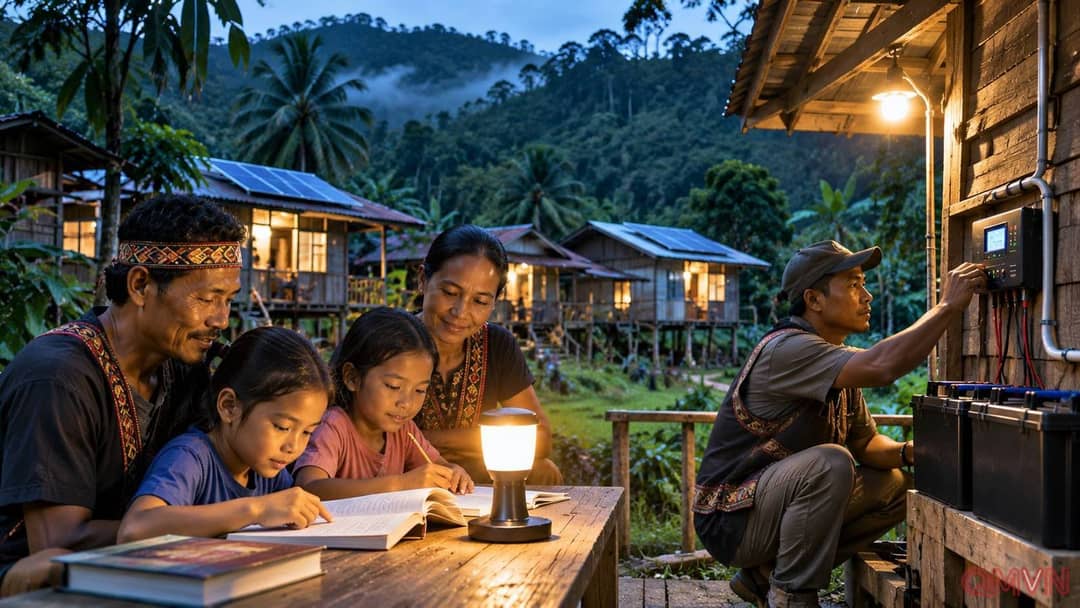
For years, daily routines in Kampung Bertang followed daylight. Families improvised with kerosene or leftover cooking oil for illumination, making evening study difficult. A stand-alone solar system installed in April 2026 now supports lights, refrigeration and household appliances. Osman Uki, a resident quoted in the original reporting, described the simple pleasure of children reading at night. The human measure of electrification is not merely the capacity of a solar panel but the new hours available for learning, cooking and living.
More than 500 Orang Asli residents live in the settlement, roughly 170 kilometres from Kuala Lumpur yet beyond conventional grid supply. Reaching remote communities often requires either expensive distribution lines or local generation and storage. Solar installations can reduce dependence on fuel deliveries, but they do not make the operating questions disappear. Batteries age, electronics fail, trained technicians move away and spare parts have to arrive over difficult terrain.
The bill that follows the ribbon-cutting
Yeap Mei Yi, co-founder of Bright Spots Energy, estimated the initial cost at roughly US$4,930 per household. The social enterprise worked with SHER Engineering, supported by Yayasan Hasanah.