Two flights in three days
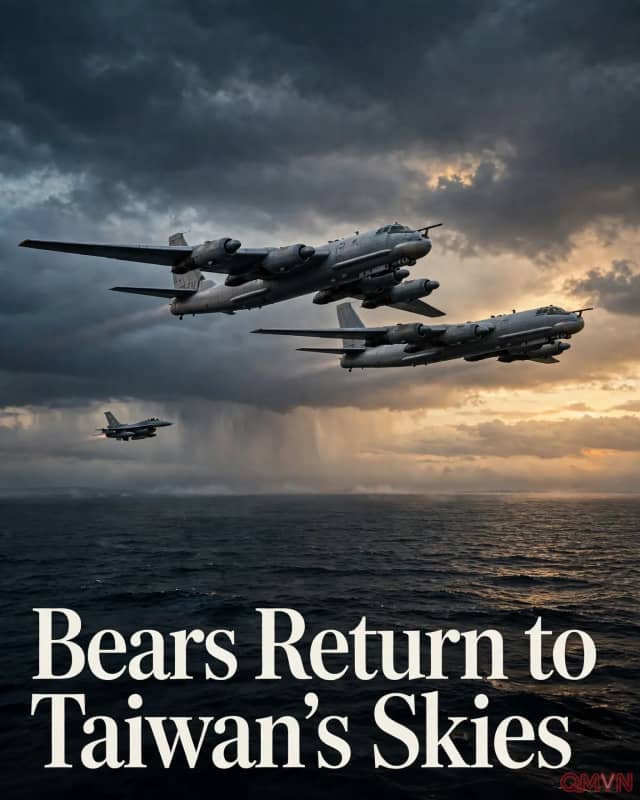
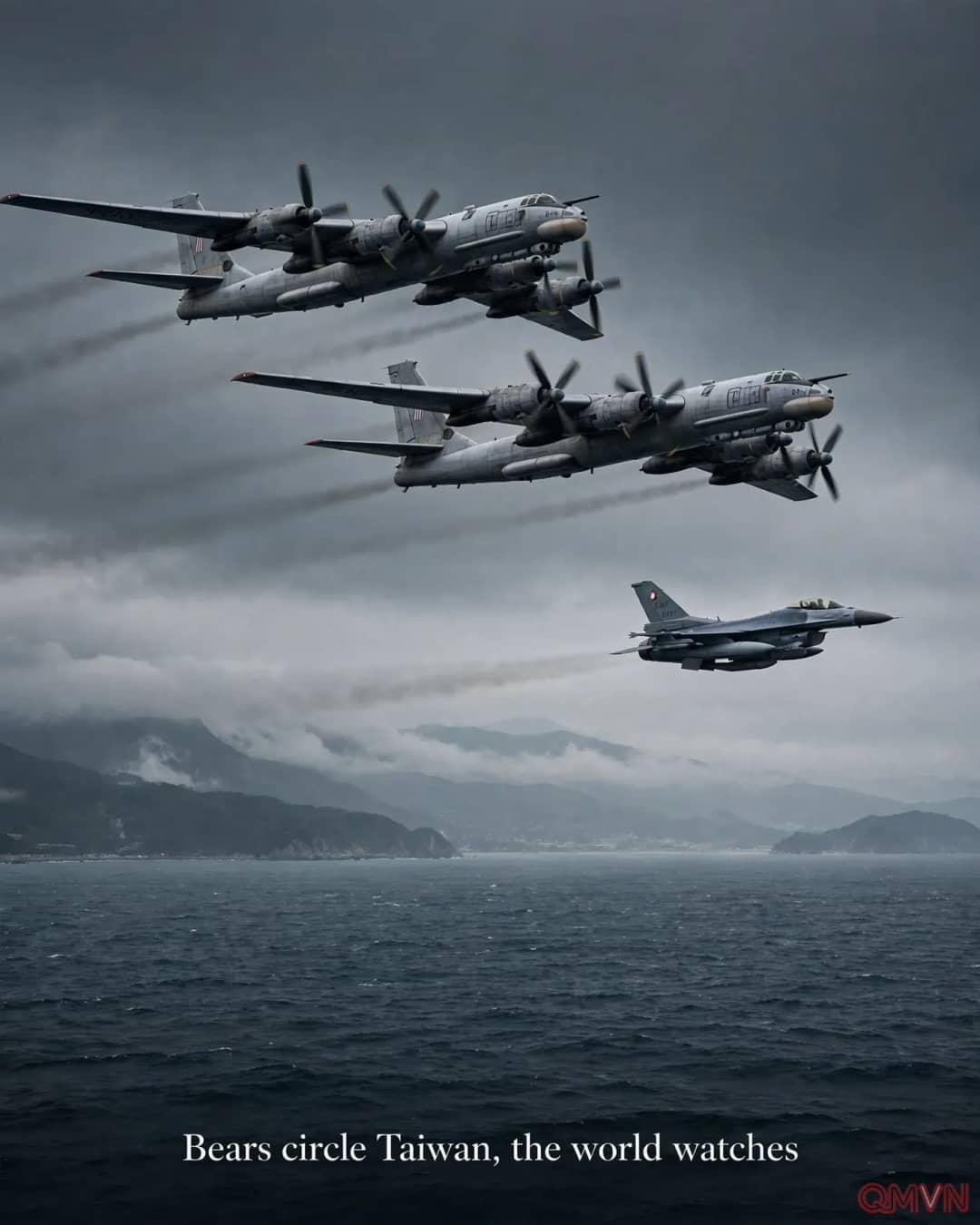
According to Taiwan's defence ministry, the two Tu-95s, known to NATO as "Bears", came up from the south, flew to the island's east and entered its Air Defence Identification Zone before exiting to the northeast, off Keelung. The ministry released a photograph of one of the aircraft, which it said had been taken from a Taiwanese F-16 fighter, and said its forces used joint intelligence, surveillance and reconnaissance assets to follow the entire flight.
Responded appropriately.
On Tuesday, Taiwan had reported two Russian military aircraft flying southward down its east coast, entering the identification zone from the northeast and leaving south of Taitung county. The same morning, Japan said two aircraft believed to be Russian had violated its airspace near Okinoshima in Fukuoka Prefecture and scrambled fighter jets, while South Korea said Russian aircraft had passed through its own air defence zone. A map published by Japan's defence ministry traced a southbound path east of Taiwan, suggesting the same planes were involved.
Shadows over Shenzhen
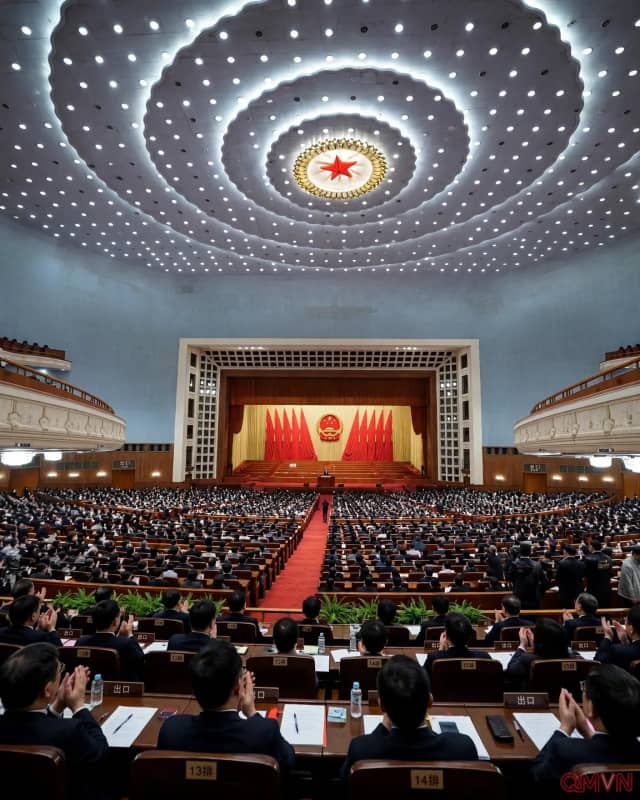
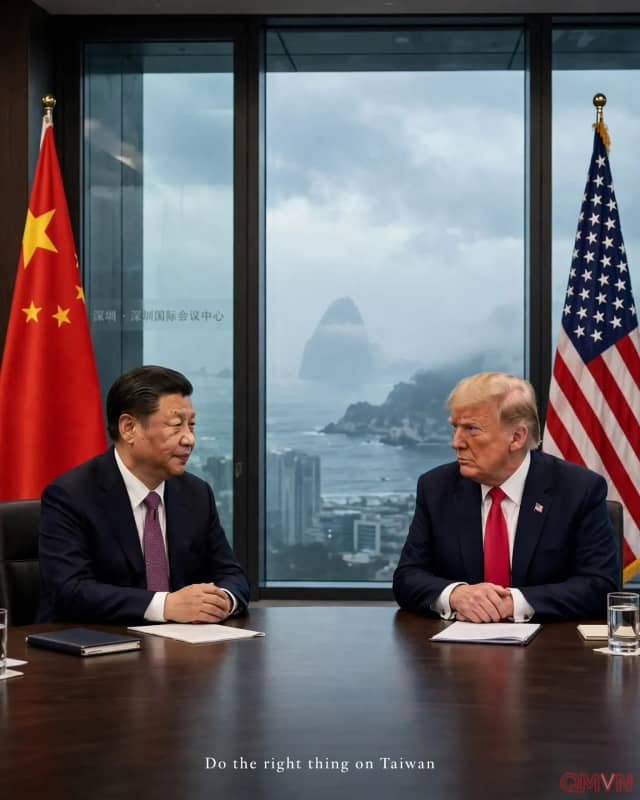
The flights unfolded as leaders of the 21 APEC economies gathered in Shenzhen, the southern Chinese technology hub hosting the summit on November 18 and 19. On its sidelines, Beijing announced that Xi, Trump and Putin would meet on Thursday, a long-floated encounter the Kremlin first raised in September.
Reports ahead of the meeting said the talks were expected to focus on a possible nuclear arms control arrangement and the US war with Iran, with Ukraine unlikely to feature.
Against that backdrop, two lumbering propeller bombers circling Taiwan look less like a military threat than a piece of choreography. Moscow has long backed Beijing's claim that Taiwan is Chinese territory, and showing its flag near the island while its leader sits beside Xi underlines the depth of that partnership. Russia's defence ministry did not respond to requests for comment, leaving the message to be read in the flight path rather than in any statement.
A handshake and a message
Earlier on Thursday, Stan Shih, the 81-year-old founder of computer maker Acer and Taiwan's envoy to the summit, briefly shook hands with Putin as the meeting opened. Shih was chosen by President Lai Ching-te for his international outlook and industry experience, and he had represented Taiwan at APEC once before, in Sydney in 2007. Taipei sends business figures rather than politicians to the forum precisely to avoid political friction, and ahead of the trip it asked Beijing for written assurances that its delegation would be treated on an equal footing.
The handshake was brief, but it captured the strange geometry of the week: a Taiwanese technology pioneer greeting the Russian leader indoors while Russian bombers traced the island's coastline outside. Taiwan, a major semiconductor producer, has joined Western countries in imposing broad economic sanctions on Russia since Moscow's full-scale invasion of Ukraine in 2022, a stance that places it firmly on one side of the divide the Shenzhen meeting is meant to manage.
Old bombers, new signals
The Tu-95 is a Cold War-era design. Some variants can carry nuclear weapons, while others are used for long-range surveillance and reconnaissance, which makes every appearance ambiguous by design. Their recent pattern in the region is not new: last December, two Russian Tu-95s flew from the Sea of Japan into the East China Sea to join two Chinese H-6 bombers for a long-distance joint flight towards the Pacific, prompting Japan and South Korea to scramble fighters.
A serious infringement of Japan's sovereignty.
Tokyo's chief cabinet secretary used those words after Tuesday's airspace violation, as Japan lodged a protest with Moscow. For Taiwan, the Russian flights add another layer to a pressure it already lives with daily: China's military operates around the island every day, and a senior Taiwanese security official said Chinese military and coast guard ships had at one point massed more than 100 vessels in the region earlier this month.