MAIN ARTICLE
A historic breakthrough in a pivotal state
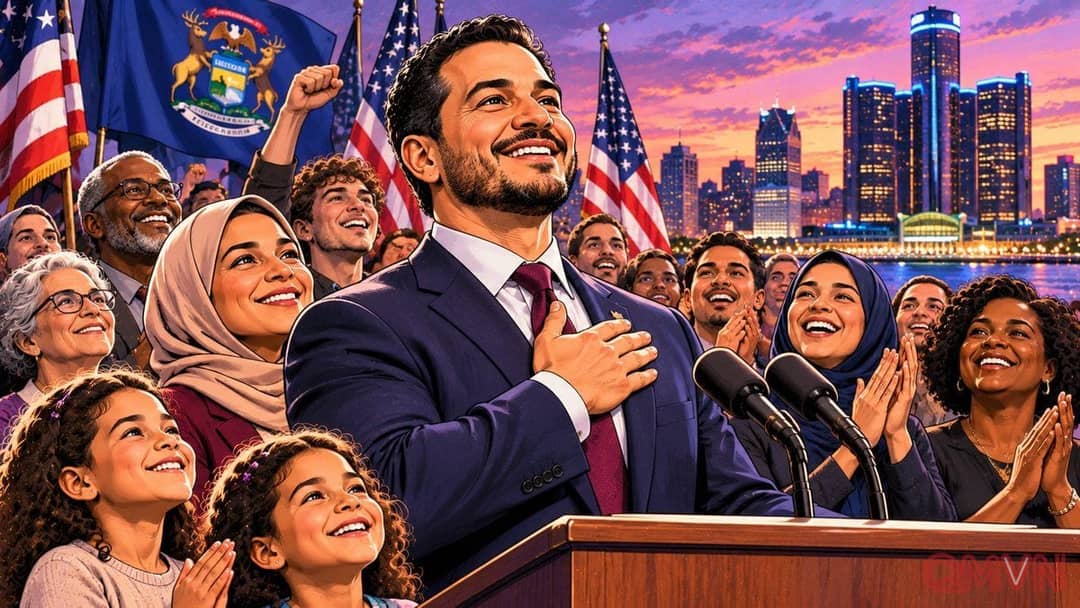
Michigan again demonstrated the power of industrial Great Lakes battlegrounds in a national election. According to projections published by the AP and CBS on November 4, Abdul El-Sayed defeated Mike Rogers for the seat left open by Gary Peters’ retirement. Democrats retained a crucial position even as their congressional gains reshaped the balance of power in Washington.
Becoming the first Muslim elected to the Senate carries particular significance in a religiously diverse country where prejudice remains a persistent feature of political debate. El-Sayed, an American-born son of Egyptian immigrants, did not erase that prejudice with one election. He demonstrated, however, that a candidate’s faith need not be an insurmountable barrier in a statewide contest.
His win also challenges assumptions about choosing the supposedly safest candidate. Michigan supported Donald Trump in the 2024 presidential election. Its voters therefore cannot be treated as a fixed ideological bloc or explained solely by their past party loyalties.
The appeal of healthcare and household finances
Before running for the Senate, El-Sayed served as a public-health leader in Detroit. He carried that experience into a campaign centered on healthcare access, family finances and the affordability crisis.
His Medicare for All proposal poses a fundamental question: who should bear the risk when illness can push a working family into serious debt?
He also criticized the influence of wealthy donors and corporate interests on policymaking, linking an abstract debate about power with daily concerns about wages and bills. Rogers instead emphasized tax relief and manufacturing employment. Both candidates understood economic anxiety was central; they differed markedly over the institutions and policies that might address it.
Victory does not mean every voter endorsed every progressive proposal. Individual ballots may reflect dissatisfaction with costs, the candidates’ temperaments, or assessments of the incumbent administration. Separating a candidate’s personal appeal from lasting support for a detailed agenda is essential to interpreting Michigan’s result.
Identity, foreign policy and party divisions
The campaign unfolded amid fierce disagreements about religion and international affairs. Rogers and some Republican allies attacked El-Sayed’s opposition to U.S. military support for Israel. Claims tying the Democrat to the Muslim Brotherhood were denied by El-Sayed, and Reuters reported no evidence supporting them. Robust debate about foreign policy is legitimate; treating religious identity itself as a security threat is another matter.
Divisions also emerged within the Democratic Party. El-Sayed beat Representative Haley Stevens in the primary, but Stevens later endorsed Rogers rather than the winner of her own party’s nomination. The episode exposed tensions between moderates and progressives that did not disappear merely because the progressive candidate ultimately won.
At the same time, the campaign built bridges. Former President Barack Obama rallied for El-Sayed, while progressive leaders supported his calls for wider public services. Michigan’s varied religious and ethnic communities meant that no candidate could win without persuading people whose identities and political priorities differed from his own.
The more difficult work begins after the celebration
El-Sayed now enters the national discussion about the Democratic Party’s direction toward 2028. His victory suggests that the binary between “moderate” and “progressive” does not fully explain electability. Communication, coalition-building and the ability to connect policy choices to ordinary lives may matter more than political shorthand.
In the Senate, campaign promises must become negotiations. Even with a Democratic majority, many bills face a 60-vote procedural threshold, while the president retains veto power. Expansive healthcare reform would demand fiscal choices and agreement extending well beyond a successful electoral coalition.
Ultimately, the significance of a historical first will depend not only on who crosses the Senate’s threshold, but on what changes for the people they represent. In Michigan, questions about manufacturing work, healthcare bills, energy costs and trust in government will endure long after the victory rally ends.