MAIN ARTICLE
An unexpected finding beneath the surface
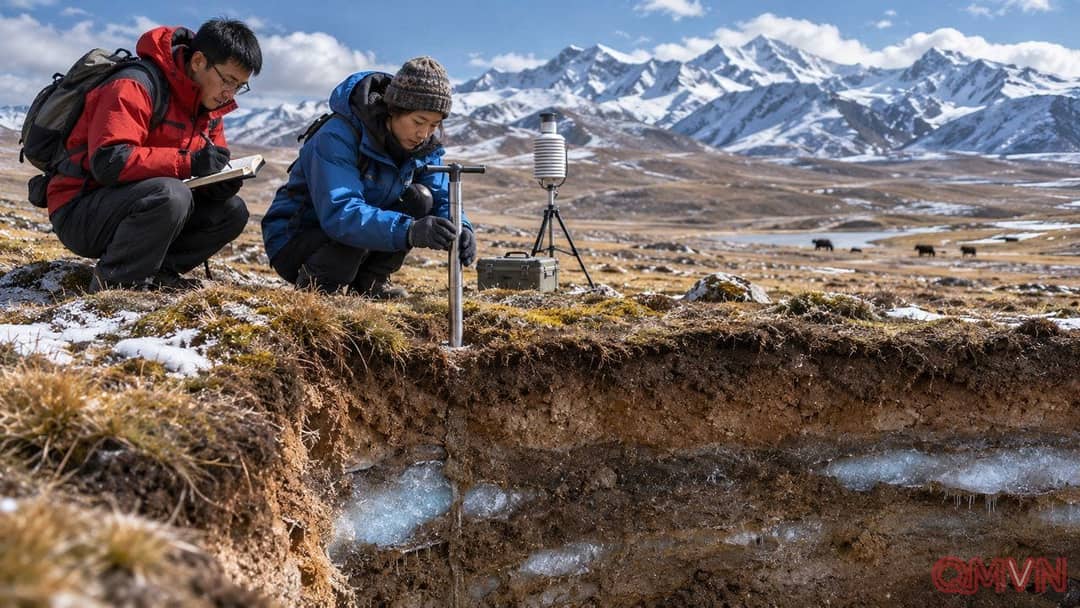
Ground ice is not the same as the glaciers moving down mountain valleys. It occupies pores, cracks and sediment within permafrost. The upper active layer may thaw each summer and refreeze in winter, while the deeper ground remains frozen for years. An increase in ice close to the surface therefore does not contradict the broader evidence that the plateau's permafrost is degrading as temperatures rise.
Researchers at Peking University, working with Germany's Alfred Wegener Institute and other institutions, assembled measurements from 369 boreholes. On average, boreholes drilled after 2000 contained a larger volume fraction of ice than those drilled earlier. Yet observation sites were unevenly distributed, so the team recognized that a straightforward comparison alone could not establish a plateau-wide pattern.
They combined a physics-based permafrost model with weather records, satellite observations and computational analysis to reconstruct changes in frozen water down to 3.2 meters between 1979 and 2018. The anomalous growth appeared chiefly in the northwestern interior influenced by westerly winds, covering about 35% of the permafrost area. This is a finding for specific places and a defined observation period, not evidence that ice is increasing everywhere in Tibet.