MAIN CONTENT
Merchant vessels in an increasingly exposed corridor
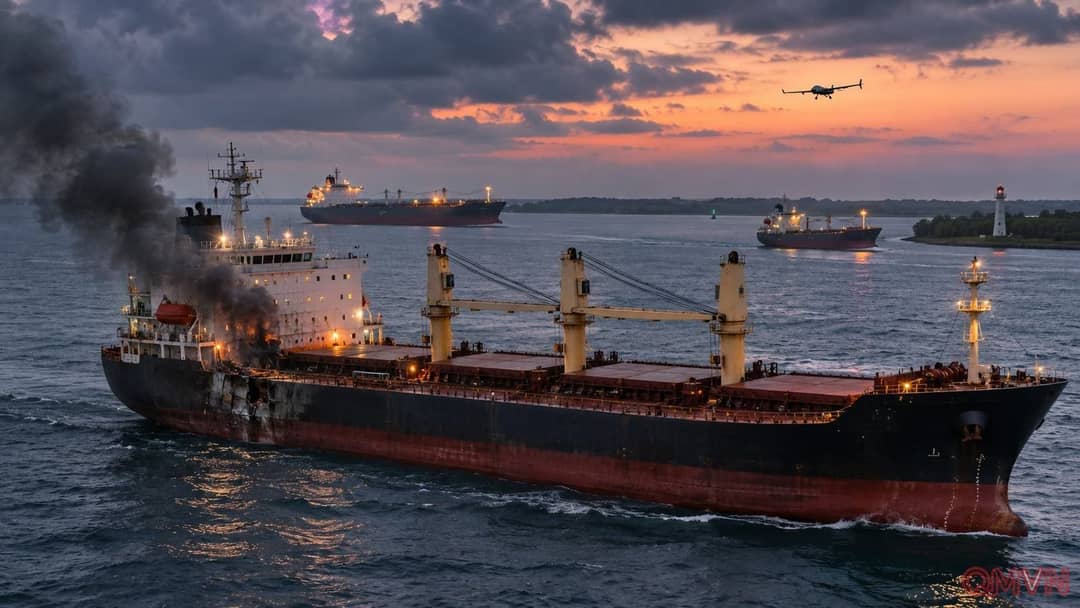
Defence Minister Stefan Radu Oprea identified the vessels as the Greek-flagged oil and chemical tanker Evia Petrol V, bulk carrier Marsol, and oil-products tanker Ali Najafov. The latter two flew the flag of Saint Kitts and Nevis. Their crews controlled the fires, officials said, and no one was reported killed or injured in these three incidents. Detailed damage assessments and the effect on vessel operations were not immediately clear.
Romania’s Defence Ministry placed the strikes on Evia Petrol V and Marsol approximately four and five nautical miles southeast of the Sulina Canal entrance, within the country’s territorial waters. A separate general cargo vessel was hit on November 13, also without reported casualties; Romanian broadcaster Digi24 identified it as the Palau-flagged Larissa 1. The short succession of incidents has transformed a routine commercial approach into an area of heightened military vigilance.
Why a narrow maritime passage matters to NATO
Sulina is much more than a dot on a nautical chart. Its waterway links the Danube transport system with the Black Sea and helps sustain Ukraine’s wartime exports.
Threats to ships using the passage can ripple through marine insurance, freight schedules, transport costs and livelihoods in ports. Those economic consequences cannot yet be quantified from the available details, but the risks are evident well beyond the damaged hulls.
Romania’s decision to scramble fighter aircraft twice illustrates the demands on NATO’s eastern flank. Detecting a drone, however, is different from proving who launched it, and both are different from deciding whether interception is safe around civilian vessels. Romanian authorities did not identify the origin of the drones in the statements reported by Reuters. Assigning responsibility for the three strikes to a particular actor at this stage would therefore go beyond the publicly established evidence.
A request for allied support, and a delicate calculation
Niculescu described the attacks as unacceptable and a violation of international law, linking the deteriorating security environment to Russia’s ongoing war against Ukraine. Russia, for its part, denies targeting Ukraine’s neighbors with drones. Neither statement substitutes for a transparent inquiry into the devices, trajectories, locations and sequence of events offshore.
Oprea said he would raise the need for surveillance-aircraft patrols and counter-drone equipment with fellow defence ministers in Brussels. France had already temporarily relocated an Atlantique 2 maritime patrol aircraft to Romania at its request. Reporting by AP and Euronews likewise frames the attacks as evidence of mounting spillover risks near NATO territory. The difficult near-term task is to improve maritime awareness and safeguard civilian traffic while preventing an incident from becoming a wider clash through miscalculation.
International law begins with the people at sea
Attacks involving civilian shipping draw attention to the obligation to distinguish military objectives from civilian objects during armed conflict. The legal assessment of any particular incident requires its specific facts, not merely a photograph of smoke or the flag on a ship’s stern. Strikes inside Romanian territorial waters also sharpen the questions of sovereignty and maritime security.
The absence of casualties in the reported attacks should not obscure the danger. A fire involving hazardous cargo, severe weather or a difficult rescue could have produced a very different outcome. Black Sea states therefore face linked duties: share warnings, coordinate rescue efforts, preserve evidence and minimize escalation. For all the geopolitical calculations, the safety of seafarers must remain central.