MAIN ARTICLE
A market selloff reveals an uncomfortable exception
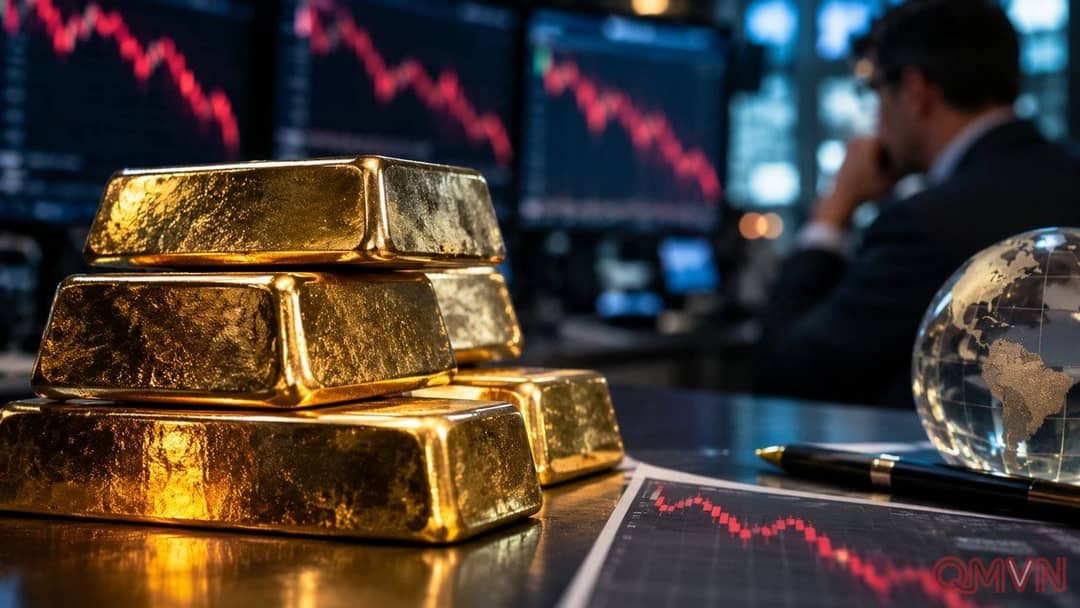
In a November 3 Reuters analysis, columnist Jamie McGeever described how questions about the sustainability and profitability of the artificial-intelligence boom had shaken US share prices. As major stock indexes retreated from their highs, investors looked again at Treasury securities, the dollar, the Swiss franc and the Japanese yen. Gold stood apart from this familiar flight to safety, failing to attract the same immediate protection-seeking flows.
Reuters reported that bullion fell below $4,000 an ounce late the previous week, a roughly one-year low. The divergence was striking because bond yields had eased while risk appetite was weakening. Neither pressure on bitcoin nor turbulence in the broader cryptocurrency market translated automatically into demand for gold. Different financial shocks provoke different responses; the mere presence of fear does not determine the direction of every supposedly defensive asset.
The Reuters commentary put gold down about 9% for 2026 at that point, far below its January peak. A poor stretch, however, does not prove that the metal has permanently lost its diversification value. It does reveal a more immediate problem: an investment advertised as a cushion can suffer substantial losses at the moment its owner expects reassurance.
When the need for cash defeats the search for shelter
An asset can be perceived as secure over decades and still be sold aggressively during a single volatile trading session. When leveraged investors meet margin calls, or fund managers must cover losses elsewhere, they need cash rather than a compelling long-term story.
Liquid holdings become natural sources of financing. Gold may then serve as something to sell rather than something to buy, blurring the distinction between a safe store of wealth and an effective short-term hedge.
Interest rates add another complication. Bullion pays no coupon or dividend. When higher energy prices raise expectations of tighter monetary policy, the opportunity cost of holding non-yielding metal can increase. A firmer dollar can also make gold more expensive for buyers using other currencies. Such forces can outweigh the fear that is normally assumed to support precious metals.
Reuters quoted Standard Chartered strategists Steven Englander and Suki Cooper as arguing that short-term liquidity needs could eclipse gold’s haven function. Their observation need not erase the metal’s long history. It instead suggests that the word “safe” describes a relationship with particular risks under particular conditions—not a contractual promise that prices will rise in every emergency.
Central banks play a different and longer game
The picture changes when the buyers are reserve managers rather than market speculators. Figures released by the World Gold Council on November 3 show that central banks and other official institutions purchased a net 321 tons in the third quarter of 2026, up 42% from a year earlier. Purchases for the first nine months reached 675 tons, 6% ahead of the comparable 2025 period. China and Poland led disclosed acquisitions, although unreported buying accounted for a large share of estimated global demand.
These institutions are not necessarily betting on next week’s price. They must weigh counterparty exposure, excessive reliance on a particular reserve currency and the possibility that international payment channels become harder to use. A household or investment fund may instead be focused on entry prices, near-term withdrawals and annual performance. The asset is the same, but the purpose of owning it is fundamentally different.
The World Gold Council also reported that physically backed gold exchange-traded funds added 211 tons during the third quarter. That is an important qualification to any sweeping claim that faith in gold has disappeared. Demand has fragmented across investor categories and time horizons. What looks like indifference on a volatile trading day can coexist with substantial accumulation over a quarter.
What gold can protect, and what it cannot
A July 2026 IMF paper argued that gold may strengthen long-run reserve diversification and carries no conventional credit exposure, but is highly volatile. Its usefulness against stock-market losses, unexpected inflation or geopolitical crises depends on the nature of the underlying shock. The study cautioned that bullion should not replace foreign-currency assets needed for immediate official liquidity. A reserve that can preserve strategic independence is not necessarily a reserve that can be deployed instantly.
Reuters also cited Standard Chartered calculations indicating that gold had developed a positive correlation with the S&P 500 over recent rolling observation periods. Positive correlation does not mean that prices will always move together. It does make diversification less dependable when shares and bullion fall simultaneously, particularly if a portfolio is under pressure to raise funds.
The depth of the recent decline may create the conditions for a technical recovery. Reuters noted that one Bank of America measure placed gold roughly 10% below its 200-day moving average. But being far beneath a historical average offers no timetable for a rebound. Investors still need to examine their objectives, investment horizon, portfolio concentration and worst-case liquidity requirements. Gold can retain a useful role without being treated as a miracle shield. Financial resilience ultimately rests on understanding why each holding is there—and what it is liable to do when conditions turn hostile.