MAIN ARTICLE
How the Mar-a-Lago aesthetic became political shorthand
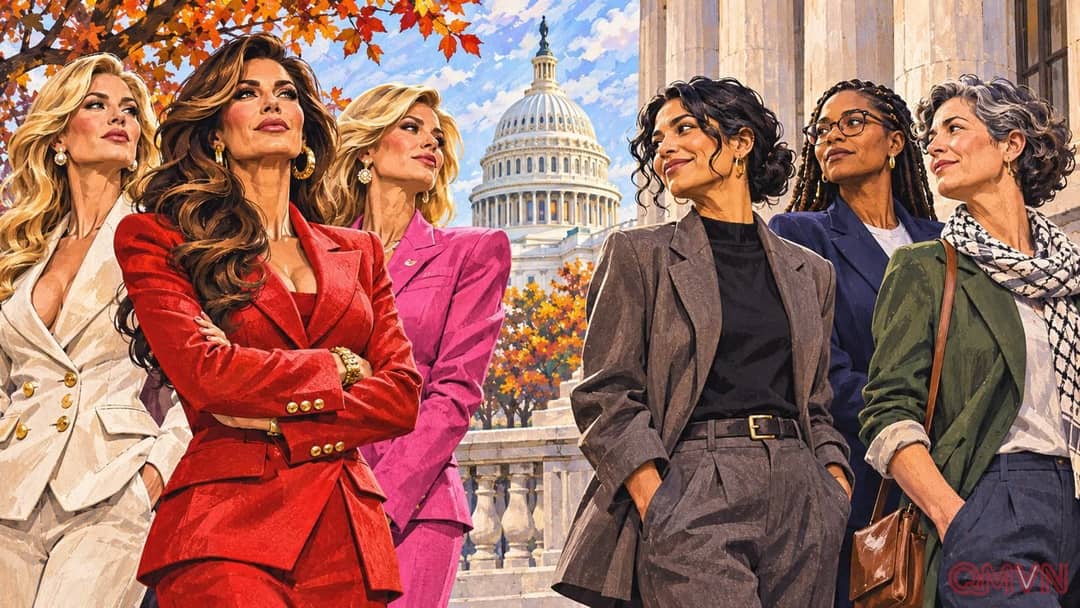
For much of the Trump era, commentators have associated some prominent MAGA women with carefully styled hair, polished makeup, fitted silhouettes, high heels and luxurious accessories. Harriet Walker’s Times column describes this as a highly visible expression of wealth and confidence, shaped by Mar-a-Lago events, television appearances and the broader celebrity culture surrounding the president. It is a journalistic characterization, not a party dress code or an accurate portrait of every conservative woman.
Kellyanne Conway, Ivanka Trump, Melania Trump, Kimberly Guilfoyle and Kristi Noem have appeared in this visual conversation because their public wardrobes were scrutinized at different moments. An outfit can suggest authority, glamour, professionalism or proximity to wealth, depending on the observer. But treating varied personal choices as a single uniform risks overlooking disagreement and individuality within a political movement. Fashion symbolism is powerful precisely because it is open to competing interpretations.
New faces, different visual languages
The election also brought visibility to Democratic women whose presentation differs from the familiar image of the Trump orbit. Texas governor-elect Gina Hinojosa appeared in white tailoring, inviting comparisons with the color historically associated with women’s suffrage.