MAIN ARTICLE
When firepower cannot dictate the political outcome
Since the United States and Israel opened their war against Iran on February 28, 2026, the repercussions have spread across the Gulf. A Congressional Research Service account describes Iranian retaliation against military installations, energy infrastructure and commercial shipping. Defending allies and bases has consequently become part of the strategic cost, not merely a logistical detail behind the air campaign.
Airstrikes can destroy valuable facilities without producing a replacement government or a lasting settlement. Iran’s territory, population and missile and drone arsenal would pose daunting challenges to any prolonged occupation. Experiences in Iraq and Afghanistan offer a reminder that tactical success does not necessarily translate into a political order that local communities view as legitimate.
An Associated Press analysis of satellite imagery documented damage to facilities at bases hosting American forces. That evidence does not establish that Iran is winning. It does show how even technologically superior militaries cannot always prevent a weaker opponent from imposing substantial costs. The crucial measure of strength may be political endurance rather than the number of targets struck.
Regional governments confront their own security dilemma
Stephen M. Walt of Harvard University argues that West Asian states are increasingly compelled to organize security through their own capabilities and negotiations.
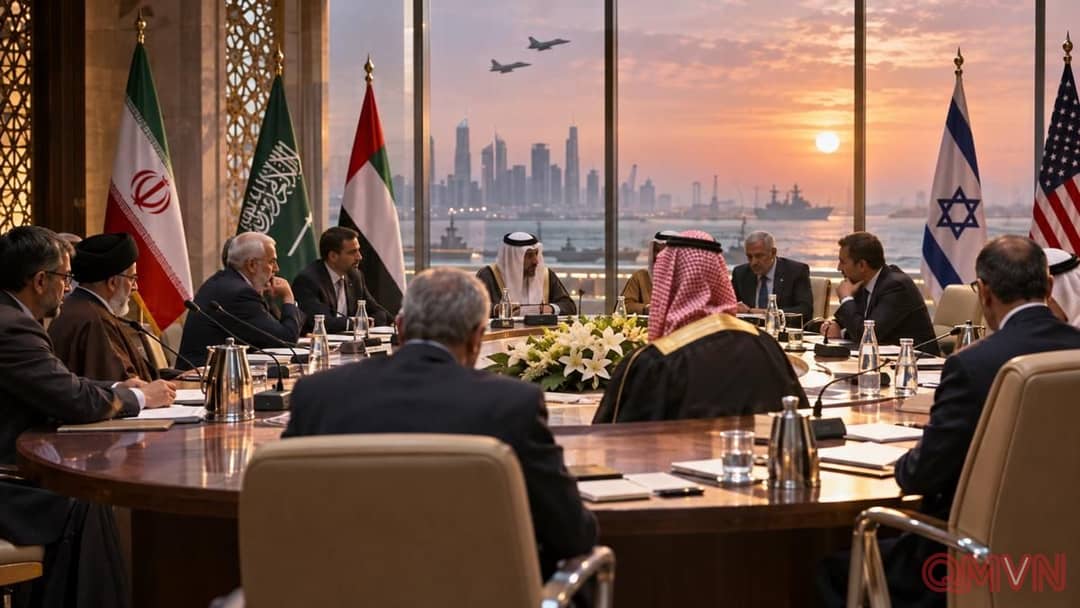
This is not a forecast of regional harmony: Iran, Saudi Arabia, Israel, Turkey and Gulf monarchies have competing priorities, distinct domestic pressures and very different understandings of deterrence.
Qatari mediation and Iranian conversations with neighboring countries underscore why local diplomacy matters. Disruption of Hormuz or attacks on energy installations hurt regional populations first. Reuters reported in November that diplomatic contacts had continued even as Tehran and Washington remained far apart over the terms of an agreement. Negotiation is therefore a practical necessity, not simply a declaration of political independence.
Greater autonomy could encourage confidence-building and more accountable regional arrangements. It could also intensify arms races, shifting alignments and internal tensions. Without reliable crisis-management mechanisms, removing a foreign security umbrella does not automatically remove the underlying rivalries. Sovereignty becomes meaningful when governments can also protect civilians and keep commitments.
America’s presence remains, even as its leverage changes
The United States retains expeditionary forces, arms relationships, sanctions and influence over international finance. Such instruments do not disappear with a single campaign. Yet attacks on facilities used by American forces have sharpened questions among partners over whether foreign bases always enhance security or can sometimes heighten exposure to retaliation.
The Washington Post reported that the Pentagon had considered a smaller Gulf footprint after the war, an assessment rather than a completed withdrawal decision. China and Russia will also continue to pursue interests through commerce, arms and diplomacy. The decline of one form of external intervention should not be confused with the end of international competition.
Walt’s argument must also be distinguished from the more triumphalist interpretation in the Iranian reference article. His analysis of declining intervention effectiveness does not validate every Tehran policy or guarantee a particular winner. Negotiated terms, maritime security, protection for civilians and the durability of political guarantees will ultimately matter more than any single narrative about a historic turning point.