MAIN ARTICLE
From the White House table to a post-election reckoning
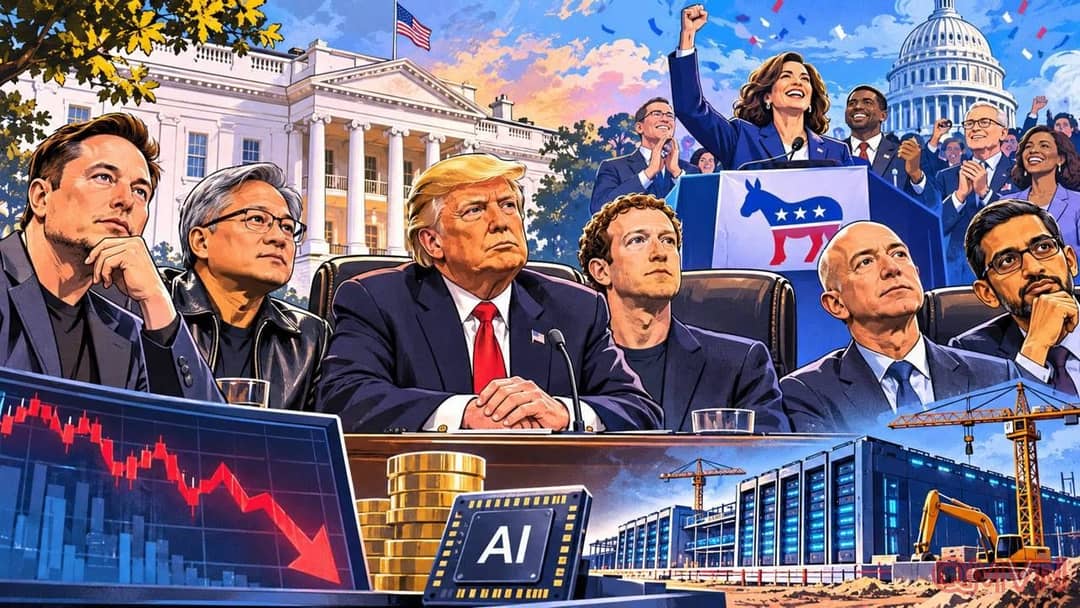
A September gathering at the White House brought Donald Trump together with major technology figures including Jensen Huang, Elon Musk and Mark Zuckerberg. As The New York Times reported on November 5, executives had supported causes favored by the president and publicly cultivated close ties with his administration. Such access offered an opportunity to argue for rapid AI development with relatively few regulatory obstacles. After the election, however, photographs once interpreted as evidence of business influence can also serve as reminders of an industry closely identified with a losing political agenda.
Silicon Valley is hardly a single political bloc. Reid Hoffman, the LinkedIn co-founder and prominent Democratic donor, has openly criticized the industry’s MAGA-aligned voices. Stanford political economy professor Neil Malhotra offered a different explanation, arguing that executives were partly protecting their companies by building relationships with a president willing to intervene in business. Both observations point toward a durable risk: maintaining a working relationship with government may be prudent, but attaching a corporate identity too tightly to one political coalition can become costly when voters change course.