MAIN ARTICLE
The young sailor who helped clear a route to Normandy
Born into a fishing family in Prestonpans, East Lothian, Charlie Horne already understood the sea when he joined wartime service. His experience led him to the Royal Naval Patrol Service, whose small vessels undertook dangerous tasks often overshadowed by accounts of battleships and invasion beaches. He was just 18 at D-Day, an age at which many people are only beginning adult life. Yet the success of the Allied landings depended in part upon such young men navigating complex hazards under fire.
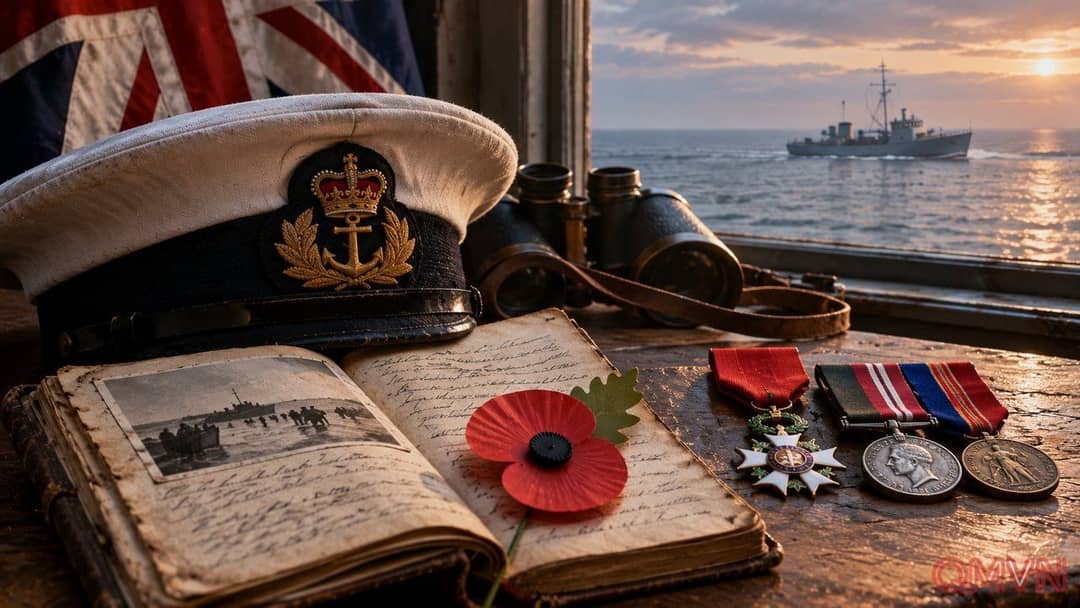
Horne served aboard MMS 291, a small wooden-hulled minesweeper that cleared a passage for American assault vessels approaching Omaha Beach. Naval mines posed a danger long before a landing craft reached German coastal defenses. Sweeping them demanded careful teamwork, disciplined navigation and steady nerves. Crews might spend hours completing what sounded like a technical assignment, knowing that a single missed mine could take several lives and block a route essential to the entire operation.
A handwritten diary that resists the passage of time
Horne’s diary described shells, bombs and flares lighting the sky, and wreckage scattered across the sea. According to the account published by The Independent, his vessel destroyed eight mines after leaving Plymouth.