A market caught between abundance and insecurity
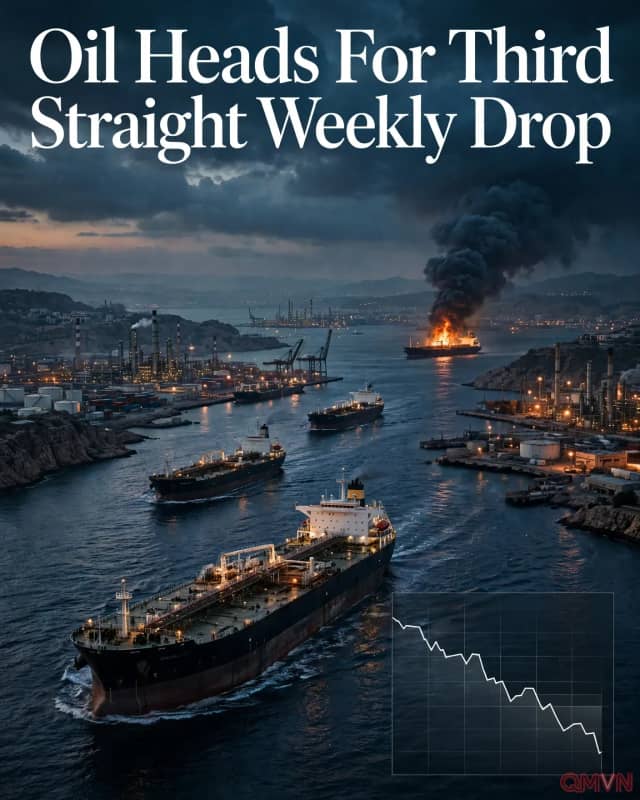
Reuters reported that Brent futures recovered to $90.42 a barrel, while the US benchmark WTI reached $81.18, gains of about 1.2% and 1.26% respectively. These were intraday quotations rather than final settlement prices. The reversal followed a period of downward pressure as traders assessed the prospect of more crude becoming available. It illustrates why a single trading session can contain apparently contradictory signals: the expected supply balance may improve even as the possibility of a sudden interruption becomes more expensive to ignore.
Oil futures incorporate expectations about future deliveries, not simply the amount of petroleum produced today. A refinery may have access to several sellers but still face difficulties obtaining a suitable grade of crude at the required time. Freight, insurance and financing are part of the cost of securing that supply. Consequently, a decline in benchmark futures does not automatically translate into an equivalent reduction in the cost of every physical cargo.
Hormuz remains a source of uncertainty
The United Kingdom Maritime Trade Operations reported incidents affecting three vessels, all of which continued their journeys with their crews accounted for. The Wall Street Journal separately reported that US authorities were examining possible Iranian involvement in cyber incidents affecting energy tankers.
That inquiry should not be mistaken for a confirmed attribution. Together, these reports help explain why commercial operators remain attentive to security developments even when oil is available from alternative suppliers.
The International Energy Agency estimates that in 2025 approximately 20 million barrels of oil and petroleum products passed through Hormuz each day, representing about one quarter of global seaborne oil trade. That historical benchmark is not a measurement of current flows. The scale nonetheless explains why concerns over the passage can reverberate far beyond the Gulf. Shipping disruptions may affect delivery schedules, insurance costs and the availability of fuel in importing economies, especially in Asia.
The supply picture begins to improve
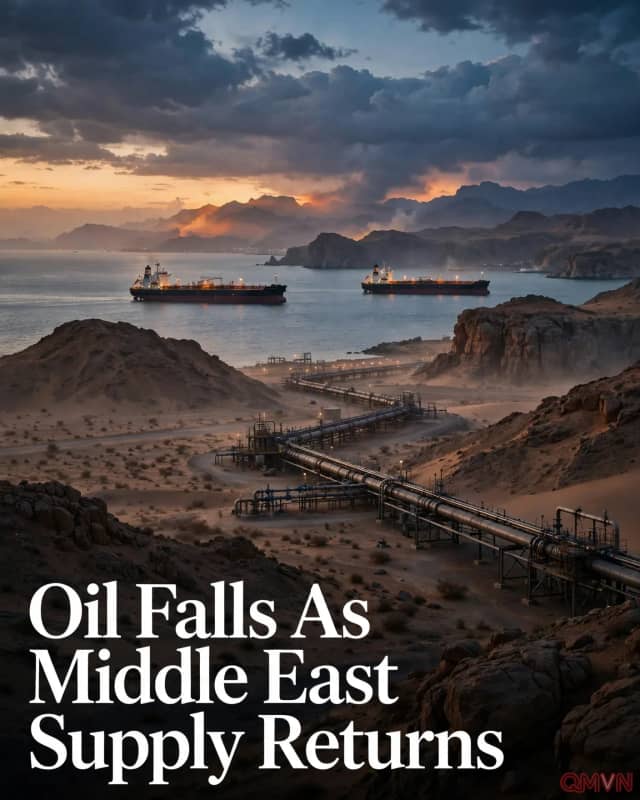
The restoration of Libya’s Sharara pipeline provides one sign of recovering availability. Asian buyers are also adapting their sourcing: Reuters reported that China and India were heading towards record annual Russian oil imports, helped by temporary US sanctions waivers. Such measures can broaden the range of suppliers available to refiners, although their durability depends on policy decisions. The resulting shifts are evidence of the market’s ability to adapt, rather than proof that every disruption has been resolved.
Deutsche Bank’s assessment of observed October inventories suggested a global surplus equivalent to 1.7 million barrels a day. A preliminary Reuters survey also indicated that US inventories might have increased during the previous week. Neither estimate should be confused with a definitive accounting of world supply. Inventory reports can be revised, and oil accumulated in one location may not be immediately accessible elsewhere. Market participants will need sustained evidence before concluding that the balance has changed permanently.
What the rebound means beyond the trading floor
A prolonged decline in crude prices could ease expenses for transport companies and oil-importing economies, while reducing revenues for producers. But the impact on retail fuel is mediated by exchange rates, taxes, refining costs and distribution arrangements. The same benchmark price can therefore produce very different consequences across countries. Airlines, manufacturers and households may experience the benefits of cheaper oil at different speeds, or see them offset by other costs.
The next phase of the market will depend on whether inventories continue to build, whether shipping becomes more predictable and whether temporary policy arrangements remain in force. The uncertainty calls for a distinction between a developing surplus and a dependable supply network. Prices can recover sharply from a low without establishing a lasting upward trend; equally, cheaper crude does not eliminate the need to prepare for disruption. The most useful evidence will be repeated improvements in physical deliveries, rather than any isolated movement in financial markets.