MAIN ARTICLE
Three concrete pillars behind the headline
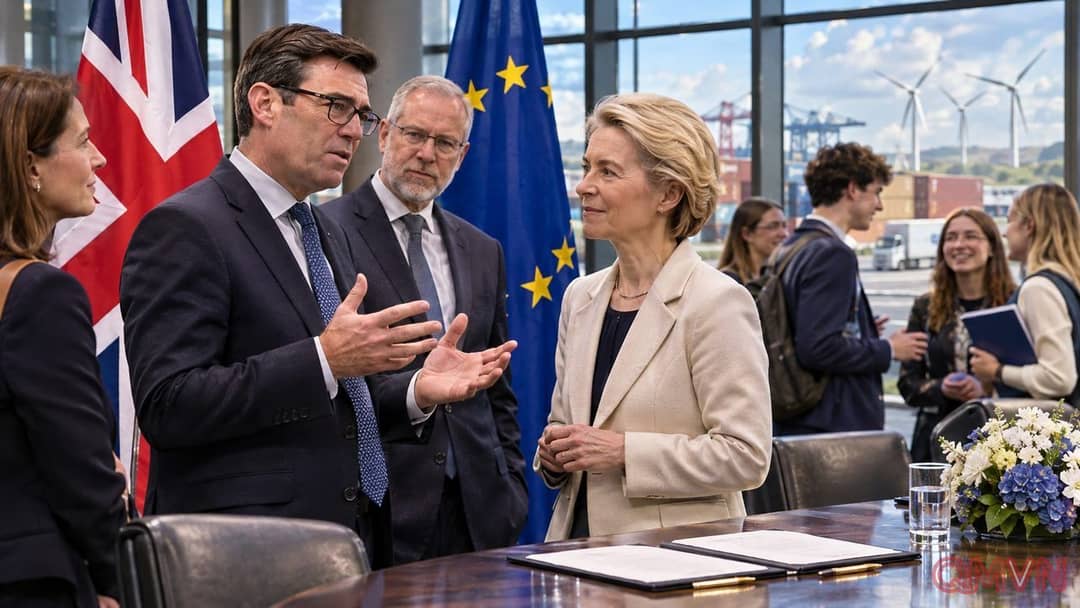
Burnham met European Commission President Ursula von der Leyen and European Council President António Costa in Brussels on November 20. The agreement they announced focuses on practical sectors rather than EU membership. One pillar concerns food and agricultural trade, where closer alignment of sanitary and phytosanitary rules is designed to eliminate many certificates and border checks. Smaller exporters could save on paperwork, while retailers may benefit from less disruption to supply chains.
Another pillar connects British and EU emissions trading systems, potentially easing carbon-related costs for manufacturers selling goods across the Channel. A third creates a time-limited youth experience scheme for people aged 18 to 31. Associated Press reporting says the framework envisages up to 100,000 young participants from each side, for stays of up to three years. It is a targeted opportunity, not the automatic restoration of unrestricted freedom of movement.
What the £17 billion figure really means
The British government estimates that the package could eventually add up to £17 billion annually to economic output, equivalent to roughly 0.5% of GDP. These are model-based potential gains, contingent on implementation, business decisions and unresolved details.