Discoveries from a rare cleaning
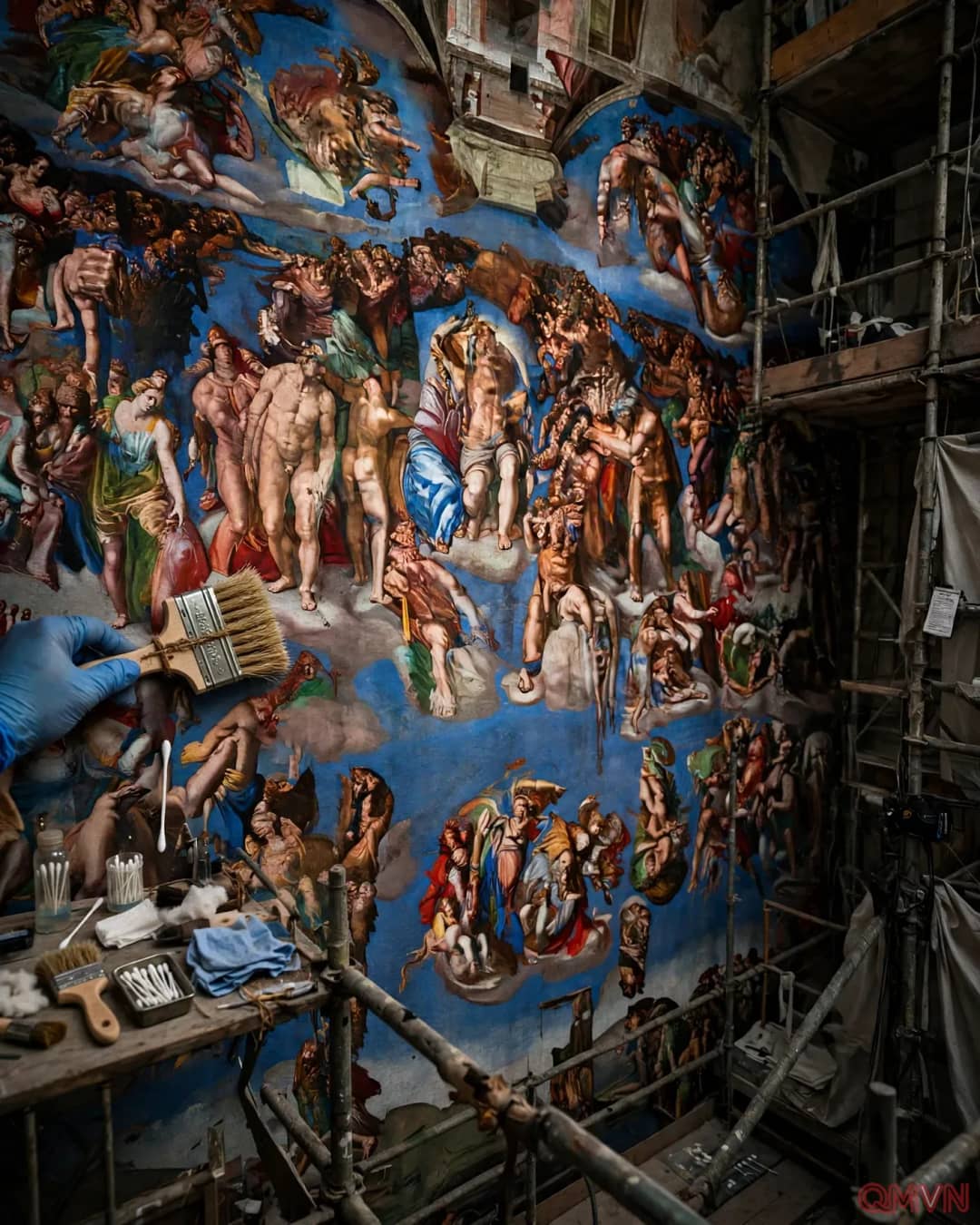
The huge fresco of more than 300 figures rising to heaven or descending to hell behind the Sistine Chapel's altar draws gasps from thousands of visitors every year thanks to its intense colours. According to The Times, the secret behind those colours emerged only when scaffolding went up in February to clean the painting.
According to the Vatican Museums, the extraordinary maintenance from February 1 to March 27 aimed to remove a whitish film of calcium lactate, formed when lactic acid in visitors' sweat reacts with calcium carbonate on the wall. Experts used demineralised water and highly absorbent paper to clean the surface, while the chapel stayed open with a full-size reproduction screen covering the scaffolding. As the original colours reappeared, Violini noticed that Michelangelo painted with parallel strokes, often perpendicular to each other to create a cross-hatching effect.
When a stroke wobbled slightly, other strokes parallel to it had an identical wobble. That meant one thing: Michelangelo was using special brushes with multiple heads.