An extraordinary day in European skies
According to Reuters, at least two flights to Warsaw, two to Sofia, two to Rome and one to Spain's Murcia airport were targeted on Tuesday, a day after another Sofia-bound flight had also been threatened. No one claimed responsibility, officials did not attribute blame, and none of the affected airlines responded to requests for comment.
Rhys Jones, analysis output manager at aviation risk advisory firm Osprey Flight Solutions, said seven confirmed bomb threats against flights in a single day was exceptional. In his view, the fact that the threats did not target a specific country, airline or route was a telling clue.
The lack of clear target… indicates that general disruption to aviation operations is the aim.
From Warsaw to Sofia, Rome and Murcia
In Poland, authorities diverted a LOT flight from London that was due to land at Warsaw's Chopin airport to nearby Modlin airport. Modlin was closed and then reopened after the plane was searched and no device was found.
Another Warsaw-bound flight, an SAS service from Copenhagen, landed at Chopin as scheduled, and the airport remained operational.
Bulgaria's transport ministry said flights from Milan/Bergamo and Dublin to Sofia were both threatened: the Wizz Air flight carried 176 passengers and the Ryanair flight 186. Both landed safely and no explosives were found. The BTA news agency had earlier quoted an official as saying a flight from Israel was affected, but authorities later said this was not the case. A day earlier, a Wizz Air flight from London to Sofia was diverted to Budapest, according to Hungarian Defence Minister Romulusz Ruszin-Szendi.
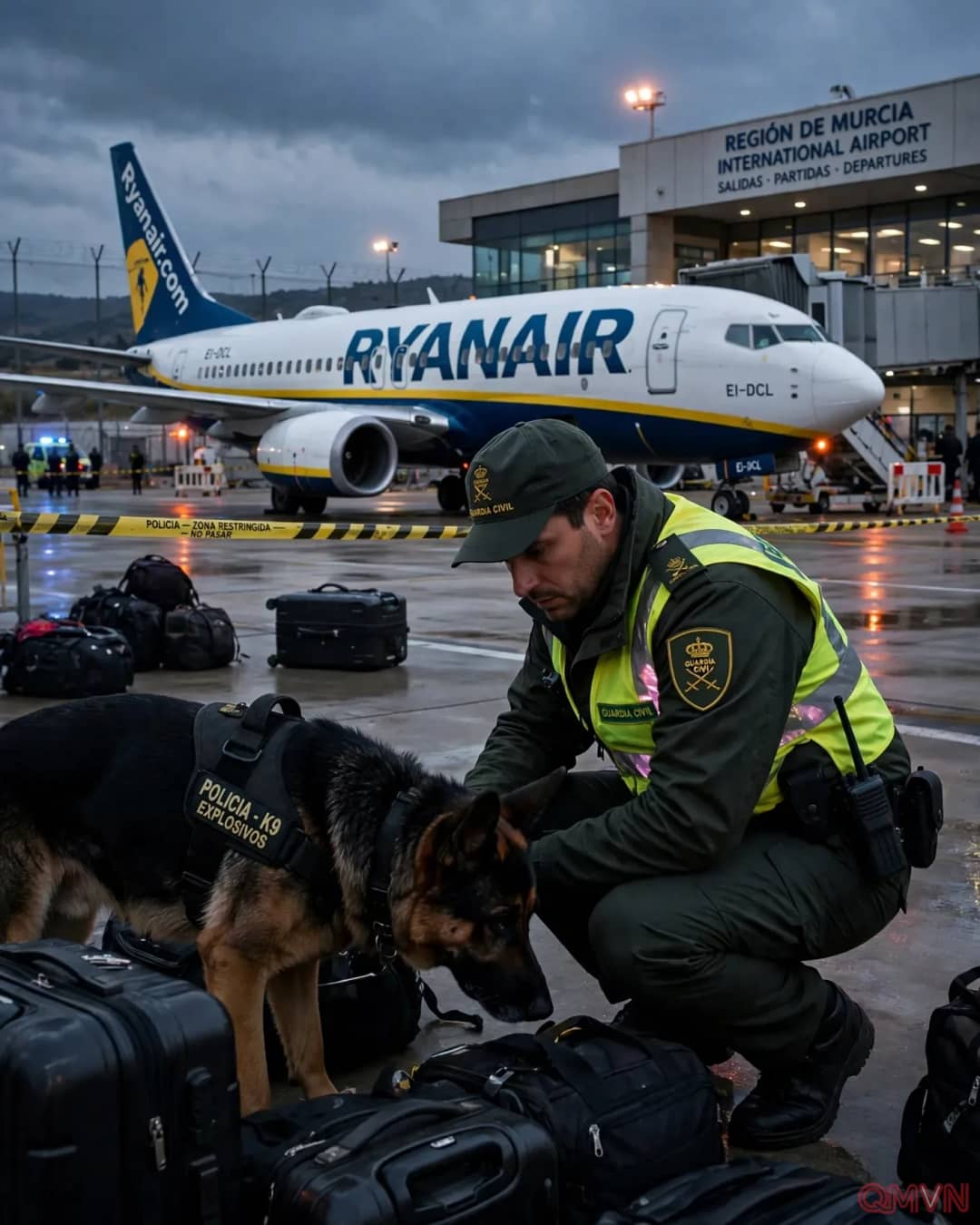
In Murcia, in southeastern Spain, parts of the airport were cordoned off after a Ryanair flight from Manchester reported a threat. Officials said it proved to be a hoax, and the airport resumed normal operations after no explosives were found on board.
At Rome's Fiumicino airport, two other Ryanair flights, from Lisbon and Dublin, were searched, according to a source at airport operator ADR. The Dublin flight was escorted by the Italian Air Force until it landed. The alert was later cleared, and the airport's operations were unaffected.
The search beneath a hull in Syros
At sea, the Panama-flagged cruise ship Crown Iris, bound for Israel, was searched on the Greek island of Syros after an unknown person claimed that an explosive device had been attached to its hull. An explosives detection dog and a diver were deployed. Initial checks found nothing, but coast guard specialists were expected to carry out further inspections before the ship could resume its voyage.
Every threat, even when it proves false, forces authorities to mobilize police, detection dogs, divers and even fighter jets, while thousands of passengers endure delays and anxiety. That cost, rather than any explosive, is the real damage.
Hybrid warfare: cheap to wage, hard to trace
Although no country has pointed fingers, the threats come as European officials accuse both Russia and Iran of “hybrid attacks” and sabotage. Moscow and Tehran both deny running any such campaign.
This same week, unidentified hackers shut down refrigerators in supermarkets in several European countries. Some experts said the hoax bomb threats could fit the same pattern of low-cost, deniable disruption. Eric Schouten, head of the aviation security group Dyami, said incidents from railways to food infrastructure bear familiar hallmarks.
It does fit the narrative of Russian state actors who want to disturb Europe.
The broader context has heightened Europe's vigilance. In September, the German government publicly blamed Russia for a sabotage plot at Leipzig/Halle Airport, where an explosive-laden drone was found near a Ukrainian cargo plane. According to an assessment by Germany's Federal Criminal Police Office cited by the Kyiv Post, the country recorded 165 suspected sabotage cases and 747 suspicious drone flights in the first eight months of 2026. Even so, in the case of the November 3 threats, officials have been careful not to conclude who was behind them.