MAIN STORY
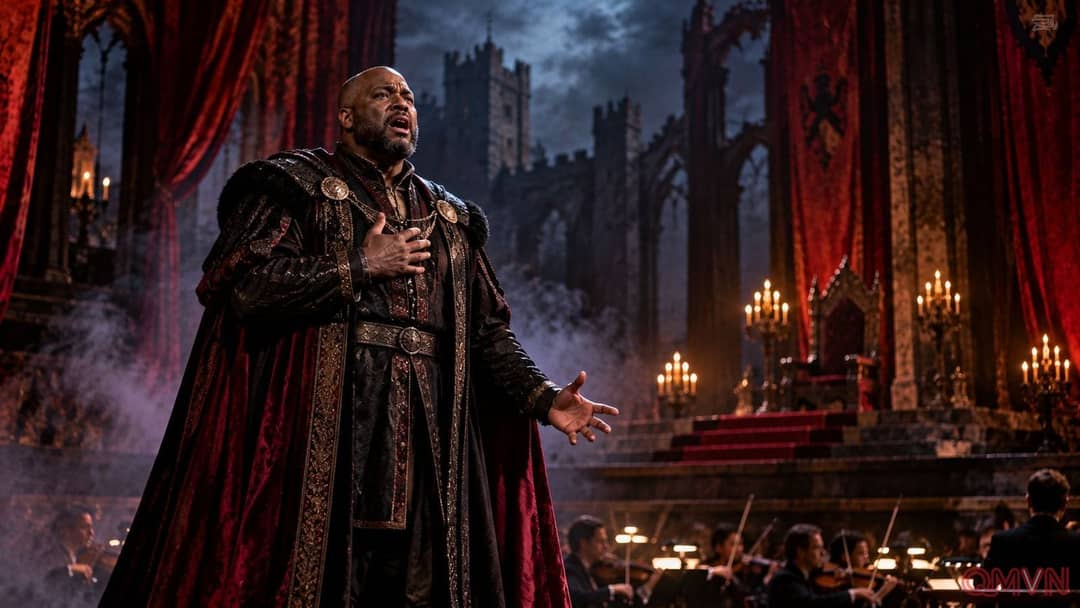
Macbeth: dignity at the edge of collapse
In Verdi’s Macbeth, the title character eventually confronts the human cost of his pursuit of power. The final-act aria “Pietà, rispetto, amore” is neither a simple confession nor a plea for sympathy. Macbeth understands that old age will arrive without mercy, respect or love. Long musical phrases demand sustained breath, control and the ability to carry grief beneath a stately vocal line.
Kelsey suggests a monarch trying to preserve his dignity after losing any claim to moral greatness. The breadth of his sound makes the character formidable, yet the warmth within that sound discloses loneliness. The effect depends less on vocal fireworks than on the tension between ceremonial authority and inward ruin.
Amonasro: a father who also manipulates
In Aida, Amonasro begins by invoking the homeland his daughter longs to see again. “Rivedrai le foreste imbalsamate” calls for lyrical persuasion before an affectionate father becomes a coercive political figure.