MAIN CONTENT
A staircase opens a window into a buried city
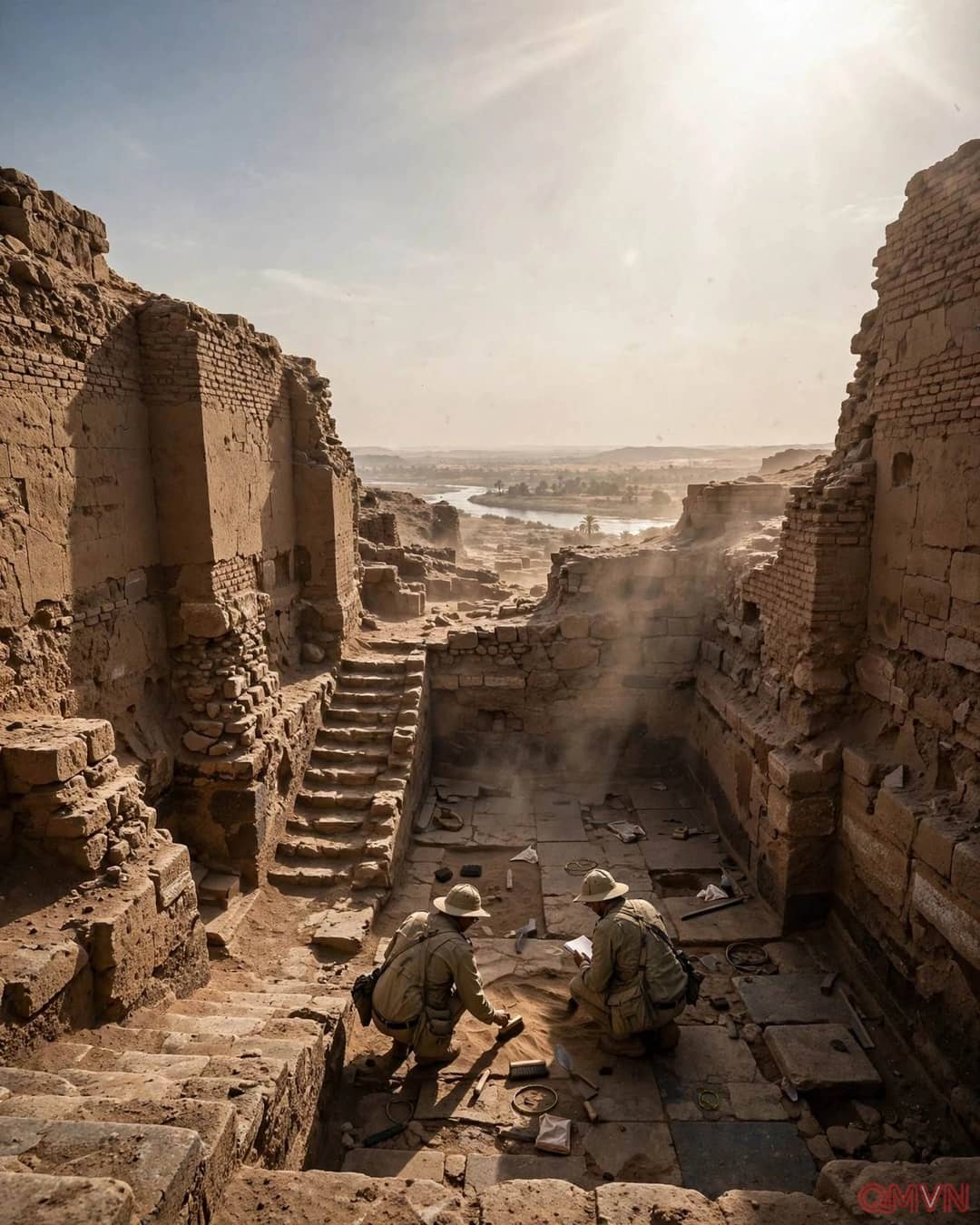
The announcement follows fieldwork by the Polish Centre of Mediterranean Archaeology at the University of Warsaw and Sudan’s National Corporation for Antiquities and Museums. First identified in 2021, the Great Church of Jesus has been difficult to explore because later layers conceal much of its fabric. Excavators reached the early floor level at the base of a substantial staircase, where surviving masonry stands approximately 11 metres high. This is a milestone, not the completion of the excavation: investigators have not uncovered the entire floor or verified every edge of the complex.
The working dimensions of 47 metres in width and about 57 metres in length suggest a footprint of roughly 2,679 square metres, but that simple calculation is not a surveyed final measurement. Researchers also estimate a height of around 21 metres. The contrast between the small exposed area and the immense probable building makes each architectural fragment valuable: stairways, walls and structural supports can reveal how worshippers moved through the complex and how builders managed its weight.
Why Old Dongola matters
Old Dongola sits beside the Nile in present-day Sudan and served as a centre of Makuria, one of the medieval Nubian kingdoms that embraced Christianity from the sixth century. These states sustained religious communities, trade links and distinctive artistic traditions for centuries. The newly studied church challenges any assumption that monumental Christian architecture was limited to Europe or the Byzantine heartland. Its enormous size points to institutions capable of mobilising craftsmen, materials and considerable resources.