Strong support for wider channels
The report surveyed most of the PWMA’s 44 institutional members, from Agricultural Bank of China (Hong Kong) to UBS, as well as asset managers and senior executives in Hong Kong. Key findings include:
- 91% support wider access for qualified professional investors to shares on the Star Market and ChiNext.
- 79% said Greater Bay Area initiatives linking Hong Kong with Shenzhen and Guangzhou would be “critical or moderately important” to their business over the next five years.
- 94% are “moderately or highly optimistic” about the market’s prospects over the next five years.
According to the report, the industry expects a broader range of regulated products to further strengthen Hong Kong’s role as a bridge between mainland China and international capital markets.
Filling Hong Kong’s technology gap
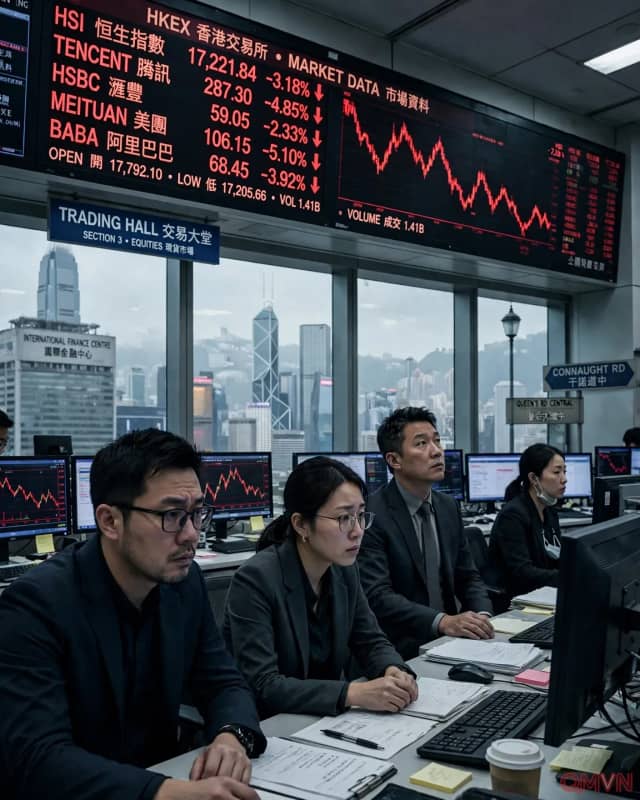
The report comes as Hong Kong equities lag many global markets because of limited exposure to semiconductor and memory chip companies, which are benefiting heavily from the AI hardware boom. By contrast, Shanghai’s Star Market and Shenzhen’s ChiNext host a greater concentration of Chinese companies across the technology supply chain.
Although “hard-tech” stocks have recently pulled back, they continue to attract investors. For wealth managers, access to these companies would let them offer clients exposure to China’s technology wave through regulated channels in Hong Kong.
Hong Kong, a gateway between two pools of capital
According to the PWMA, expanding regulated channels, broadening products and strengthening international wealth corridors are essential.
*“Expanding regulated investment channels, enhancing product breadth and strengthening international wealth corridors are key to sustaining Hong Kong’s leadership as a global cross-boundary wealth centre.” — Vivien Khoo*
Overseas institutional investors can currently trade mainland-listed shares through the Stock Connect scheme and the Qualified Foreign Institutional Investor programme, but face restrictions, including a 10% ownership cap in a single listed company for any one institution. In June, China Securities Regulatory Commission chairman Wu Qing said the regulator would support foreign investors setting up wholly owned subsidiaries or joint ventures in securities and futures, as part of efforts to further open the stock market, valued at more than 100 trillion yuan.
The world’s largest cross-boundary wealth centre
According to Boston Consulting Group’s Global Wealth Report 2026, Hong Kong has overtaken Switzerland as the world’s largest cross-boundary wealth management centre, with cross-boundary wealth rising 10.7% in 2025 to about US$2.9 trillion and forecast to grow about 9% a year through 2030. The main drivers are capital flows from mainland China and a buoyant stock market with active IPOs.
*“A trusted platform for managing and booking wealth.” — Amy Lo*
Amy Lo, chairman of the PWMA executive committee and CEO of UBS Hong Kong, also highlighted the city’s resilience and the adaptability of its industry and talent pool amid persistent geopolitical tensions.
Risks and limits to consider
Despite the optimism, industry confidence has eased slightly from last year, when 100% of PWMA members were optimistic. The mainland tech boards are highly volatile, and China’s capital controls and ownership limits remain significant barriers for international investors.
In addition, US-China technology tensions, especially in semiconductors, could affect the prospects of the very companies investors want to access. Expanding investment channels therefore needs to be accompanied by robust risk management and transparency to protect investors.