MAIN CONTENT
A striking claim that still needs measurement
In his November 15 evening address, Zelensky cited a report from General Mykhailo Drapatyi and said Ukraine had already neutralized more than 55% of Russia’s refining capacity. The statement suggests a broad cumulative impact of long-range strikes. It does not, by itself, establish that 55% of Russia’s actual fuel output has disappeared permanently, or that every facility previously hit is shut down at the same time. Refineries can resume partial production after emergency repairs.
On November 10, Reuters quoted two industry sources who estimated that recent attacks had affected approximately 30% of Russian processing capacity. Their assessment concerned a particular period and the operational effects at major plants. Different definitions, observation windows and repair rates can explain part of the gap. Without comprehensive independently audited output figures, the 55% figure should be presented as Ukraine’s claim rather than an established industrial measurement.
Why refineries have become military targets
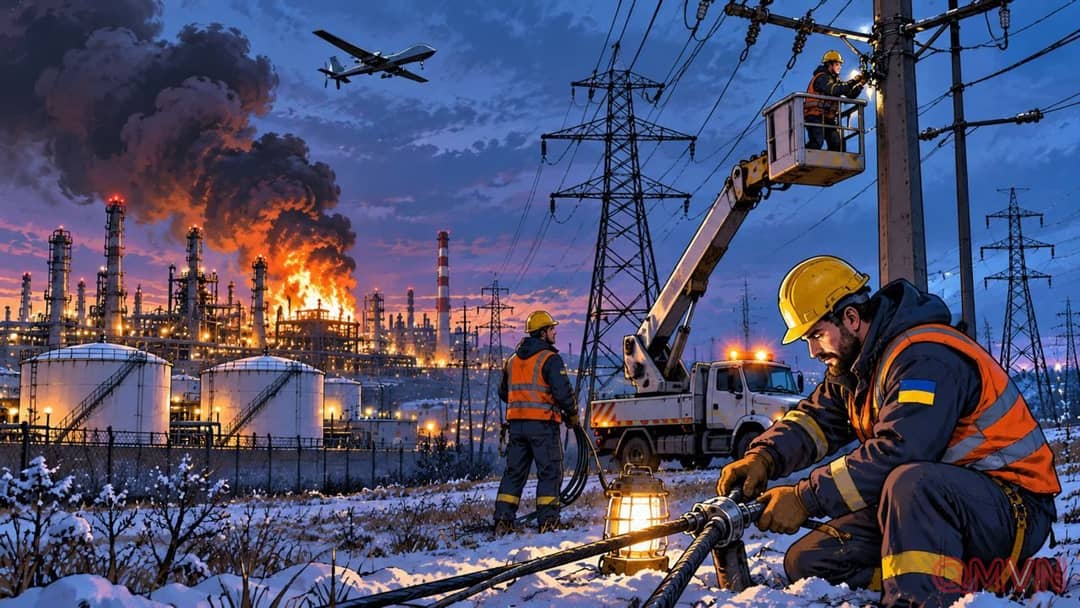
Long-range Ukrainian drones have struck oil-related facilities in areas including Samara and Volgograd and at sites far from the shared border. Kyiv argues that refineries help finance Russia’s war economy and supply fuel for transport and military logistics.