Footprints that tell a story
The hazel dormouse is a hard creature to spot. It weighs only about 15 to 20 grams, has golden-orange fur, is active at night and spends most of its time in the branches. So rather than trying to see it, conservationists look for the traces it leaves behind.
Footprint tunnels are small tubes fixed to branches, lined with an ink pad and paper. When an animal runs through, its prints are recorded on the paper. At Babers, nine of the 39 tunnels picked up dormouse footprints, making it one of the first CRT farms to return positive results.
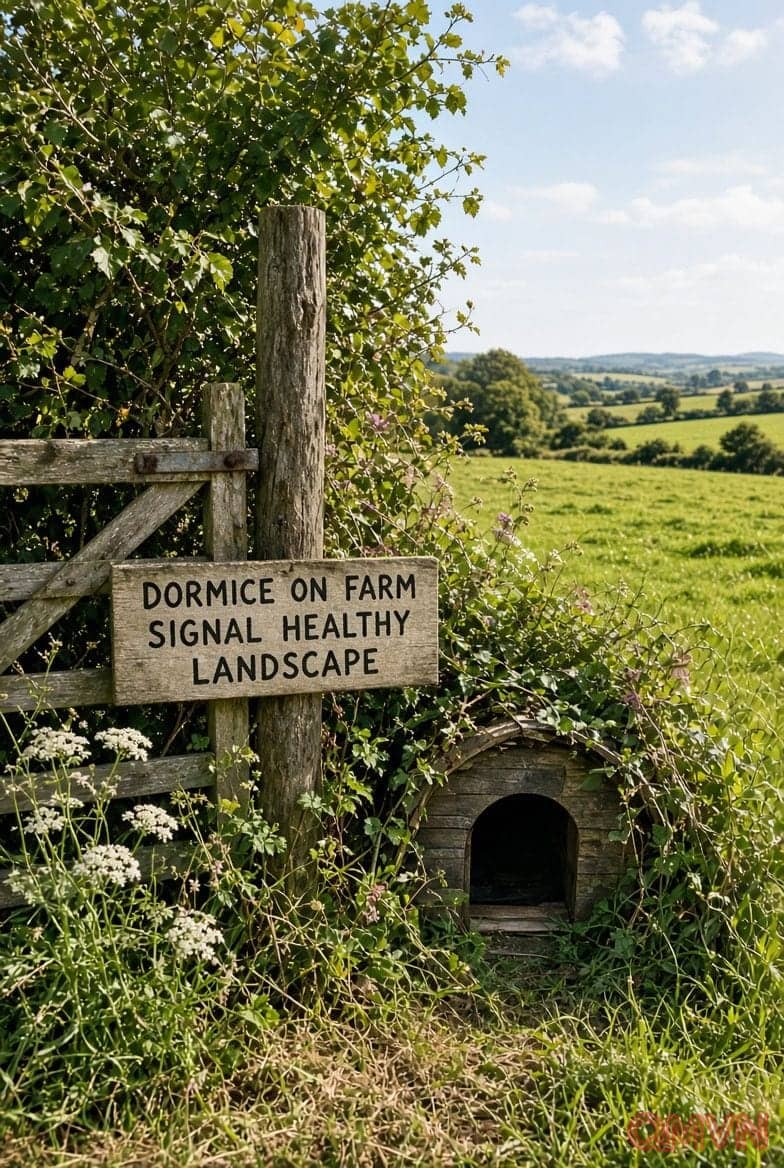
The mark of a healthy landscape
Dormice depend on diverse woodland, species-rich hedgerows and connected habitats that provide food and shelter all year round. They feed on flowers, pollen, insects, berries and hazelnuts, and rarely come down to the ground to travel.