First Store in Hanoi After Years in the South
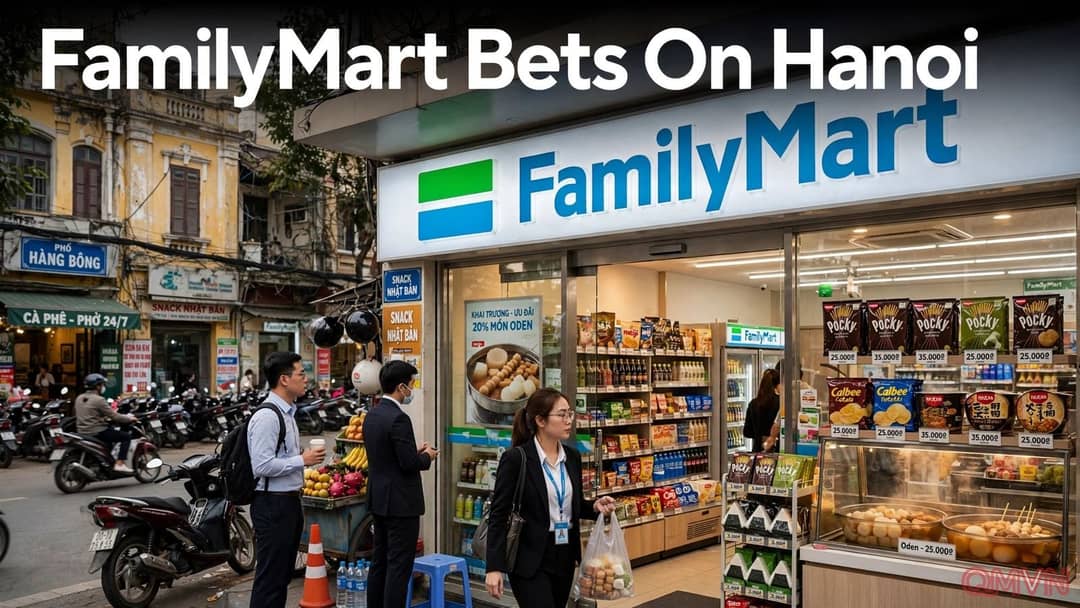
According to Nikkei, FamilyMart has just opened its first outlet in inner Hanoi, expanding its store network from the south where it operated through a joint venture with Phu Thai Group that held a master franchise license. The move north reflects a clear strategy to extend the network to northern Vietnam, where a young population, high urban density, rapid urbanization and growing convenience shopping habits are rising fast. The store offers Japanese national brand products, FamilyMart private label and hot foods such as rice balls, fried chicken and oden, targeting office workers, students and urban families seeking safe, fresh and quick options near home, office towers and apartment complexes. It marks a symbolic return to the capital.
Target of 300 Stores and Japan-Vietnam Product Mix
FamilyMart aims for about 300 stores by fiscal 2031 in Hanoi and surrounding provinces. The model combining Japanese products and local tastes is seen as a key advantage in a crowded market.
The convenience store has just started as a business format here, there is still large room for growth as small privately run shops account for 80 percent of retail sales
The chain said it will sell fried chicken, oden, rice balls and drinks, alongside products from Japanese food makers. Private brand helps control quality and price, while national brands build trust among consumers familiar with Japanese quality. The company is also considering a central kitchen and cold chain logistics to ensure freshness for Hanoi, similar to how chains like Fujimart Times City operate, and is working with local suppliers for vegetables, ready meals and beverages to localize the assortment.
Vietnam's Convenience Store Boom
Vietnam now has over 2,000 convenience stores and is expected to see strong growth in coming years as modern retail replaces traditional mom-and-pop shops. In the race for scale, GS25 is projected to grow nearly 35 percent to 318 stores, FamilyMart about 23 percent to 172 stores and 7-Eleven about 14 percent to 148 stores nationwide, according to an industry report by The Investor.
WinMart plans 13,000 sales points by 2030, mainly in rural areas, with a pace of more than 1,500 stores per year. Competition pushes chains to differentiate through hot food, e-payments, fast delivery, loyalty apps and Japanese products that appeal to young urban shoppers.
Convenience stores are a very important channel for medium and small Japanese businesses to sell their products in Vietnam
He said organizations like JETRO, the Japanese consulate and financial agencies would join hands to help Japanese retailers bring goods to Vietnam and expand their presence.
From Phu Thai Joint Venture to Northern Strategy
FamilyMart once formed a joint venture named Vina FamilyMart with Phu Thai Group, where Phu Thai held 51 percent and FamilyMart-Itochu 49 percent, and was granted a master license for Vietnam. After the split, Phu Thai developed a new retail brand called B'smart capitalizing on its existing 42 shop system, while FamilyMart stayed in Vietnam and contemplated teaming up with another local partner. FamilyMart then restructured and continued expansion with a new partner, focusing on Ho Chi Minh City before moving to Hanoi with a fresh format. According to Itochu, the corporation once planned 300 stores in Ho Chi Minh City and 100 stores in Hanoi by 2013, a target delayed by competition and restructuring. This latest expansion shows the long-term strategy returning, with Hanoi as a new growth hub and gateway to northern provinces where shipping, shipbuilding and urban consumption are rising.
Context: Middle Class and Urbanization in Hanoi
Hanoi and its metropolitan area are seeing fast population growth, an expanding middle class and rising demand for convenient, safe and traceable consumption, especially among young families and office workers. Urban areas like Times City, Royal City and office streets create steady foot traffic for convenience stores throughout the day. FamilyMart said it will combine Japanese products and hot meals suited to Vietnamese taste while maintaining Japanese hygiene and service standards that Vietnamese consumers appreciate. This context provides a favorable backdrop for the 300-store target by fiscal 2031, especially as young consumers value ready-to-eat meals, quality private label and late-night service near home.