Sabotaged Meta Engagements And Withheld Microprocessor Tools
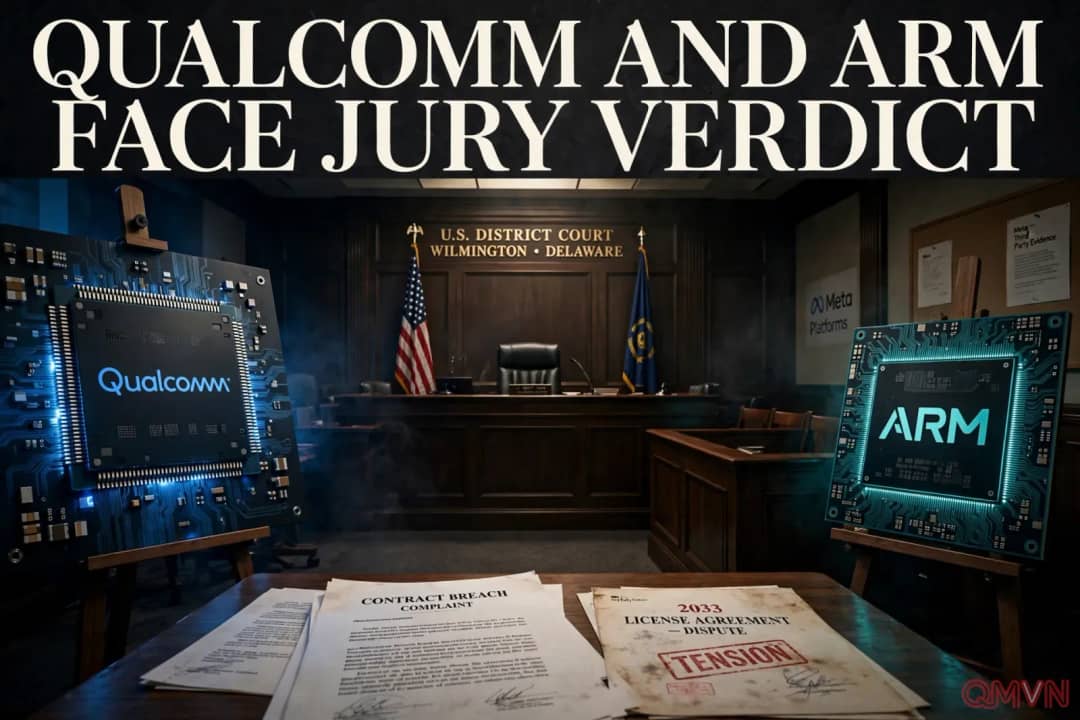
Deliberations are set to begin before a federal jury in Wilmington, Delaware, under presiding United States District Judge Maryellen Noreika, concluding five intense days of testimony in Qualcomm's lawsuit against Arm Holdings. Central to Qualcomm's legal complaint is the assertion that Arm engaged in willful, bad-faith interference with its ongoing commercial relationship with virtual reality pioneer Meta Platforms.
Qualcomm argued before jurors that Arm deliberately sought to derail critical chip supply negotiations by leaking a confidential 2024 license-breach notice to Bloomberg News. This leak was allegedly engineered to inject market uncertainty among enterprise partners and damage Qualcomm’s competitive standing in artificial intelligence and edge computing.
Furthermore, Qualcomm claims Arm violated core licensing terms by withholding vital software patches and silicon design toolkits, alongside breaching a specific contractual agreement designed to guarantee that Qualcomm paid within 10% of the lowest market price for Arm processor designs.
It’s really bad because Qualcomm’s entire chip business depends on Arm and on Arm honoring its contract and honoring its promises.
Qualcomm accuses Arm of deliberately leaking confidential breach notices to sabotage Meta commercial ties.
Arm allegedly withheld essential software bug fixes and hardware design development tools.
Litigation challenges violations of contractual clauses guaranteeing lowest comparative royalty pricing.
Arm Mounts No-Harm Defense Amid Five-Year Royalty Freeze Claims
Refuting the allegations in court, Arm’s litigation team urged jurors to recognize that Qualcomm had suffered zero measurable commercial harm from the disputed events. Arm characterized the lawsuit as an aggressive tactical maneuver manufactured by Qualcomm to extract leverage in ongoing negotiations over future architecture licensing tiers.
A critical legal flashpoint hovering over the proceedings involves Qualcomm’s pre-trial motion seeking an extraordinary remedy: enforcing a contractual penalty clause that would permit Qualcomm to halt all intellectual property royalty disbursements to Arm for five full years.
While Judge Noreika has yet to issue a definitive ruling on the five-year royalty suspension, Arm's attorneys argued passionately that such punitive forfeiture clauses are legally unenforceable penalties under established contract law.
They were not harmed in the least by the allegations in this lawsuit.
Arm contends Qualcomm suffered no verifiable financial injury and operates solely for tactical leverage.
Qualcomm seeks judicial enforcement of a clause enabling a five-year cessation of all royalty payments.
Federal court reserves judgment on the statutory validity of punitive royalty suspension provisions.
From Symbiotic Alliance To Hostile Direct Semiconductor Rivalry
The ongoing Wilmington trial represents the second federal courtroom showdown within two years between the semiconductor giants, featuring direct testimony from both Arm Chief Executive Rene Haas and Qualcomm Chief Executive Cristiano Amon. In the previous 2024 trial, Arm failed to convince a jury that Qualcomm had breached agreements following its acquisition of server-chip startup Nuvia.
The fundamental driver of this structural confrontation traces back to SoftBank Group Corp’s 2016 acquisition of Arm. Under SoftBank's stewardship, Arm fundamentally altered its commercial posture, shifting from a neutral technology architect that licensed intellectual property to all market participants, toward an aggressive competitor selling complete proprietary silicon designs directly to enterprise buyers.
Although Qualcomm’s primary underlying architectural licensing agreement extends until 2033, the bitter animosity displayed in court casts severe doubt on whether the two titans can ever establish commercial terms for next-generation computing architectures.
The five-day trial highlights the deterioration of their business relationship after SoftBank shifted Arm toward selling chips of its own.
Second major federal jury trial in two years featuring testimony from CEOs Cristiano Amon and Rene Haas.
SoftBank transformed Arm from an impartial IP licensor into an aggressive direct market competitor.
Qualcomm’s baseline architecture agreement remains active through 2033 but future terms remain contested.