MAIN CONTENT
An opening negotiated at the diplomatic table
The Shenzhen announcement followed more than eight years of follow-up negotiations under the bilateral free trade agreement. Seoul said China had undertaken to give Korean film and gaming businesses most-favored-nation treatment: in principle, terms no less favorable than those offered to comparable foreign partners. The commitment matters because entertainment access has long depended on regulatory decisions that producers could not predict.
The arrangement also broadens cooperation beyond cinema. Reports by Yonhap and other Korean outlets say the audiovisual provisions encompass television dramas, animation, documentaries and entertainment programs. Such categories were largely outside the narrower 2014 film co-production framework. The widening of scope creates opportunities for different creative industries, although detailed implementation and individual approvals remain essential.
A trade pledge can establish expectations and a basis for diplomatic consultations, but it cannot by itself fill a movie theater. Chinese authorities still control approvals, classification and distribution, while producers must arrange financing, rights and schedules. The distinction between a negotiated rule and an actual theatrical release will be decisive.
Why joint productions matter
China restricts the share of screen time available to imported films, whereas approved domestic productions are treated differently. Under the existing bilateral co-production framework, qualifying jointly made movies can count as Chinese films.
For Korean companies, that status could be more commercially valuable than an isolated permission to import a completed title.
Joint projects also involve creative compromises. Scripts must appeal to audiences in two countries; casting, language, financing and intellectual-property ownership all need agreement. A film that is legally eligible for domestic treatment still has to reach cinemas and win viewers in a fiercely competitive market. Industry excitement is therefore accompanied by understandable caution.
The pact's significance extends beyond ticket sales. Stable cooperation could help technicians, writers and production companies rebuild relationships interrupted for years. Conversely, filmmakers may hesitate to invest if approvals remain unpredictable, since delays can make a co-production expensive even before its first screening.
Star of Shanghai as a possible test case
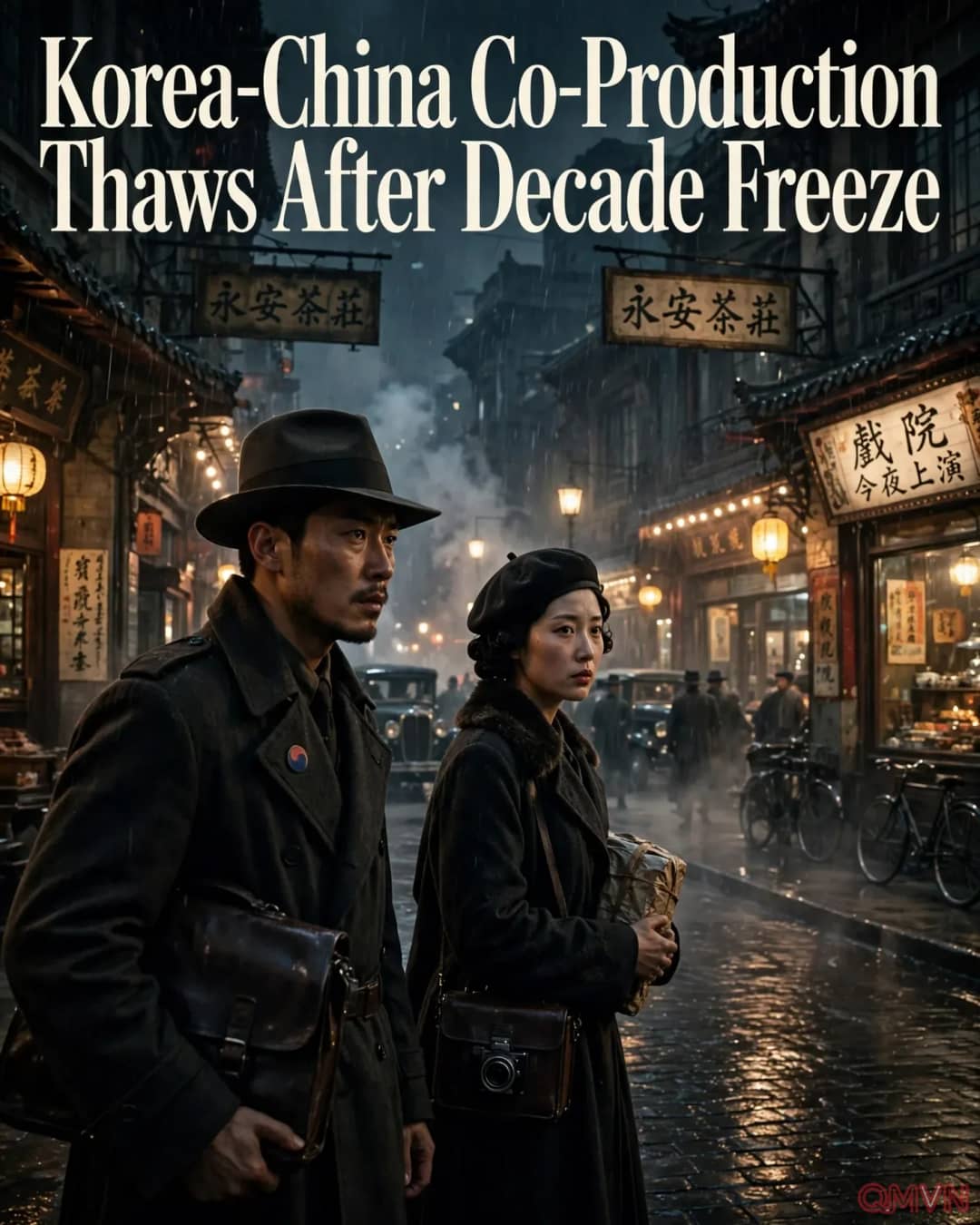
Industry reports identify Star of Shanghai, a working title for a spy-action film set in the early 1930s, as a potential first beneficiary. Its story reportedly follows Korean independence activists operating in Shanghai during Japan's colonial rule, alongside Chinese opponents of Japanese expansion. Historical figures said to feature include Kim Gu and Yun Bong-gil, whose 1932 attack on a Japanese military gathering became a landmark in Korean independence history.
Korean production company Kortop Media has been developing the project since 2020 and has reported cooperation with a major Chinese studio. Early industry accounts placed the budget around 30 billion won and mentioned actors Kim Myung-min and Sung Dong-il. These remain development-stage reports, not confirmation of a completed cast or financing package; no filming or release date has been announced.
The subject could offer a rare shared historical narrative, but that promise is not a substitute for transparent regulatory review or an artistic vision that stands on its own. Its progress will offer a more meaningful signal of change than optimistic declarations alone.
The limits of a cultural thaw
Past developments counsel restraint. After the THAAD dispute, Korean content largely disappeared from Chinese mainstream distribution without Beijing announcing a formal blanket prohibition. A handful of improvements in 2022, including video-game approvals and streaming access, did not produce a lasting normalization of Korean drama releases.
The latest negotiations come amid broader efforts to stabilize bilateral economic ties. Reuters reported that the November agreement covered entertainment and tourism, while Yonhap described the new film and gaming commitments. These are important changes in diplomatic terms, but the final evidence will be whether approvals are consistent, commercial contracts can be honored and cultural exchanges endure fresh political tensions.
For audiences, the issue is ultimately simpler than a trade negotiation: whether they can watch stories from their neighbors and decide for themselves what resonates. A genuinely open cultural relationship is measured not only by signatures, but by the freedom and continuity of exchange.