MAIN CONTENT
A derailment interrupts a crucial railway corridor
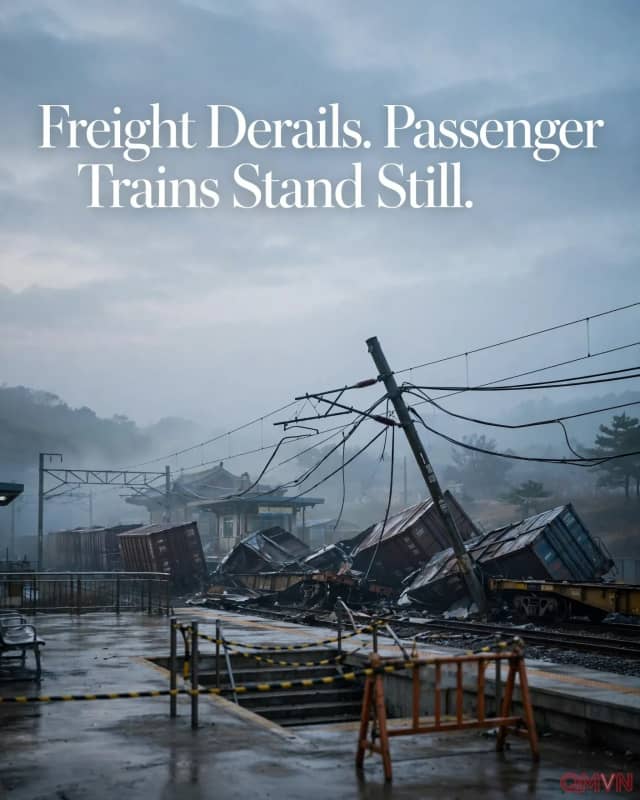
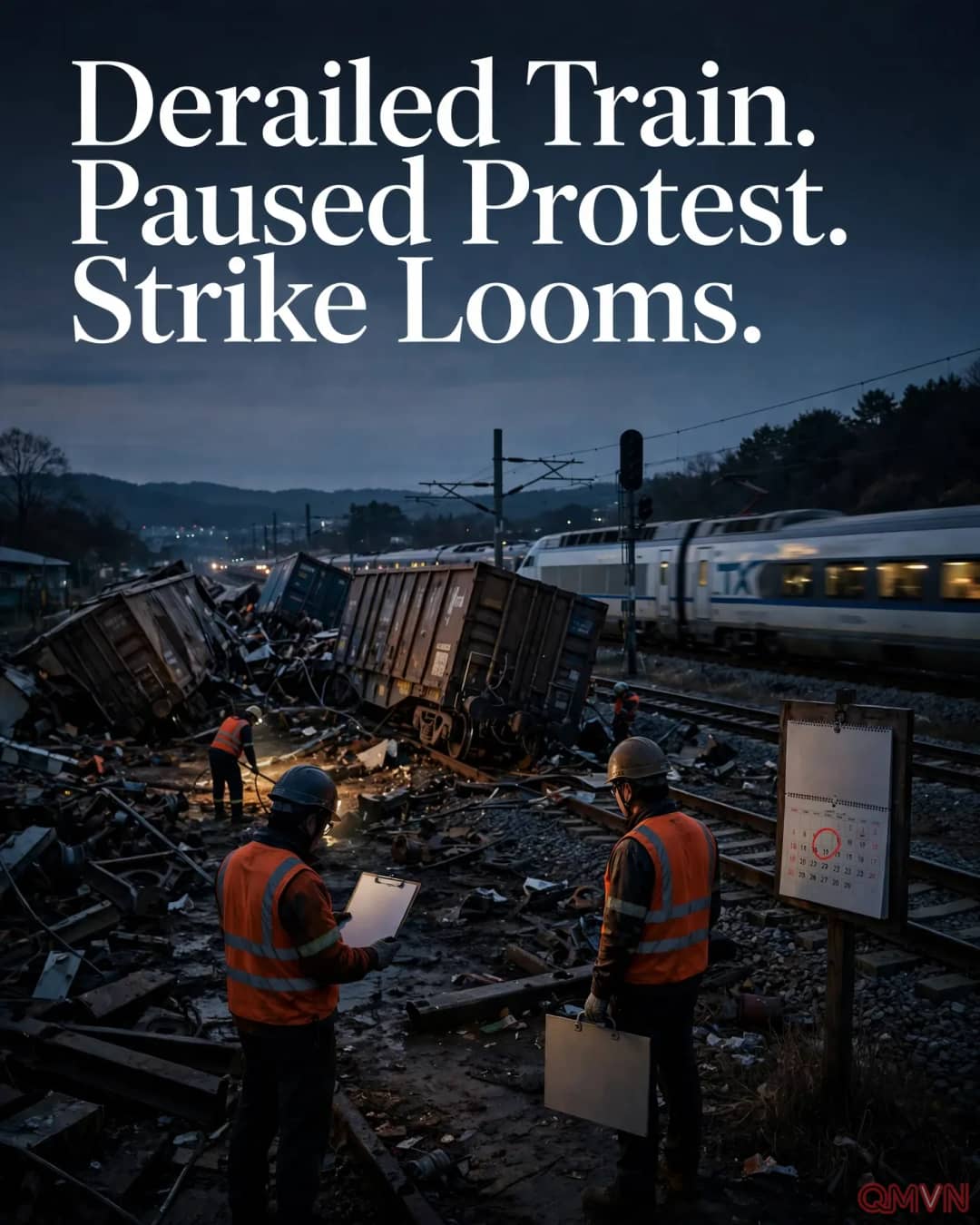
The accident occurred early on Saturday, November 21, as freight train No. 3810 entered Sojeong-ri Station in Sejong. Korail said the train’s automatic emergency braking system activated before cars left the rails. Reports said five freight cars derailed and overhead power infrastructure was damaged. Authorities had not established the underlying cause at the time of the union’s announcement, so the braking sequence should not be mistaken for a final explanation of why the accident happened.
The disruption affected conventional passenger services on the Gyeongbu Line between Cheonan and Daejeon, a corridor connecting communities and commercial centers across South Korea. Travelers faced cancellations and delays, while Korail arranged substitute buses and additional rail capacity to reduce the impact. For people traveling to work, family obligations or university examinations, a broken connection can have consequences well beyond a delayed departure.
Recovery teams worked overnight to remove damaged equipment, repair the railway and inspect safety conditions. Regular services resumed on Sunday morning, according to Korail, but some follow-up repairs still required attention. The distinction matters: reopening a line is an immediate milestone, whereas restoring all equipment and establishing why the derailment occurred are separate tasks requiring careful technical review.
Why the union chose to postpone its campaign
The Korean Railway Workers’ Union had planned to begin a work-to-rule campaign at 9 a.m. Monday. Instead, it moved the start to Thursday, November 26, explaining that workers should help stabilize operations and support recovery from the accident.
In its statement, the union pledged cooperation with restoration efforts while retaining the right to demand changes once the emergency had passed.
Work-to-rule action differs from an outright strike. Participants follow contractual procedures and prescribed operating requirements strictly, without the discretionary flexibility that can keep a complex service moving at its usual pace. It can therefore expose how much a rail network depends on staffing reserves and informal adjustments, while also causing delays even when employees remain at their posts.
The postponement is limited. The union said train drivers would still take their scheduled rest days, and members would continue regional evening meetings. Those decisions preserve organization and bargaining pressure without immediately introducing the previously planned slowdown. They also show why describing the announcement as a cancellation of industrial action would be misleading.
Safety, staffing and the unresolved negotiations
At the heart of the dispute are union demands for more personnel in safety-critical work, enforcement of rules requiring two people for hazardous tasks and an end to job cuts or restructuring measures the union says may undermine working conditions. Those positions are claims and demands made by employee representatives, not findings that staffing shortages caused Saturday’s derailment. Investigators must examine technical evidence before any causal connection is drawn.
Management must maintain a dependable network while controlling costs and organizing shifts; workers argue that efficiency cannot come at the expense of adequate supervision and safe procedures. Both concerns become sharper after a visible transport failure. A sustainable response requires information about staffing levels, maintenance priorities, risk assessments and whether documented safety rules are consistently followed.
The union has warned that it may begin an indefinite strike at 9 a.m. on December 10 if talks do not produce a satisfactory offer. That remains a conditional plan, not a confirmed shutdown. For passengers, it is essential to distinguish three dates: service resumed on November 22; work-to-rule action was deferred to November 26; and December 10 remains a possible escalation point.
What the coming weeks may reveal
The incident presents a near-term test of cooperation. Railway employees, operators and investigators have overlapping interests in establishing a safe service, but they differ over how responsibilities and resources should be distributed. Constructive negotiations could address immediate fatigue and staffing concerns while separating evidence-based accident prevention from broader disputes about employment policy.
Passengers also have a role in understanding the evolving situation. Service notices issued by Korail are more reliable for individual journeys than assumptions based on a union announcement, because schedules can change independently of the formal industrial-action calendar. Anyone traveling near the affected corridor should consult the operator’s most recent updates rather than treating the Sunday restart as a permanent guarantee against disruption.
There is a broader lesson for public transport governance. Accidents draw attention to broken rails, damaged cables and delayed trains, but public confidence ultimately depends on transparent investigation and visible corrective action. The union’s decision buys a few days for recovery and dialogue; whether it becomes a turning point will depend on what workers and management do with that time.