Overwhelming citizen mandate prioritizing solar and wind over nuclear options
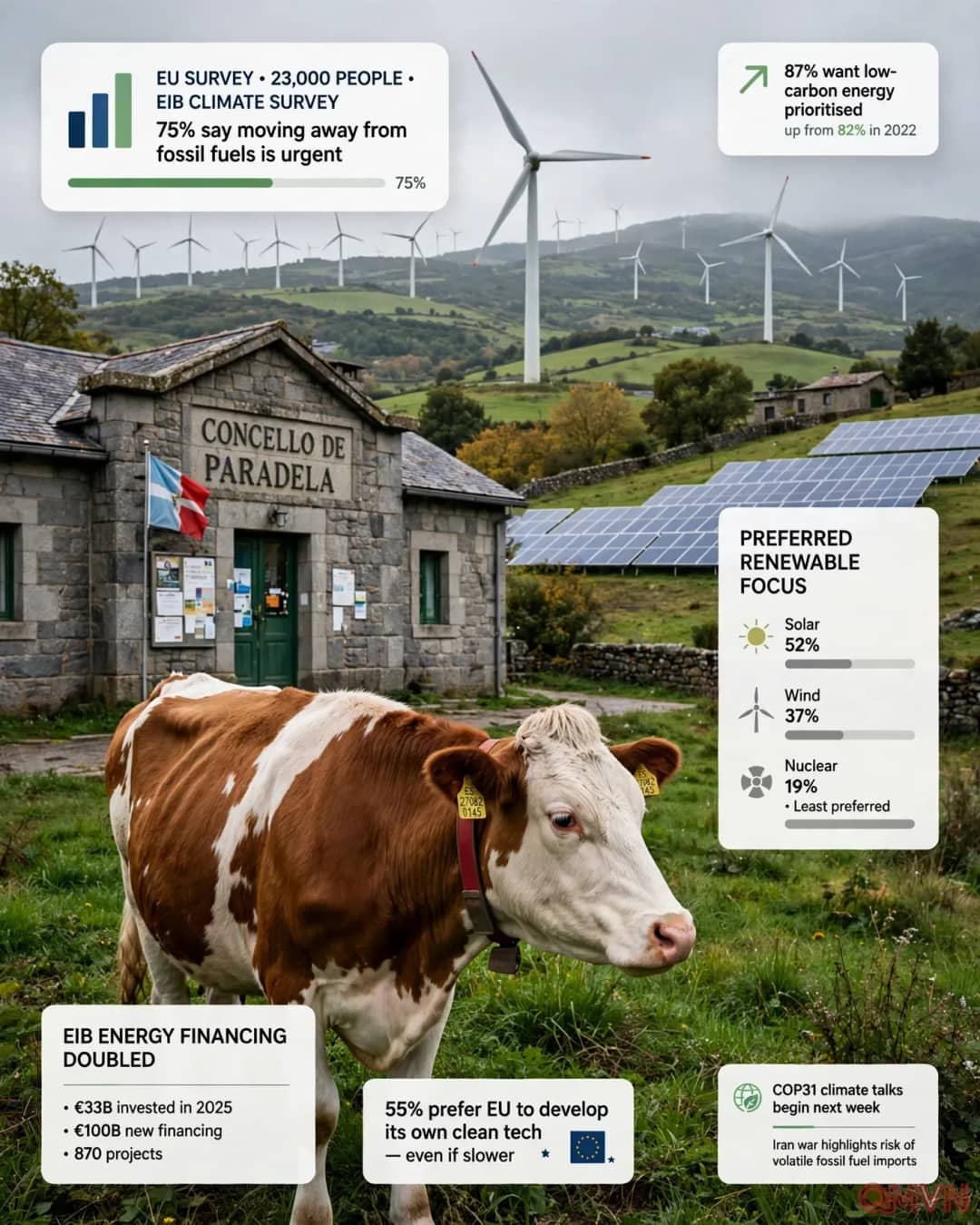
The eighth edition of the EIB Climate Survey, executed in partnership with research agency Ipsos bva across all 27 European Union member states, recorded historically high mandates for clean power development. Some 87% of surveyed citizens stated that the continental transition to low-carbon energy should be prioritized by governments, an increase from the 82% recorded during the previous regional energy shock of 2022. Escalating wholesale fuel spikes triggered by foreign military hostilities have cemented the realization that relying on external oil and gas imports exposes European households to acute, unmanageable cost burdens.
When evaluating zero-carbon energy architectures, European respondents expressed clear sectoral preferences. Solar technology emerged as the premier developmental focus, championed by 52% of respondents, followed by wind installations at 37%.
In contrast, nuclear power proved significantly less popular among surveyed citizens, garnering only 19% support as a prioritized energy trajectory. The public mandate illustrates a strong consumer desire for decentralized, rapidly deployable clean infrastructure that provides direct, localized relief to regional power tariffs.
In a rapidly shifting geopolitical landscape, this is both the right thing to do for the planet and the smart thing to do for our economies, in order to bring down energy costs for businesses and households.
Technological sovereignty favored over imports alongside record EIB green capital
Beyond calling for operational urgency, European citizens articulated an unmistakable preference for continental industrial self-reliance. Despite Asian supply dominance across battery cells, solar wafers, and wind turbines, a commanding 55% majority of respondents indicated they would prefer the EU to cultivate and manufacture its own indigenous clean technologies, even if doing so resulted in a more measured deployment schedule.
75% of EU citizens view abandoning fossil fuels as urgent; 87% demand that politicians prioritize renewable power.
Solar power ranks as the primary clean energy focus with 52% citizen support, leading wind at 37% and nuclear at 19%.
55% of Europeans prefer developing domestic clean technologies rather than importing foreign alternatives.
Annual energy financing deployed by the European Investment Bank (EIB) has doubled since 2022 to reach €33 billion ($37.06 billion).
The EIB executed €100 billion in total new infrastructure financing and advisory allocations across 870 projects over the past year.
Underpinning this societal transition, the European Investment Bank has dramatically expanded its lending capacity. Annual clean energy allocations disbursed by the public lending institution have doubled since 2022, reaching 33 billion euros ($37.06 billion) in 2025, contributing to a total organizational financing envelope of 100 billion euros across more than 870 sustainable projects. This capital deployment demonstrates the institutional capability of European public banking to transform public consensus into physical clean generation assets.
Public support for clean energy is underpinned by an acute recognition that import dependence on volatile foreign hydrocarbons is an untenable economic vulnerability.