MAIN ARTICLE
Accessible prices require a closer look at the menu
What stands out in Camilla Long’s account is the gap between Nakimushi’s fashionable appearance and a manageable bill. She describes lunch for two costing less than £60 and highlights £12 ramen. Her comparison with prices from the 2010s expresses a sense of value, rather than an economic measurement. The useful point is that a meal’s quality need not be demonstrated by an expensive total. A restaurant can show ambition through its cooking while leaving room for a relatively modest order.
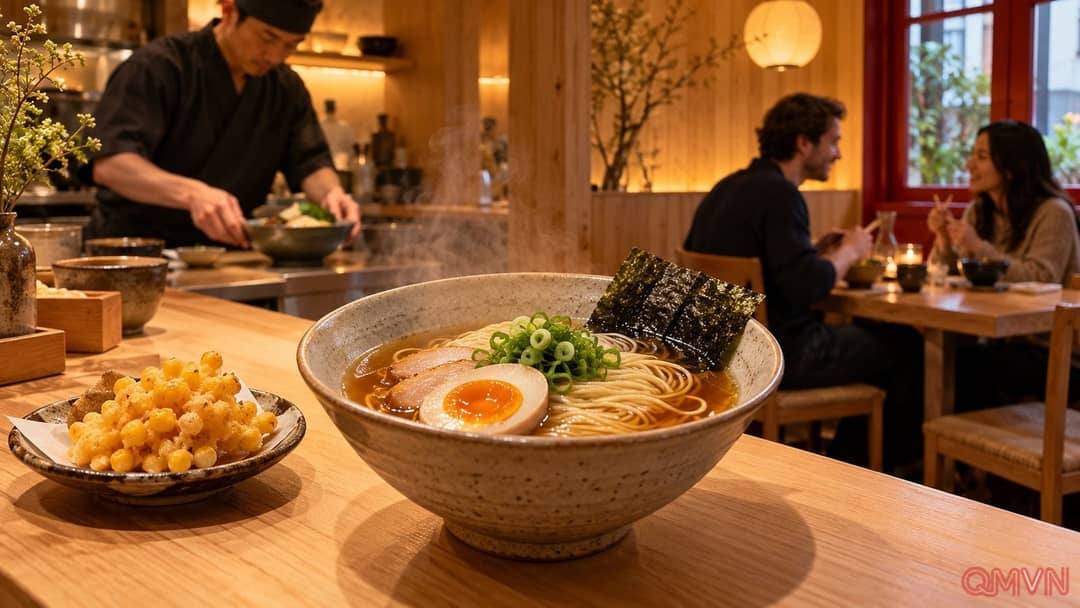
Checked on October 11, 2026, the restaurant’s website links to a sample dinner menu listing corn tempura at £6, red prawn gyoza at £9, lobster ramen at £24 and dessert at £6. Together those dishes total £45 before drinks or other applicable charges. This is an ordering illustration, not an advertised package. The £12 bowl in Long’s review therefore cannot stand for every evening meal. Reading prices by dish and service makes the claim of affordability useful rather than misleading.
Two chefs broaden the story of Japanese cooking
Nakimushi brings two areas of expertise into one permanent home. Robin Kosuge is associated with Robin’s Ramen, while Yuji Shimokawa Kelly created Urchin; both concepts developed at Supermarket of Dreams. Ramen provides a familiar anchor, while smaller plates and hot dishes allow a broader meal.