MAIN CONTENT
An order book through 2033 is visibility, not instant revenue
In its November 19 business update, Seatrium put the net value of its contracted work at S$12.2 billion across 35 projects as of September 30. Projects extending to 2033 provide unusually long visibility for an industrial company. But the backlog is neither cash in the bank nor profit already earned: revenue recognition depends on construction progress, contractual milestones, and delivery. Distinguishing binding contracts from early-stage proposals is essential when evaluating future results.
The Edge Singapore noted that the order book had fallen from S$13.3 billion at the end of June. Deliveries and work completion can reduce a backlog even when activity remains healthy, so the decline alone does not prove weakening demand. It nevertheless underlines the importance of continually replacing completed work with attractive new projects.
Floating LNG and power infrastructure drive new opportunities
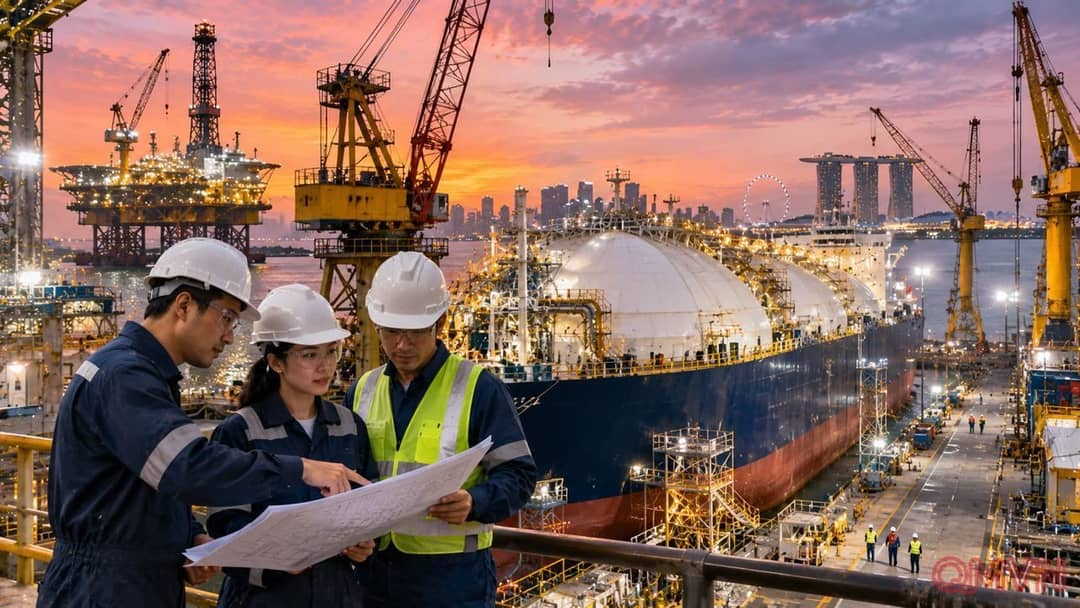
Year-to-date new orders totaled approximately S$1.7 billion. They include three floating storage and regasification unit conversions associated with Karpowership and Excelerate Energy, vessel integration assignments for SBM Offshore and MODEC, and the conversion and integration of five floating power plants for Karpowership.
Seatrium also expects to complete four offshore rigs for Keppel’s RigCo. The mix connects conventional offshore skills with a changing energy market.
Floating LNG receiving facilities can provide an alternative to permanent land-based import terminals, while power ships may offer quicker additional generating capacity. Both appeal to countries seeking more dependable energy supply. Their commercial prospects, however, still hinge on government approvals, client funding, gas availability, emissions policies and the practical difficulty of refitting complex vessels.
Margins matter more than the headline backlog
Seatrium said third-quarter revenue maintained its operating run rate while gross margins continued improving from the first half. A better project mix, tighter spending controls and disposals of non-core businesses have supported that progress. Completed disposals are expected to deliver recurring annualized savings exceeding S$50 million, and further portfolio changes are intended to simplify operations.
For perspective, 2025 net profit more than doubled to S$323.6 million while revenue reached roughly S$11.5 billion. The latest guidance is for 2026 underlying net profit to be materially higher than its 2025 counterpart. It is not a final earnings figure; underlying results exclude one-off gains on divestments and legal or corporate claims. Investors must distinguish that forecast from a guaranteed outcome.
From expression of interest to binding work
Seatrium has signed a letter of intent with Golar concerning a third floating LNG conversion, aiming to finalize a contract before the end of 2026. Such a letter signals an opportunity, not necessarily a completed agreement ready for revenue recognition. This distinction matters because large infrastructure deals may change scope or timing before commercial terms become binding.
Chief executive Chris Ong pointed to improving order-win momentum as evidence of demand for dependable energy systems. Whether that demand produces shareholder value will depend less on announcements than on schedule discipline, engineering quality, milestone payments and the margins achieved when vessels and offshore assets are finally delivered.