MAIN ARTICLE
Why the AI economy increasingly needs light
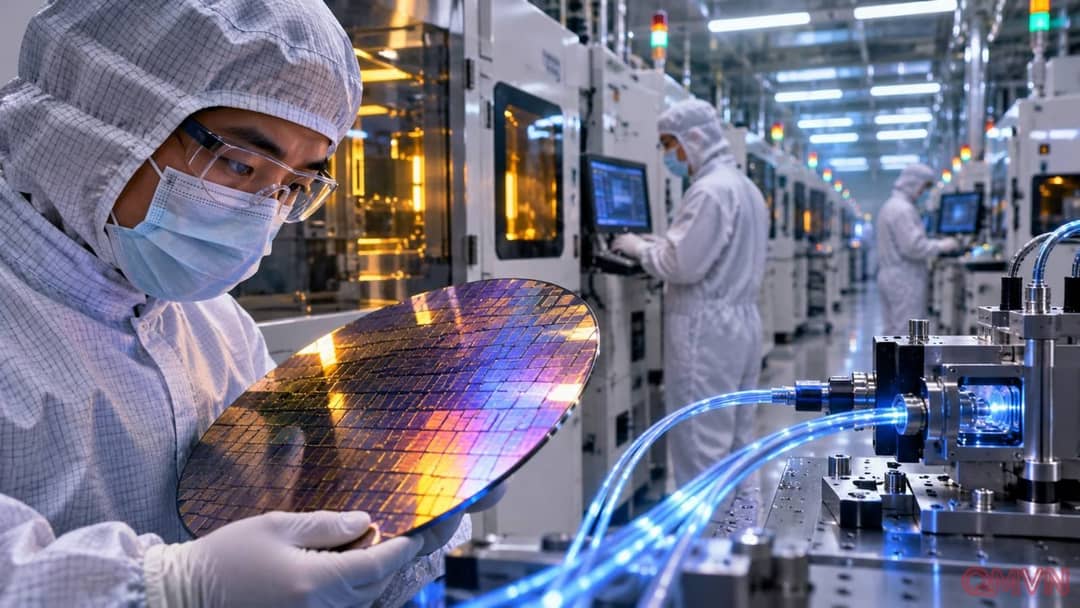
An AI data centre requires more than powerful processors. Thousands of accelerators must exchange extraordinary volumes of information quickly and without wasting electricity. As conventional electrical connections run into challenges involving bandwidth, distance and heat, optical links are becoming strategically important. Silicon photonics uses structures fabricated on silicon to guide and manipulate light, potentially supporting high-speed communications modules inside and between computing systems.
Hua Hong has not said it will produce every component of an optical networking system. Chairman and president Bai Peng described an ambition to participate in the range of silicon-based devices found in optical modules. That may include supporting circuitry, controllers and specialised manufacturing processes; it should not be confused with a claim that the company already controls every step in making an optical transceiver. The distinction matters because management is describing a route into a larger supply chain, rather than announcing a finished product.
The opportunity extends beyond the headline processors that dominate public discussion of AI. Power-management circuits, microcontrollers, memory components and high-speed links can determine how efficiently an entire cluster operates. A specialised foundry with a broad process portfolio can benefit from these supporting technologies even without competing directly at the most advanced logic nodes.