Guinean train drivers learn their trade in China as railway training becomes a pillar of Beijing's partnerships in Africa
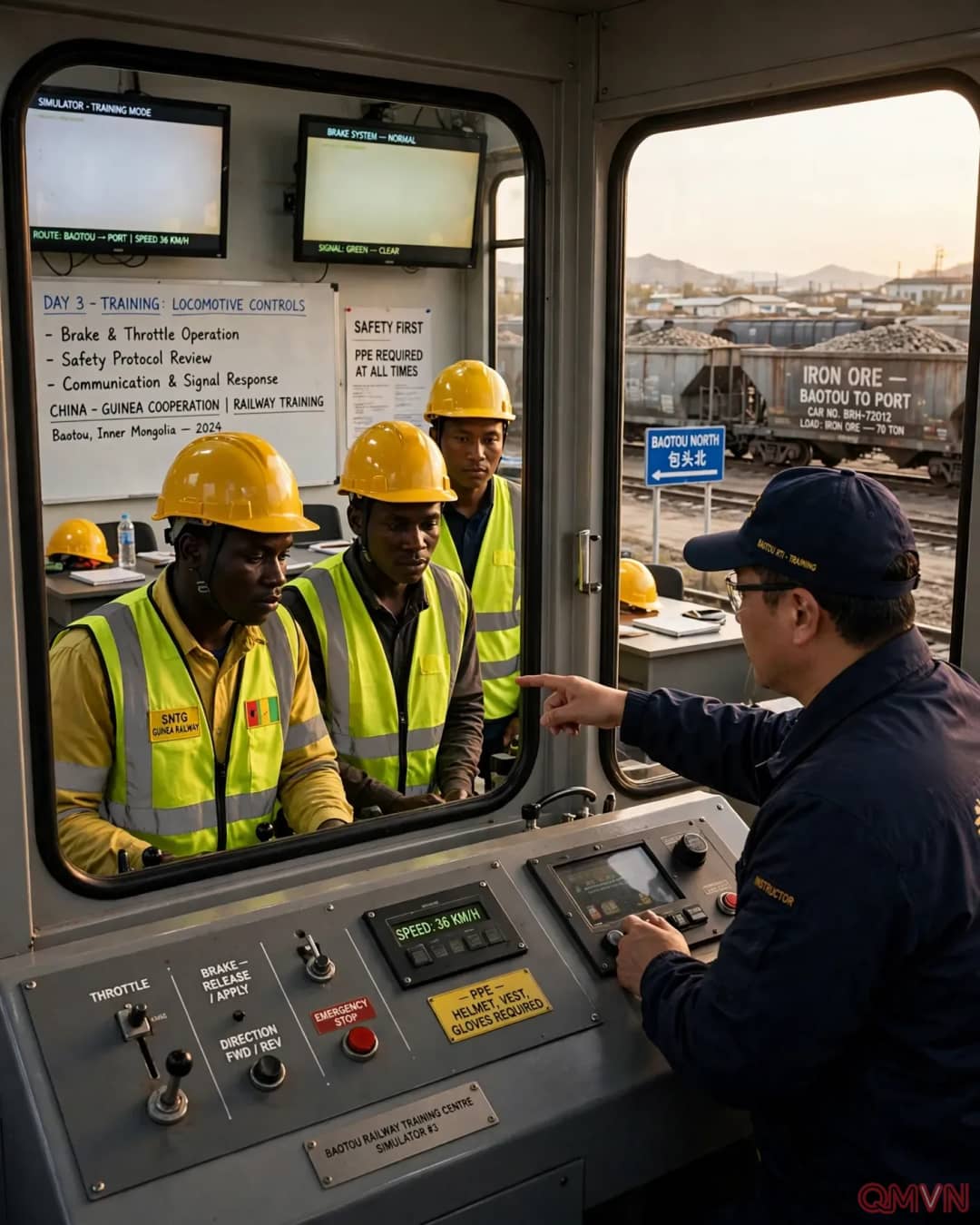
In the industrial city of Baotou, in China's Inner Mongolia region, 62 railway workers from Guinea are spending four months learning to drive and maintain locomotives. When they return home, those who pass their final assessment will help run the Trans-Guinean railway, the new line that carries iron ore from the giant Simandou mine to the Atlantic coast. The course, part of a programme known as Simandou Academy, combines classroom lessons, simulators and hands-on work with locomotives, and runs until February. Guinea's presidency says the aim is to prepare Guineans to operate and maintain the country's new railway infrastructure themselves. The programme reflects a broader pattern in China's engagement with Africa, where building railways is increasingly accompanied by training the people who will run them. For Guinea, it is a test of whether one of the world's largest mining projects can deliver lasting skills and jobs, not just exports.
Tiếng Nói QUANG MINH·2 min read · 4 min listen·21 November 2026, 03:17 EST·
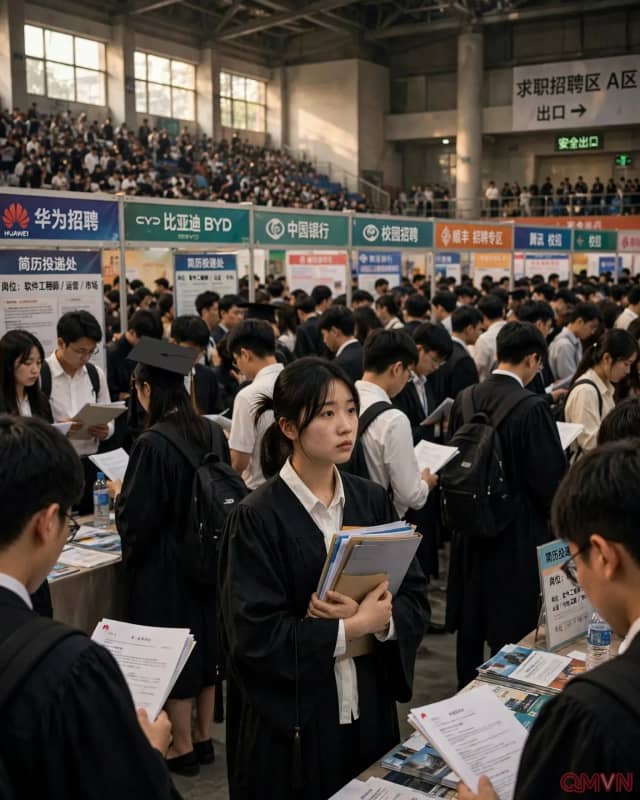
AI-generated illustration
From the classroom to the cab
The Guinean trainees left for China in October in a group of about 60, according to local reports. In Baotou, they are studying signalling, safety rules and locomotive systems before practising on simulators and real equipment. Graduates are expected to take up roles on the line that links the mines in southeastern Guinea to the coast.
Similar training has already produced results. Chinese officials involved in the project cite the example of a young Guinean woman who studied at the project's railway institute and now drives trains carrying ore from the mountains to the coast.
Advertisement300 × 250
Guinean trainees have also attended vocational courses at railway colleges in Tianjin, and teachers from Baotou have travelled to Guinea to train wagon inspectors.
A project on a vast scale
Simandou is often described as the world's largest known untapped deposit of high-grade iron ore:
The project includes more than 600 kilometres of new trans-Guinean railway and new port facilities on the Atlantic coast.
It is developed by the Guinean government with Rio Tinto and Chinese partners including Baowu and Chinalco, through SimFer and the Winning Consortium Simandou, with total investment of more than $20 billion.
Operations officially began in November 2025, and the first shipment of ore left Guinea in December 2025, arriving in China in January 2026.
At full capacity, the partners aim to export up to 120 million tonnes of iron ore a year.
Training as part of the deal
Guinea's government has framed Simandou as a chance to prove that natural resources can drive broader development, not just raw exports. Its Simandou 2040 programme includes plans for local skills, processing and infrastructure, and the training of train drivers, engineers and seafarers is a central part of that promise. In April, 18 young Guineans left for maritime training in Jiangsu to prepare for shipping operations linked to the project.
For China, training programmes help secure the long-term operation of infrastructure built by Chinese companies, spread Chinese technical standards and build goodwill among local communities and governments.
Questions that remain
Critics of large mining projects in Africa caution that training a few dozen workers at a time is modest compared with the scale of the investment, and that many senior technical and management roles are still filled by foreign staff. Construction itself relied heavily on equipment and experienced workers brought from China, because skilled local labour was scarce.
Supporters respond that capacity takes time to build and that each cohort of trained Guineans reduces dependence on outside expertise. The real measure of success will be whether Guineans eventually run the railway, port and mines themselves, and whether the benefits reach the communities along the line.
EVENT BACKGROUND.
China's role in African railways stretches back decades. In the 1970s, it financed and built the TAZARA railway linking Tanzania and Zambia, a symbol of solidarity in the post-colonial era. In the 2010s, under the Belt and Road Initiative, Chinese companies built major lines such as the Addis Ababa–Djibouti railway and Kenya's standard gauge railway between Mombasa and Nairobi. These projects improved transport links but also raised concerns about debt, cost overruns and how much local expertise was developed, prompting Beijing to emphasise vocational education and technology transfer, including through training workshops and partnerships with African colleges. Guinea, which holds some of the world's largest reserves of bauxite and iron ore, waited decades for Simandou to be developed, as legal disputes, corruption allegations, changes of government and the challenge of building infrastructure across difficult terrain repeatedly delayed the project. After a military government led by Mamadi Doumbouya took power in 2021, authorities pushed partners to move faster and to commit to local benefits. Supporters see Simandou as a transformative opportunity, while sceptics warn of environmental impacts and the risk that wealth will bypass ordinary Guineans. The central question is whether skills, not only ore, will flow along the new tracks.
Key takeaways
Infrastructure lasts only as long as the people trained to run it.
True partnership is measured by how much knowledge stays behind when the builders leave.
Natural wealth becomes national strength only when it is matched by human capacity.
Subscribe to the QMVN newsletter
A daily morning digest - only stories worth reading, no spam.