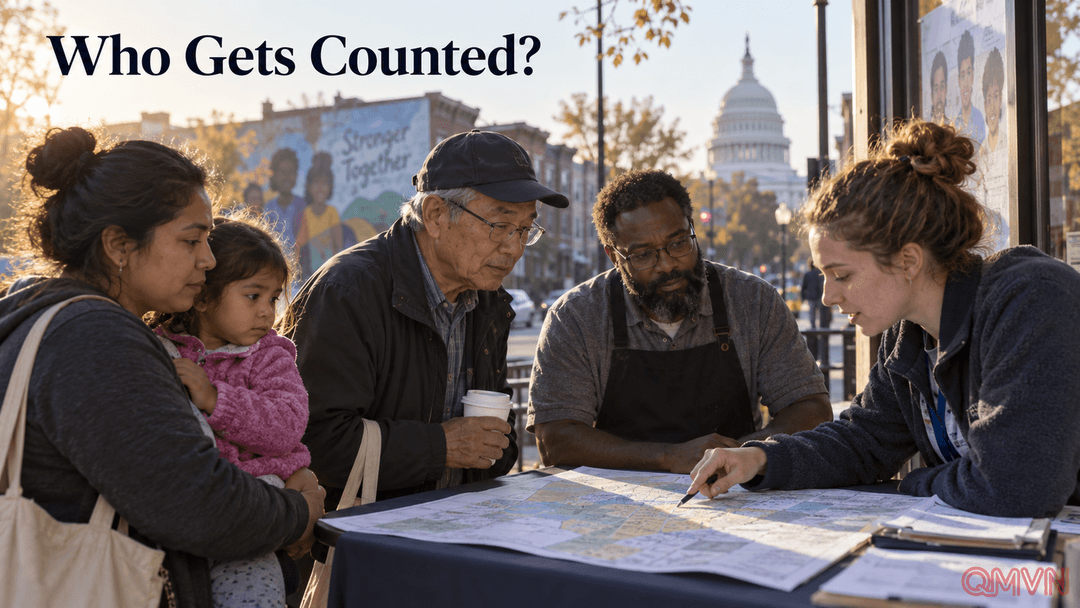
A proposal that revisits the population count
The Commerce Department has opened public comment on directions for the 2030 Census. Its proposal considers counting only citizens and lawful permanent residents for House apportionment, rather than the broader population living in each state. It also asks whether race, ethnicity and certain gender-identity-related information should continue to be collected.
These are not yet binding rules. They face consultation, technical review and likely court challenges. Still, their appearance shows how a once-a-decade count has become a meeting point for immigration policy, voting power and the government’s understanding of national needs.
Why a count reaches into daily life
The census does more than produce a portrait of population. It underpins the distribution of all 435 House seats among states, informs many federal programs and helps local governments plan schools, health services, transport and disaster response. A small distortion in fast-growing places can shape consequences for an entire decade.
Race and ethnicity data are also used to monitor civil-rights enforcement, health gaps and language access. Opponents of removing the questions say communities would find it harder to document their needs. Good data do not automatically create fairness, they argue, but the absence of data makes fair decisions harder to test.