Discovery at Inamuragasaki and Signal From the Seabed
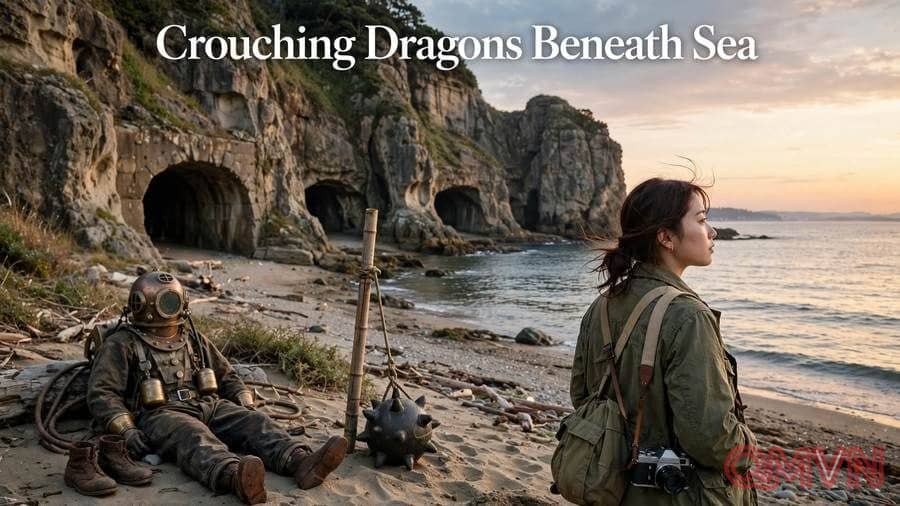
Kanade Hamamoto, 25, had spent years at Inamuragasaki, a scenic seaside spot, without knowing its hidden history. A friend mentioned that remains of a military base could still be seen near the cape, in tunnels cut into cliff face. Curious, she searched online and came across term Fukuryu Special Attack Unit for first time. The discovery became bilingual photo book titled ー・・, rendered in English as Arrived at the seabed, referring to Morse code style signal one long tug and two short ones divers would use to tell colleagues on shore they had reached bottom.
Once underwater, fukuryu could communicate only through coded tugs on a rope. Their bodies were sealed inside heavy diving suits, with weighted shoes and helmets fastened shut with four screws. As those screws were tightened, surviving members described a piercing high pitched sound right next to their ears. In his memoirs, former fukuryu Takaichiro Monna wrote that it felt as if I were being placed in a coffin while I was still alive. Even years afterwards, they could still hear whistling sound.
A Different Kind of Kamikaze and Last Line of Defense
The first organized kamikaze attack came during Battle of Leyte Gulf off Philippines in October 1944, when Lieutenant Yukio Seki crashed his Zero fighter into US Navy escort carrier St. Lo, causing explosion that sank vessel in minutes.