MAIN ARTICLE
When retired equipment becomes a keepsake
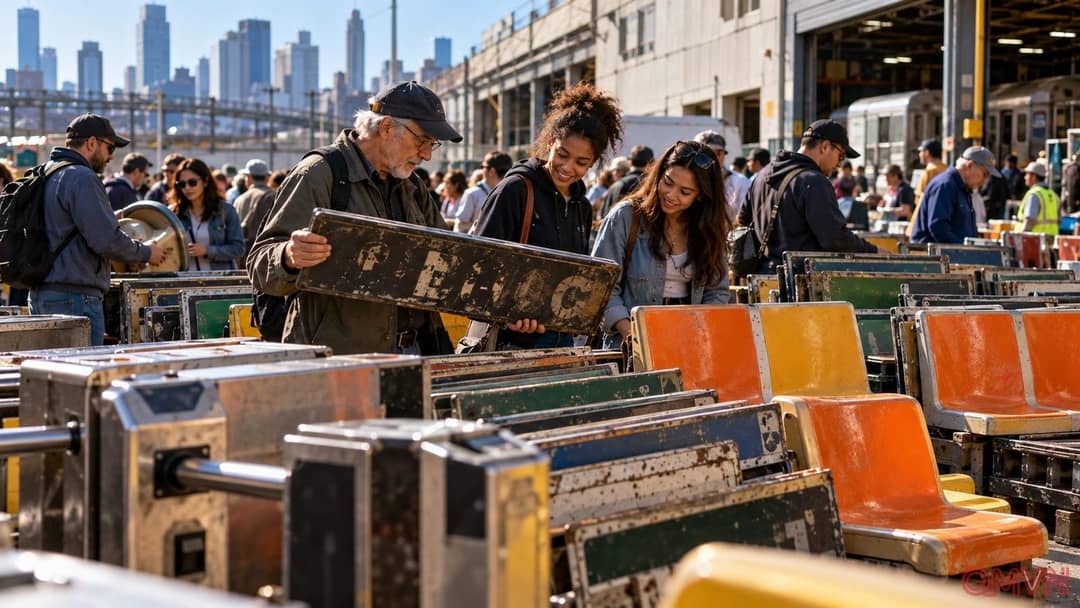
The outdoor sale in Brooklyn offered anything but ordinary souvenirs. Visitors examined station nameboards, train seats, handholds and hardware that had once played practical roles in moving millions of commuters. The Metropolitan Transportation Authority (MTA) promoted the inventory as “perfectly imperfect”: objects whose visible wear is part of their appeal rather than something to conceal.
Prices showed how seriously collectors take these objects. Reporting from the event put medium station signs at about $500, larger examples above $1,000 and iconic orange plastic seats at around $900. Retired yellow MetroCards offered an accessible alternative at roughly $6. Buyers could therefore take home either an imposing piece of transport infrastructure or a modest token small enough for a wallet.
The intimate meanings behind public objects
For 61-year-old Nori Juba, a Grand Central sign carried the names and route numbers he encountered on daily journeys. Speaking to AFP, he acknowledged the subway’s age and imperfections while explaining that such qualities also made the metalwork distinctively New York.