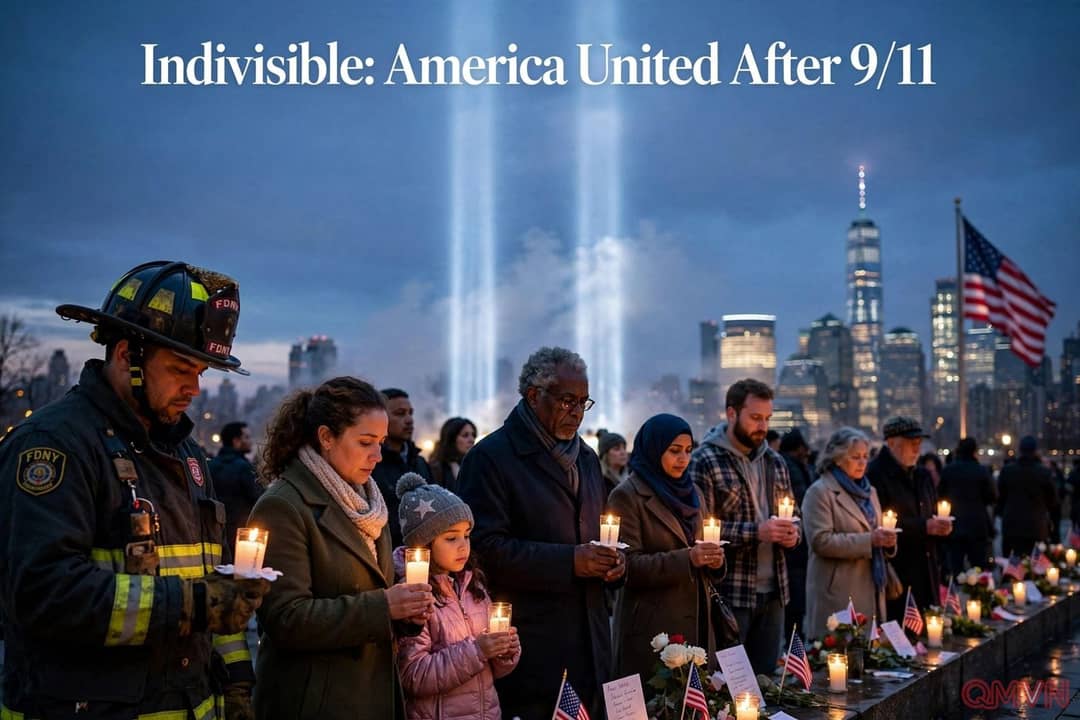
When America Became Indivisible
On the morning of September 11, 2001, as hijacked planes struck the World Trade Center, the United States stopped. In hours, 2,977 lives were lost, yet the image that lingered for many was not only smoke but solidarity. According to AP, Democrats and Republicans stood together on the Capitol steps singing God Bless America, blood banks had lines around the block, and strangers carried flags to firehouses. The word indivisible from the Pledge of Allegiance suddenly felt literal, not rhetorical.
The Wall Street Journal essay that inspired this reflection called it a brush with indivisibility, a fleeting touch of wholeness. A Reuters/Ipsos poll in August 2026 found 75 percent of Americans still view 9/11 as the most impactful event of their lifetime. That unity did not erase grief, but it showed a nation could choose compassion over vengeance when it mattered most, and that memory still shapes how people think about belonging.
Those Who Remain and the Legacy of Courage
Caroline Ogonowski, whose father Captain John Ogonowski piloted American Airlines Flight 11, gave birth this year to a boy she named John after her father. She told Reuters about a new sadness, that her father will never meet his grandson, and her son will never know his grandfather. She took the baby to her father's grave last week and will attend a memorial in Boston. Her story echoes thousands of families where grief has turned into gentle continuity.