MAIN ARTICLE
When geopolitics reaches the shipping lane
Maritime trade depends on routes that no single port can control. When tensions rise in the Middle East, security risks can force changes in sailing patterns, raise insurance premiums and expose operators to higher fuel costs. Industry representatives cited by the South China Morning Post viewed indications that Washington might refrain from additional attacks on Iran as a welcome signal. Such a development, however, would provide only limited relief rather than a guarantee of durable stability for international routes.
Hing Chao, co-founder and executive chairman of the Hong Kong Chamber of Shipping, described the city as vulnerable to conflicts among major powers. For carriers, the pressure extends well beyond physical dangers at sea: trade rules, taxes and market access can shift quickly. A resilient transshipment hub must therefore diversify exposure, offer dependable financial services and enable customers to assess the costs of moving cargo before vessels depart.
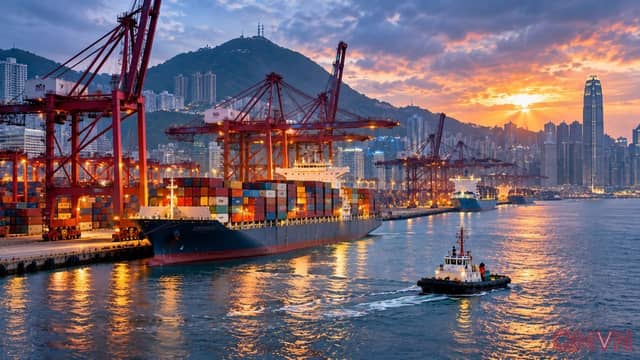
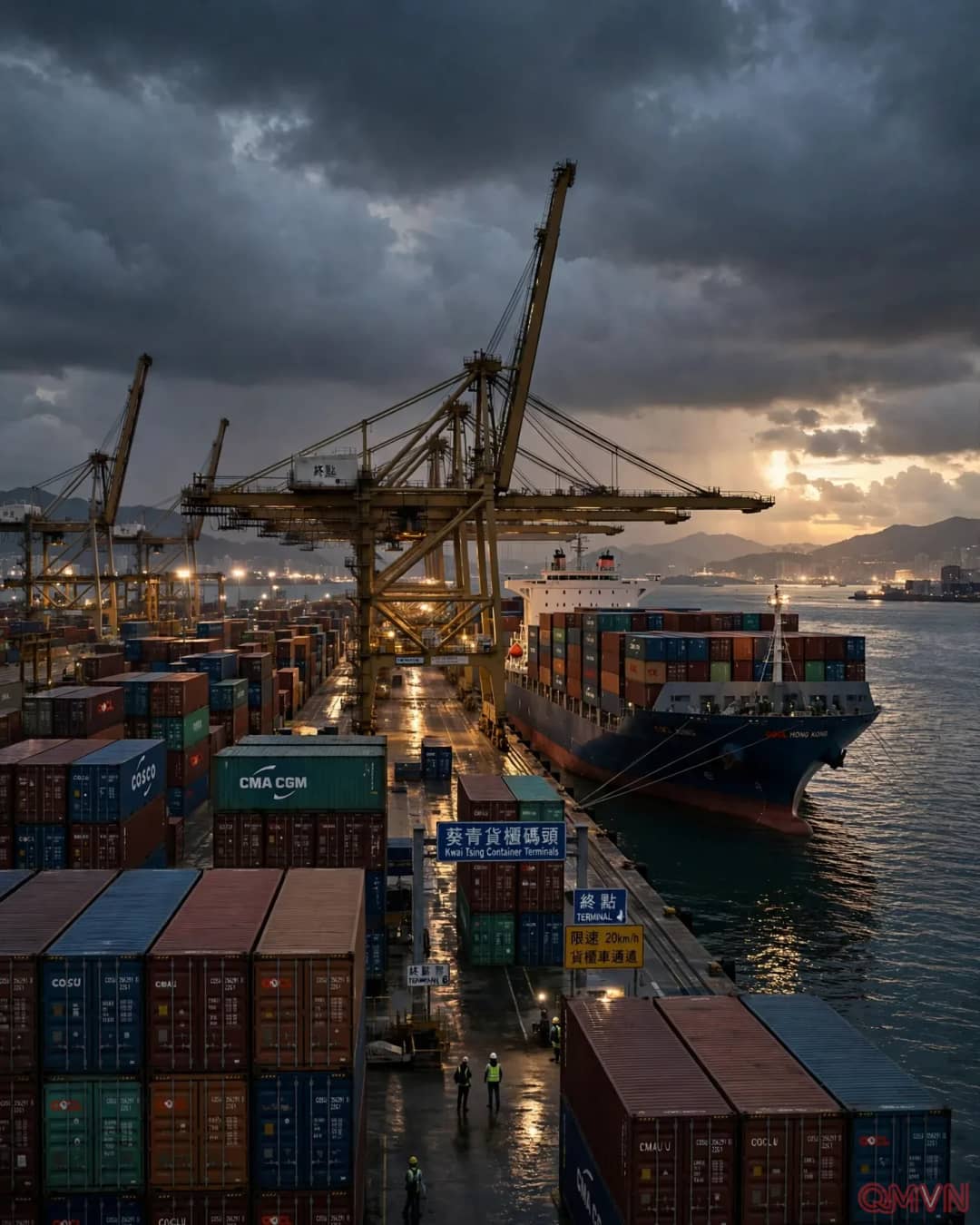
Why Kwai Tsing still matters
Falling container volumes can make a historic port seem less relevant. Official Hong Kong statistics show throughput declining from 20.77 million TEUs in 2017 to 12.995 million in 2025. A TEU represents the capacity of one standard twenty-foot container.
The trend does not stem from a single crisis. Growing mainland and Southeast Asian competitors, changing shipping networks and decisions by freight owners about routing have all reshaped the competitive landscape.
Yet Kwai Tsing remains an essential physical asset, handling about 9.66 million TEUs in 2025, the majority of Hong Kong’s container traffic. Government figures show that movements between Hong Kong and mainland China accounted for approximately 47.8% of the port’s laden container volume that year, with much of that trade associated with the Pearl River Delta. The figures underline the port’s connections to factories, exporters, professional services and logistics networks beyond its waterfront.
Competing through service rather than scale alone
The second quarter of 2026 delivered mixed signals: port cargo tonnage edged down 0.2% from a year earlier, while container throughput rose 1.1% to 3.24 million TEUs. One better quarter does not reverse a prolonged decline, but it helps distinguish short-term movement from structural change. Restoring competitiveness is less about attracting every possible vessel than about faster handling, reliable scheduling and specialized services for which customers see clear value.
In a November 4 response to legislators, Hong Kong authorities emphasized smart operations, green transition and digitalization at Kwai Tsing alongside closer cooperation within the Guangdong–Hong Kong–Macao Greater Bay Area port network. Better data exchange, transparent procedures and cleaner marine fuels could strengthen the offer to carriers. Technology spending, however, has to be paired with reasonable pricing and workforce training: software alone cannot create cargo demand.
The mainland opportunity and its limits
Drawing on mainland China’s commercial scale need not mean depending on a single route or customer group. Hong Kong can position itself between Chinese manufacturers and international partners by expanding maritime law, insurance, ship finance and supply-chain management. When vessels reroute, the ability to resolve disputes and manage unforeseen risks may be as valuable as physical loading speed.
A successful transition should be judged by higher-value employment and confidence among diverse trading partners, not only by rankings based on cargo tonnage. Hong Kong retains infrastructure and commercial relationships that can support adaptation, but political pressure, regional competition and energy volatility remain. The mainland opportunity will translate into lasting strength only if it is combined with openness, transparency and continual improvement.