MAIN STORY
Why the first 72 hours matter
The central idea is a three-day cushion of self-sufficiency. During a power cut or water outage, charging a phone, preparing meals or receiving reliable public warnings may become difficult. A modest collection of essentials, kept where everyone can find it, can make the first hours of disruption less dangerous and reduce unnecessary pressure on frontline responders.
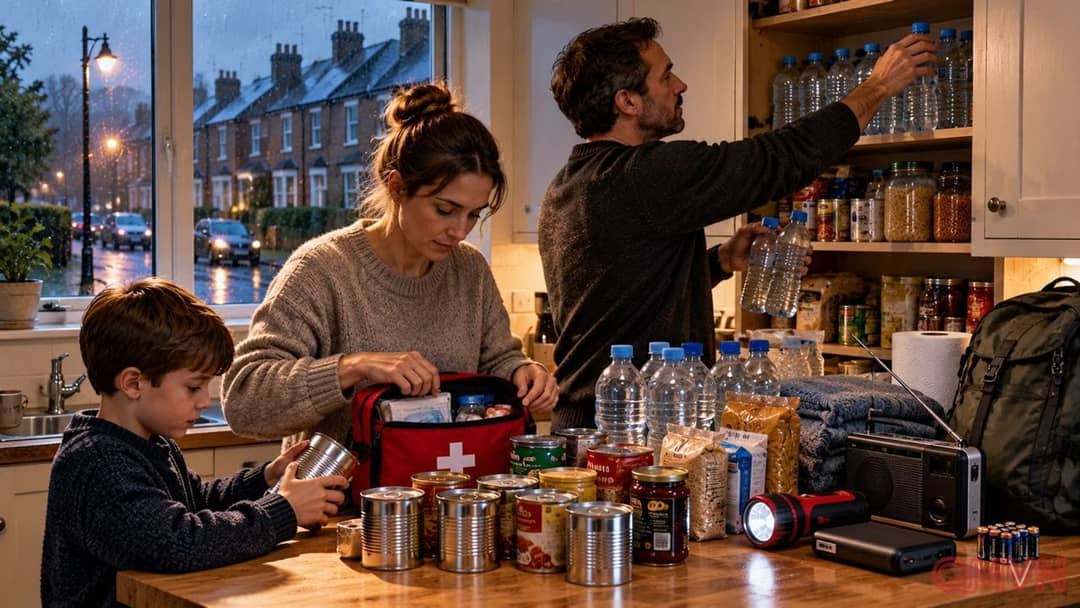
Britain’s official “Be Ready” checklist suggests bottled water for three days, allowing about three litres of drinking water per person per day; cooking and hygiene can require more. It recommends shelf-stable foods that need neither refrigeration nor cooking. The guidance is deliberately flexible: the needs, budgets and storage space of households vary widely, and preparation should fit those realities rather than require expensive purchases.
The kit goes beyond food and water
The government’s suggested essentials also include a torch, spare batteries, a charged power bank, a battery-powered or wind-up radio, first-aid materials, important medication, hygiene products, warm clothing and some cash in case electronic payments fail. Parents should consider baby formula and nappies, while pet owners need provisions for their animals.