MAIN ARTICLE
Losing a job changes how a promise sounds
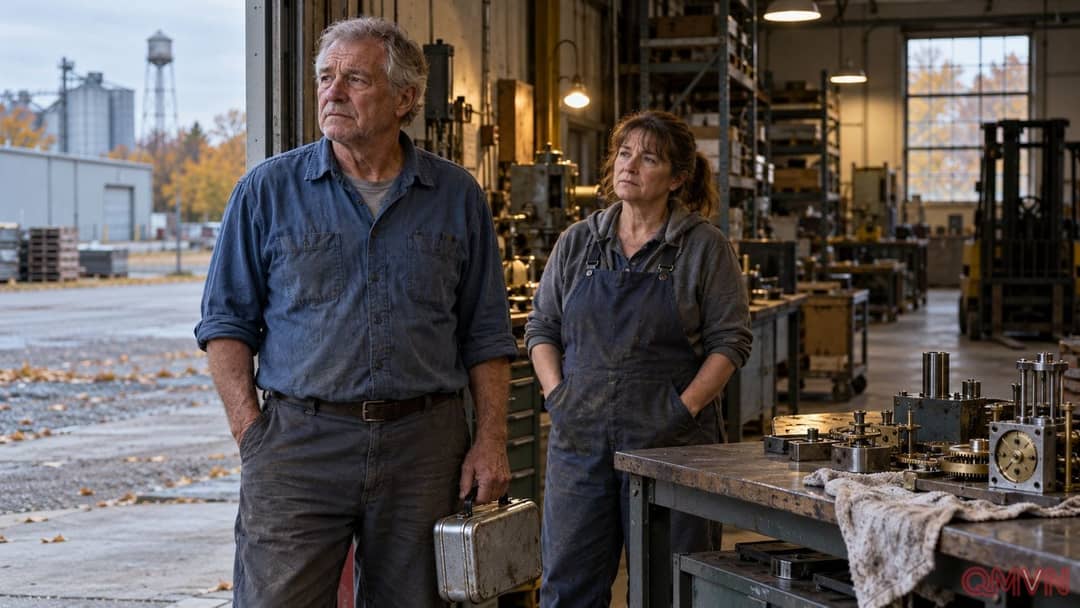
Nelson Vandermeer, 62, voted Republican for decades. According to AP, he lost his product design job when Howard Miller closed its factory in Zeeland, Michigan, in 2025, laying off nearly 200 workers. The century-old clockmaker depended on components from overseas. Vandermeer believes tariffs helped cost him his livelihood and plans to vote for Democratic candidates in November. For him, a debate usually conducted through trade balances and negotiating strategies has become a personal question about the disappearance of a valued job.
Howard Miller was already struggling as demand for traditional decorative clocks weakened. Expanding into furniture did not eliminate its reliance on imported glass and components. These factors need to be considered together: tariffs can intensify pressure on a vulnerable business, without being the sole explanation for its closure. Making that distinction does not diminish workers’ losses. It helps identify which problems a change in trade policy might address and which also involve consumer preferences or the company’s underlying market.
A protected factory can also depend on imports
Tariffs can give domestic products an advantage against competing imports. But American manufacturers frequently buy foreign materials or components to complete their own goods. Higher input costs force choices about margins, selling prices, suppliers and production.
If customers buy less after prices rise, the pressure can travel from purchasing departments to factory shifts. Suitable domestic substitutes are not necessarily available at the required scale, quality or delivery time. The same measure can therefore help one producer while increasing another producer’s costs.
AP reports that Vornado Air in Kansas cut more than 70 jobs in February, blaming higher imported component prices. Winnebago Industries reduced employment by 200 in 2025 after metal and electronics import costs rose. There is a historical precedent: Aaron Flaaen and Justin Pierce’s research on the 2018–2019 tariffs found that input costs and trade retaliation could outweigh employment benefits from protection in more exposed manufacturing industries. That finding concerns an earlier period; it is not an automatic calculation of the effect on every factory in 2026.
National gains and household losses can both be real
The BLS report released on October 2 records 9,000 additional manufacturing jobs in September and a gain of 72,000 from the recent December 2025 low. This shows improvement across the sector, without identifying tariffs as its cause. Net employment figures also cannot erase particular local losses. Expansion at a factory in one region and closure in another can appear within the same positive total. Understanding the difference is essential when national statistics meet workers’ accounts of what happened in their own communities.
White House spokesperson Taylor Rogers told AP that output and construction activity signalled a revival, with manufacturing jobs to follow as new factories opened. Construction employment and employment operating a completed plant are different measures. Meanwhile, families must pay bills and find work immediately. Tracy Chew and several relatives lost jobs at the Case plant in Iowa, but AP notes that its closure was announced before the tariffs. Her disappointment illustrates how anger can focus on government even when the causes of a job loss extend beyond trade policy.
Disappointment has more than one route to the ballot box
Vandermeer has decided to change his vote, while other workers remain divided. AP describes Koby Bird, formerly in quality control at Bicycle Corp. of America, as supportive of tariffs in principle but frustrated by unpredictable changes that made business planning difficult. He still leans Republican because other issues matter to him. A voter can reject how a policy is implemented while retaining faith in its purpose or loyalty to the party offering it. Economic dissatisfaction does not produce a single political response.
In Pennsylvania, union leader Wendell Young says he senses workers’ attitudes changing after layoffs. Lower production at a customer can reduce orders for packaging suppliers and threaten further jobs. Such effects carry the tariff debate beyond one factory gate. Nevertheless, individual interviews cannot measure the entire electorate, and disappointment does not guarantee opposition victories. The midterms will test whether expectations of future employment remain persuasive to people facing present costs, and whether candidates can address the uncertainty those workers describe with more than another distant promise.