MAIN CONTENT
An encounter that puts people first
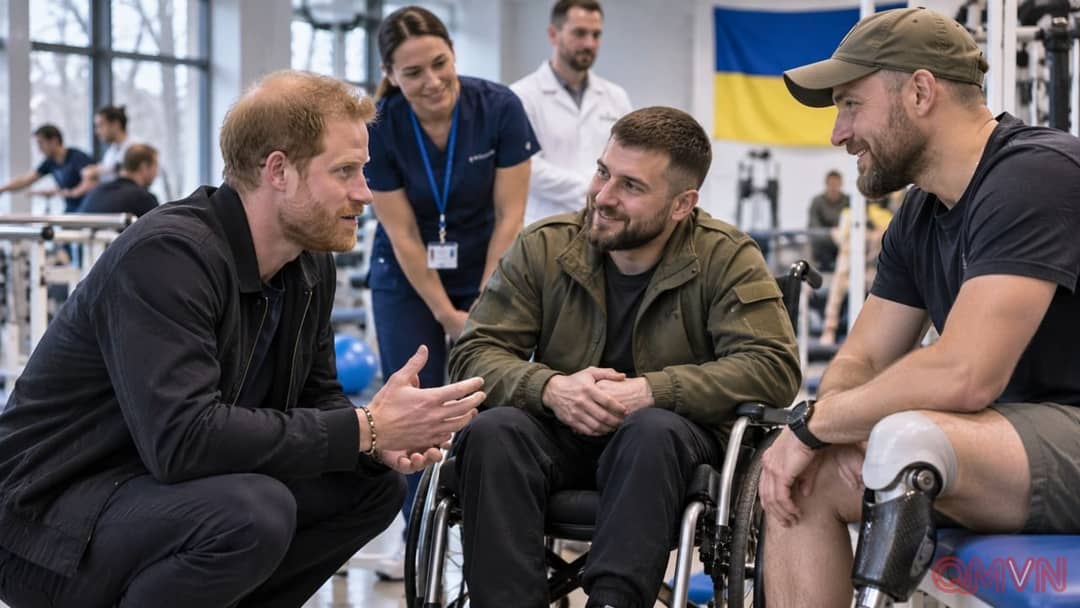
At the Superhumans Centre in Lviv, Harry spoke with patients learning to use prosthetic limbs and with specialists who help them regain everyday skills. Among those he met were Artem, a veteran who lost both arms, and Kostiantyn Vlasenko, a soldier whose ordeal near the front line ended in an extraordinary evacuation. Such meetings bring personal depth to accounts of the war that are frequently dominated by maps, weapons and casualty figures.
A former British Army officer who served in Afghanistan, Harry approached the conversations with an understanding of military life, although no two soldiers experience combat in the same way. He described wounded veterans as role models, emphasizing their continuing capacity to contribute to society. The attention matters because rehabilitation is not confined to physical recovery: a changed body can also affect work, relationships, identity and a person’s sense of belonging.
Sport as a beginning, not an endpoint
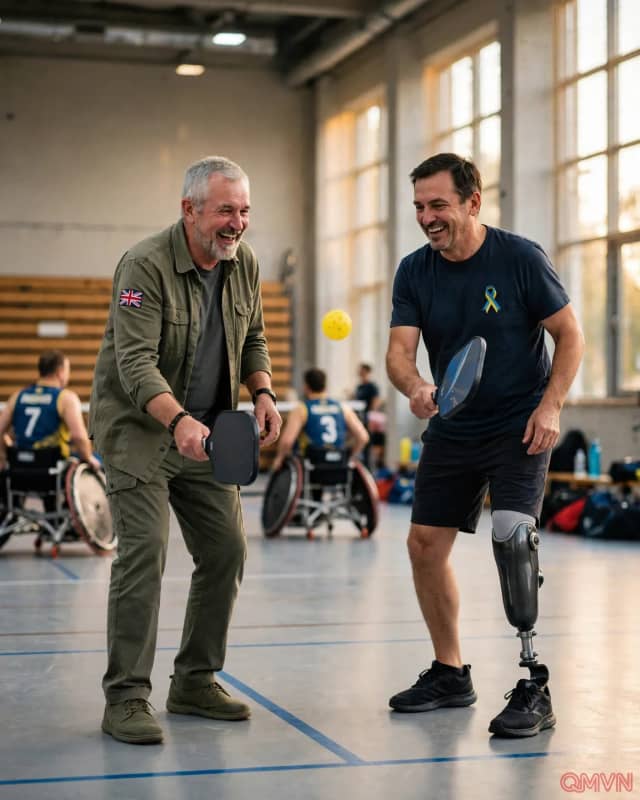
Harry watched wheelchair rugby and pickleball during Ukraine’s national Invictus selection events. Regional officials said roughly 500 veterans and serving personnel registered for the domestic competition, designed to help choose a delegation of around 60 athletes for Birmingham in 2027.
The prospect of Ukraine’s largest Invictus team shows how adaptive sport has developed into something more durable than a symbolic appearance at an international event.
Harry founded the Invictus Games in 2014 to support wounded, injured and sick military personnel and veterans. Athletic training cannot replace surgery or specialist psychological care, yet competition can nurture routine, companionship, determination and a renewed sense of agency. In Lviv, he also reunited with Valery Odainyk, a former Invictus competitor in Canada in 2025 who remains in military service. Their exchange illustrated how recovery and public service may overlap rather than form neatly separated chapters.
Lives behind the statistics
Clinicians in Ukraine face complicated injuries caused by explosions, gunfire and prolonged exposure to combat. A prosthetic limb is not a simple replacement for a lost one. Patients may need repeated adjustments, balance training, treatment for pain and extensive support as they reimagine ordinary tasks. People should not be reduced to heroic stories merely because they persevere through these difficulties; their preferences and frustrations matter, too.
That is why scenes of veterans laughing on a sports court carry more meaning than a momentary victory. The same athlete may later need a modified prosthesis, accessible transport or a workplace that accepts disability without prejudice. Support must include families and communities as well as doctors and coaches. Public praise becomes hollow if society celebrates resilience while leaving wounded people to negotiate basic services alone.
A commitment that must outlast the war
The duke argued that investment in service members must continue after they take off their uniforms. For policymakers and charities, this means reliable rehabilitation services, mental-health support, retraining, job opportunities and structures that do not disappear when international attention moves elsewhere. A high-profile visit can amplify a cause, but a patient’s long recovery depends on systems that function on ordinary weekdays.
Harry also suggested that Ukraine might one day host the Invictus Games after the war, an expression of hope rather than a confirmed hosting arrangement. The larger significance of his visit lies in a less glamorous ambition: people who survive violence should be able to build full, independent lives. Recovery is not completed when the cameras leave, a medal is awarded or a prosthesis is fitted. It is measured in the opportunities that remain.