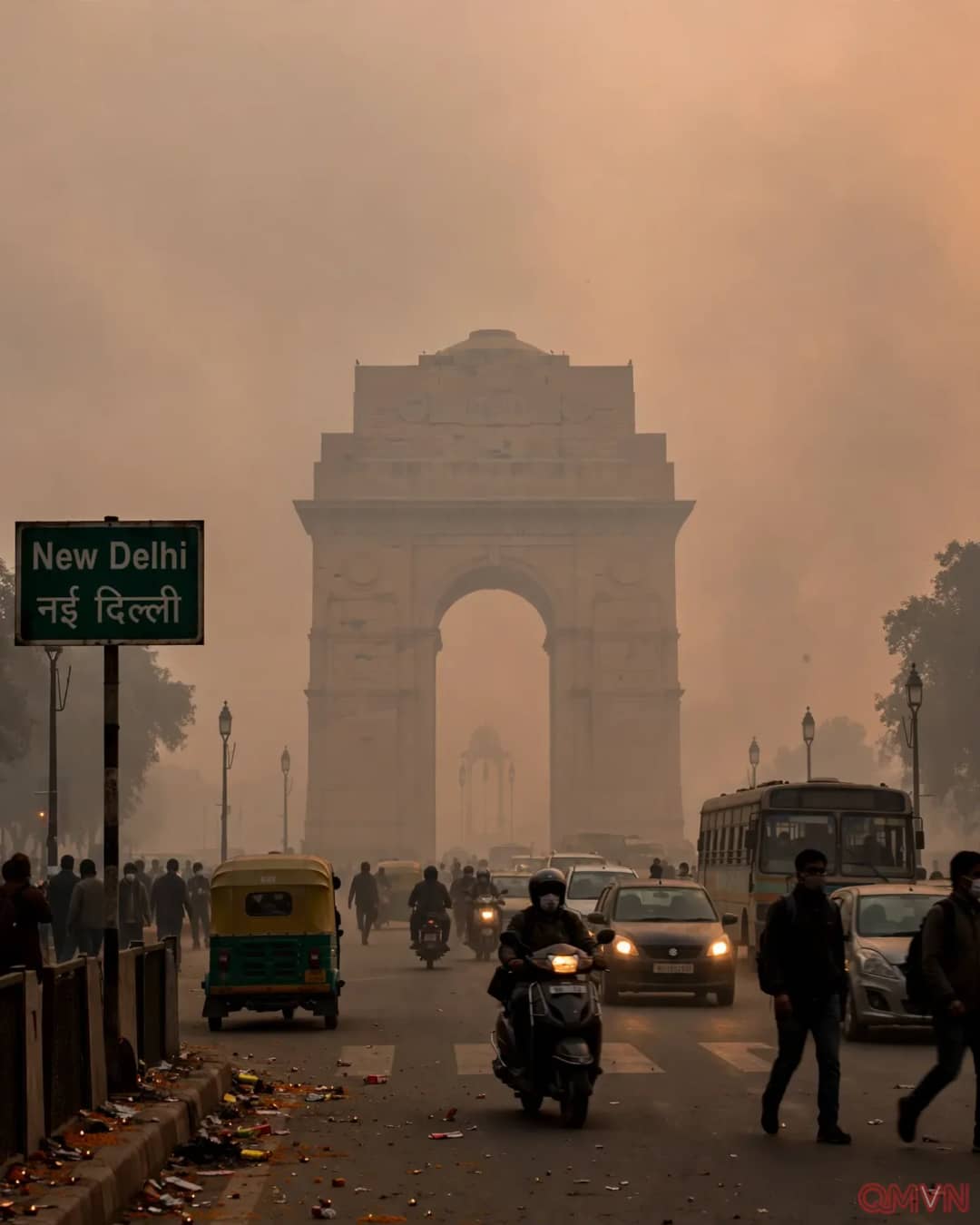
A smoggy sky after a night of fireworks
According to IQAir, citing data from a city government monitoring station, early on November 9, about eight hours after the peak of the fireworks, PM2.5 levels in Mandir Marg reached 879 micrograms per cubic meter. That is nearly 59 times the WHO’s recommended daily maximum.
Every year, millions of New Delhi residents celebrate Diwali, the festival of lights, with fireworks. In a city of more than 30 million already shrouded in winter smog, festival nights are often followed by hazy mornings, with traffic moving through dense smog.
“Green” fireworks and flouted rules
This month, India’s Supreme Court allowed the limited use of so-called “green” firecrackers, designed to produce fewer emissions, during Diwali. But the restrictions are routinely ignored, and the city reverberated with explosions throughout the festival night.