MAIN STORY
A small ring carrying a large memory
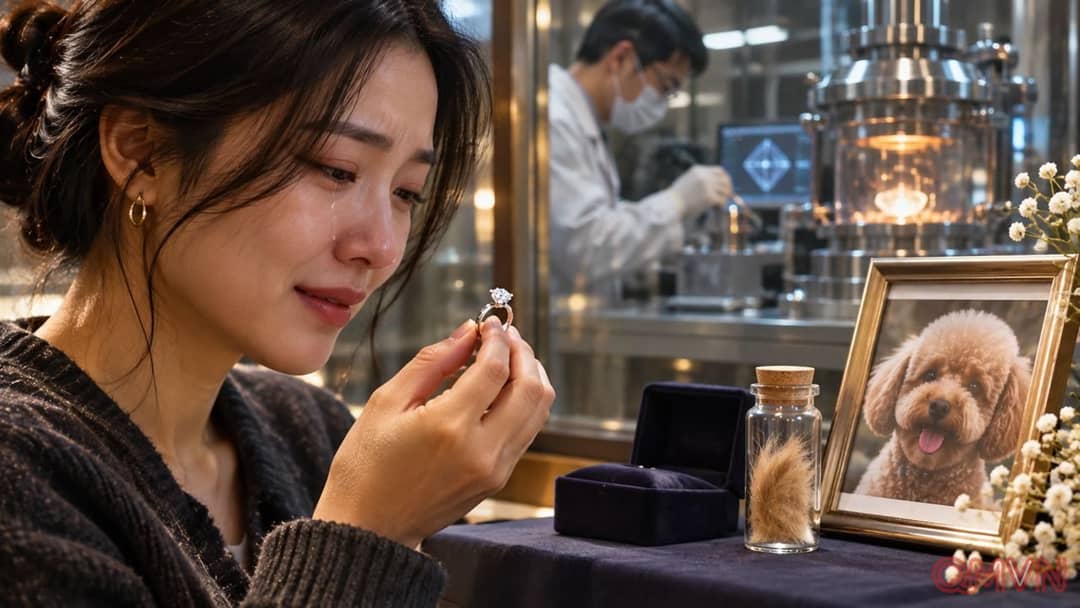
According to accounts cited by the South China Morning Post, Jilin resident Chen Xing ordered her ring in 2020 as her toy poodle Baobao entered old age. Delivered in February 2021, it featured an 18-karat gold setting and a half-carat princess-cut laboratory-grown diamond, with a reported price of 8,950 yuan. After Baobao died in April, Chen began wearing it every day. Her experience is a personal account reported by local media, not independent laboratory verification of the gemstone’s composition.
What distinguishes such a ring from ordinary jewelry is the promise of continuity. Fur that once belonged to a beloved companion is presented as a lasting crystal that can be passed down through generations. For someone mourning an animal, the emotional significance may exceed its resale value. Precisely because that emotion is so strong, however, sellers have a heightened obligation to explain what they can and cannot substantiate.
Real chemistry, harder questions of provenance
Laboratory diamonds can be grown through high-pressure, high-temperature technology, or HPHT, in which carbon crystallizes on a diamond seed under carefully controlled conditions. Memorial-diamond companies describe cleaning and processing fur or cremation remains to recover carbon before growing the stone. The basic technique is consistent with established diamond synthesis. But the quantity of recoverable carbon, any additional carbon sources and the documentation of each processing step are separate questions.