United States election officials mount unprecedented defensive protocols against disruptions and federal interference
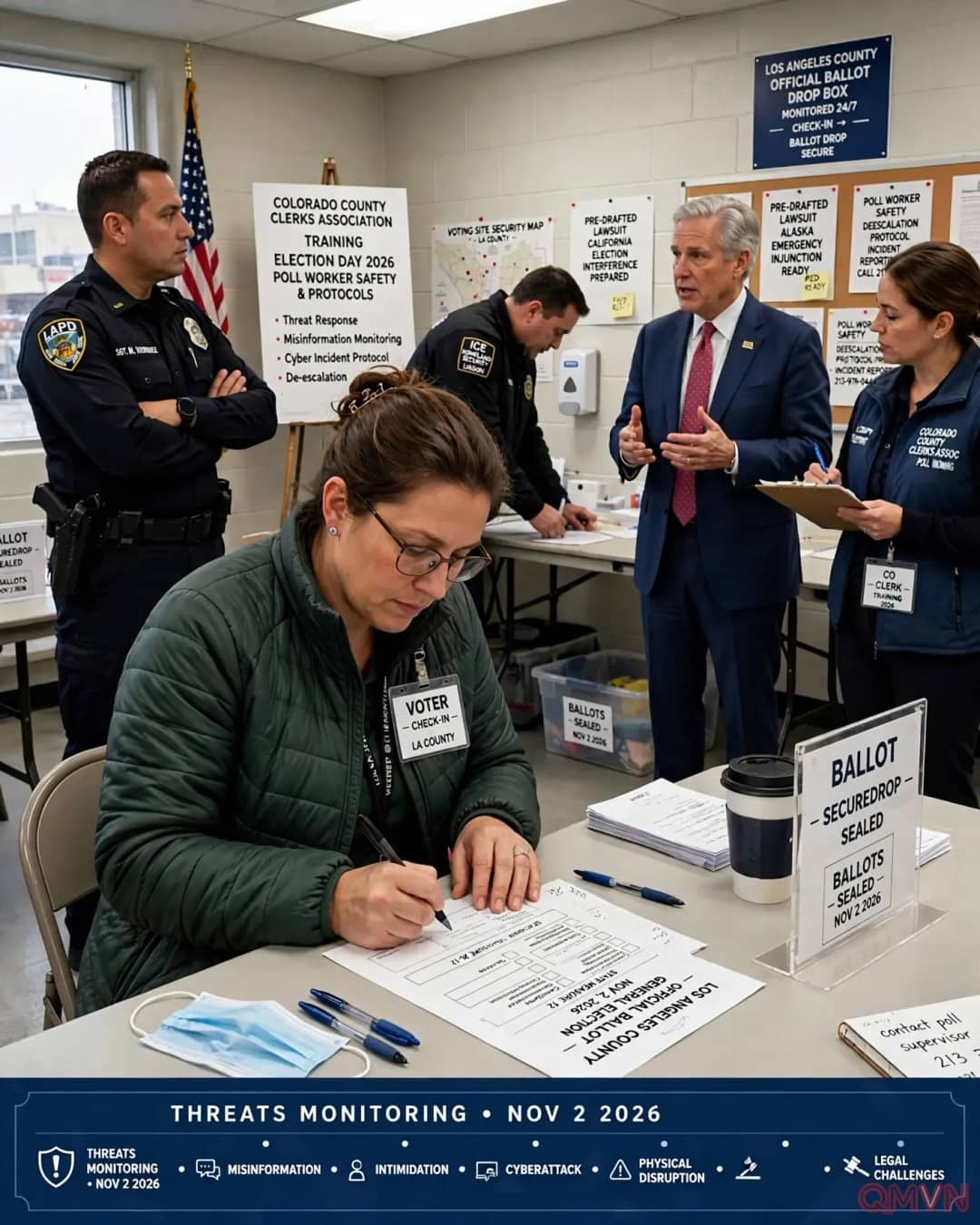
State and municipal election administrators across the United States have completed months of rigorous operational readiness to administer the 2026 midterm elections, establishing unprecedented defensive security protocols to neutralize potential voting disruptions. Beyond hardening physical voting precincts and training poll workers against partisan intimidation, election officials confront an extraordinary and novel institutional hazard: the prospect of direct or indirect interference from Donald Trump and federal executive agencies. With conservative legal groups escalating challenges against disputed ballots in California and certification timelines in Alaska, coupled with recurrent allegations of noncitizen voter fraud, state governments have pre-drafted emergency injunctions and coordinated closely with local law enforcement to safeguard the franchise and defend constitutional ballot-counting procedures.
Edite QUANG MINH·2 min read · 3 min listen·3 November 2026, 05:00 EST·
AI-generated illustration
MAIN BODY
Anticipating executive interference and pre-emptive judicial readiness
The most alarming contingency confronting state secretaries of state is the unprecedented risk of administrative or enforcement overreach by federal authorities. Donald Trump and allied political organizations have repeatedly threatened local election administrators with criminal prosecutions while mounting aggressive litigation to restrict ballot tabulation.
Advertisement300 × 250
*
"Sadly, a new hazard on the list this time that’s never been on the list before is the possibility that our own federal government would try to interfere somehow, directly or indirectly." — Steve Simon, Minnesota Secretary of State
*
In response, election authorities across multiple battleground states have pre-emptively retained specialized outside counsel and drafted emergency restraining orders. These legal teams are prepared to seek immediate federal injunctions should federal agents or executive departments attempt to disrupt polling operations or seize election infrastructure.
State legal divisions prepared pre-drafted emergency court filings to block unlawful executive interference.
Donald Trump and allied legal groups threaten election workers while litigating ballot certifications in Alaska and California.
Secretaries of state retain specialized outside litigation teams to guarantee immediate injunctive relief.
Securing physical precincts and neutralizing online disinformation campaigns
Physical safety protocols for election workers and tabulators have been comprehensively overhauled amid rising threats of grassroots disruption. Local election supervisors have conducted tactical drills with municipal police forces to formulate immediate response protocols if federal immigration agents appear at voting locations.
*"The more this stuff comes up, and the fact that it is based on so much disinformation or half-truths, it’s incredibly frustrating." — Matt Crane, Executive Director of the Colorado County Clerks Association*
Simultaneously, election security task forces are tracking viral disinformation narratives recycling debunked claims regarding voting machine manipulation and invalid ballots. Officials warn that these unfounded allegations are coordinated to undermine civic faith in election outcomes and provide pretext for post-election challenges.
Conducting specialized inter-agency training with local police to respond to unannounced federal agent presence.
Deploying comprehensive physical protection measures for ballot-processing facilities and frontline poll workers.
Deploying real-time fact-checking mechanisms to debunk recirculated digital conspiracy theories regarding voting tabulation systems.
EVENT BACKGROUND
This defensive mobilization culminated on the eve of the November 2026 United States midterm elections, where narrow margins for congressional control elevated administrative procedures into high-stakes partisan battlegrounds. Following years of sustained rhetoric challenging democratic processes since the 2020 election, conservative coalitions systematically introduced litigation questioning voter eligibility, mail-in ballot legality, and certification mandates. In 2026, the administration’s threats to deploy federal resources to police polling places and restrict disputed certifications in states like California and Alaska created an unprecedented constitutional friction between state sovereignty over elections and federal executive power. The fundamental crux of the conflict lies in the tension between state election officials duty-bound to administer impartial, decentralized democratic balloting versus executive efforts to leverage federal power and public distrust to influence electoral outcomes.
KEY LESSONS LEARNED
Pre-emptive legal readiness and inter-agency coordination provide the essential armor protecting institutional integrity during democratic crises.
The non-partisan professionalism of local election administrators remains the primary bulwark against political interference.
Vigorous, transparent civic communication is vital to disarming coordinated disinformation campaigns and preserving public trust.
Subscribe to the QMVN newsletter
A daily morning digest - only stories worth reading, no spam.