MAIN ARTICLE
The bottleneck is no longer a single silicon die
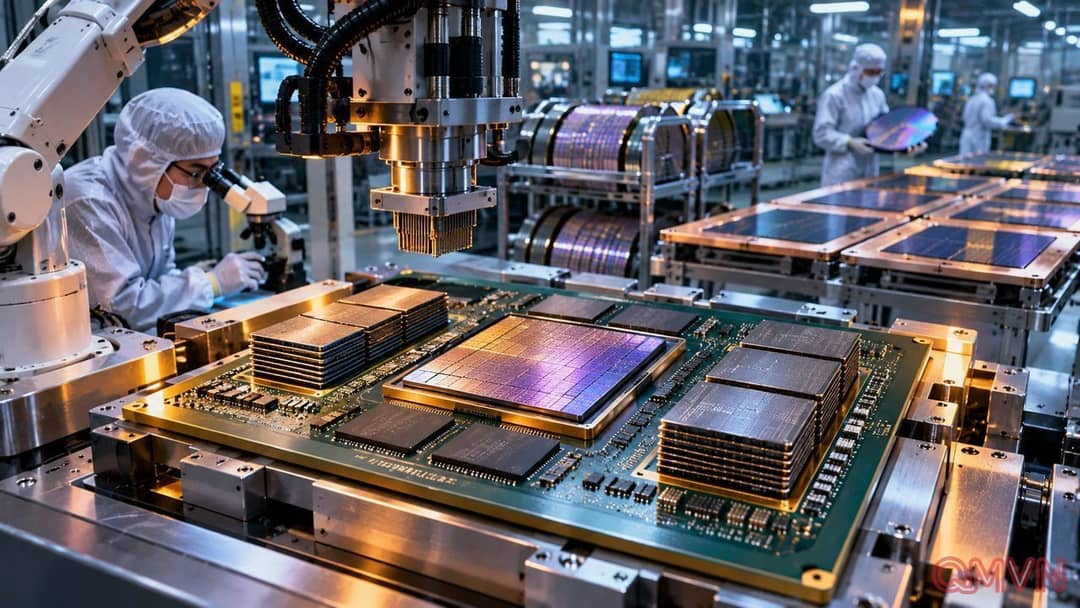
For decades, packaging largely meant protecting a chip and connecting it to a circuit board. Artificial intelligence has changed that role. Powerful processors need to exchange immense quantities of data with high-bandwidth memory; slow links can neutralize gains achieved through advanced transistors. As chipmakers approach the technical and economic limits of shrinking components, combining specialized pieces of silicon into one package has become a fundamental route to higher performance. The packaging stage is consequently moving closer to the heart of system design.
TSMC's CoWoS technology connects multiple chips on a shared platform, shortening communications between computation and memory. It is widely used across AI products from Nvidia, AMD, Broadcom and cloud providers developing their own processors. Former Intel chief Pat Gelsinger has suggested that advanced packaging could eventually account for a very large share of a chip product's value. His estimate describes a possible future for some complex products, not a universal measure of today's industry.
Leadership brings capacity pressure
Reuters reported, citing an industry executive speaking anonymously, that Nvidia is providing billions of dollars of financing to increase CoWoS packaging capacity at Siliconware Precision Industries, known as SPIL, a subsidiary of ASE Technology. Nvidia did not comment on the reported arrangement, and ASE declined to address customer-related market speculation.