Main report
An ambitious flight with two recovery targets
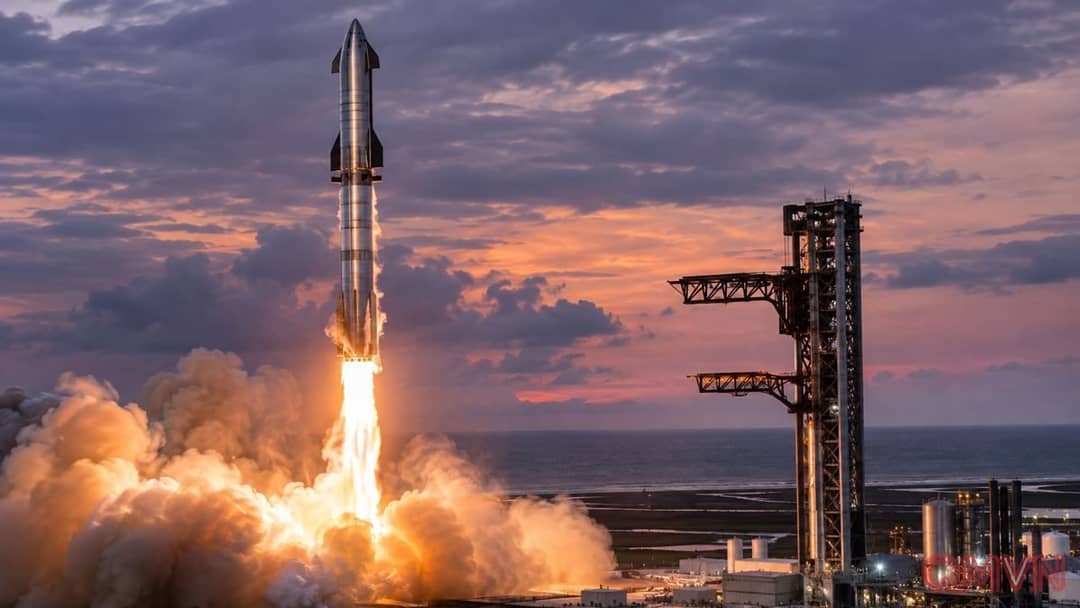
Starship lifted off on November 13 from SpaceX’s sprawling Starbase complex near the US-Mexico border. The 15th flight test was conceived as a two-stage demonstration of recovery technology: Super Heavy would return minutes after takeoff and be seized by mechanical arms on its tower, while the spacecraft above it would orbit Earth and return nearly a day later for a similar maneuver. The intention was to recover both major elements of an orbital rocket without conventional landing legs.
This made the flight substantially more ambitious than merely placing payloads in space. SpaceX wants the largest and most expensive parts of Starship to be turned around rapidly, rather than built anew after every launch. Such a system could eventually change launch economics, but only if the catches become consistently reliable and refurbishment demands remain manageable.
Why the booster went offshore
Associated Press and the Financial Times reported that stage separation occurred, but the booster developed a problem during its return. An automated abort ruled out the planned catch and diverted Super Heavy toward an offshore disposal area. It ended up in the Gulf of Mexico and exploded. As of the initial reporting, SpaceX had not provided a definitive technical explanation for the malfunction.