MAIN ARTICLE
A visit beyond the racetrack
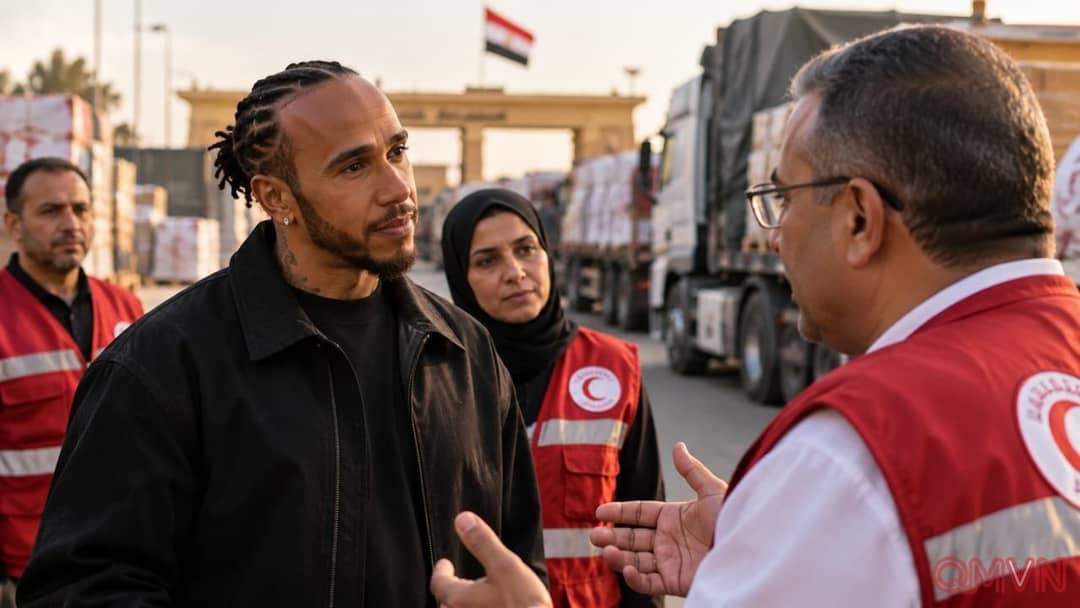
Hamilton arrived in El Arish on November 10 and met relief workers before touring Rafah, according to Reuters and the Associated Press. Officials explained how donations and supplies are received, sorted and coordinated for delivery into Gaza. North Sinai Governor Khaled Megawer accompanied the visit and described Egypt’s role in the humanitarian operation. The setting could scarcely be further removed from an international racing circuit: here, delays are measured not in lost positions but in the daily pressures confronting displaced households.
In a public message afterward, Hamilton described food trucks lined up at the border and said shipments faced repeated obstacles. He cited sleeping bags, first-aid supplies, medical equipment, wheelchairs and even footballs for children as examples of goods he understood had been rejected. Those descriptions are attributed to Hamilton; Reuters did not independently establish the circumstances of each individual rejection. The distinction matters because a first-hand visit can illuminate a problem without revealing every administrative or security decision behind it.
What waiting aid trucks reveal
An aid consignment's journey does not end when a truck reaches a crossing. Donations must be transported, inspected, cleared and distributed, and relief workers need secure routes to communities whose infrastructure has been damaged.