An abandoned mine awakens
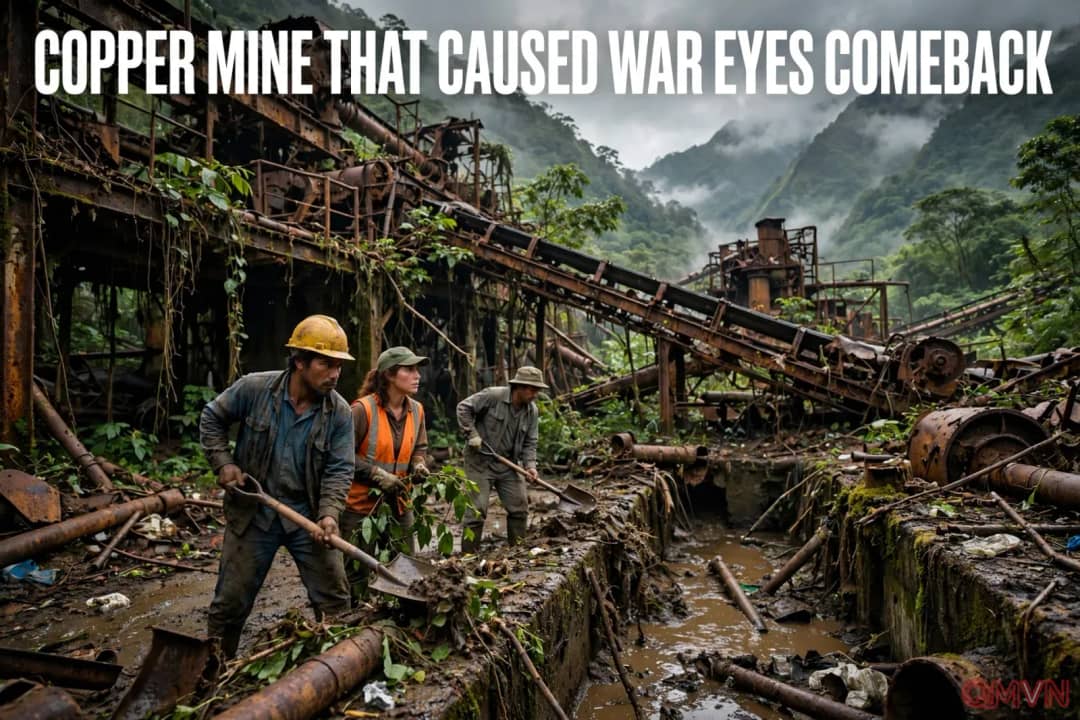
For years, the rusting skeleton of the Panguna mine sat filled with sludge, plants sprouting through crumbling machinery; an old water pump station became a church, with steel beams for pews. Now heavy machinery from Lloyds Metals and Energy rumbles along the dirt roads to the pit, Indian engineers and technicians fill the lodges of nearby Arawa, and former combatants loyal to the president guard the entrance.
Booming demand for copper for electric vehicles, power grids and data centres has made Panguna’s estimated 5.3 million tons more attractive than ever. But the speed of the restart has unsettled many who remember the crisis. In early October, 45 heavy vehicles bearing the Lloyds logo were set on fire, probably by local alluvial miners; President Toroama called it an “isolated act of violence by individuals” and said work would continue.
“If you’re walking fast, too fast, you have more chances of sliding over and probably you can even break your head. We should be taking time, making sure that we are doing things the right way.” — Dennis Kuiai
Life on the tailings
Around Panguna, people name their villages not by name but by the mine’s remnants: by the drainage tunnel, by the pump station, in the pit or on the upper, middle or lower tailings. From 1972 to 1988, the mine dumped about 100,000 tons of waste rock downstream every day.