Canada’s Budget Charts “Economic Independence” in a Decisive Shift Away From Reliance on the US
On Nov. 5, Canada’s government unveiled a budget titled “Masters of our Destiny,” calling for “economic independence” and saying that while reducing reliance on the United States will take time, “the shift is under way.” It is Prime Minister Mark Carney’s second budget, presented to parliament just two days after President Donald Trump suffered a sweeping midterm rebuke. Although Democrats, who will control both chambers of Congress, have signaled a desire to ease the trade war with Canada, the budget insists the old relationship will not return. The plan includes Canada’s first sovereign wealth fund worth C$25 billion, a powerful tax incentive to attract investment and C$44 billion in support for businesses and workers hit by Trump’s tariffs. The opposition Conservatives criticized it as a “credit card budget,” saying ordinary Canadians will be left to pay the debt.
Edite QUANG MINH·2 min read · 3 min listen·7 November 2026, 02:53 EST·
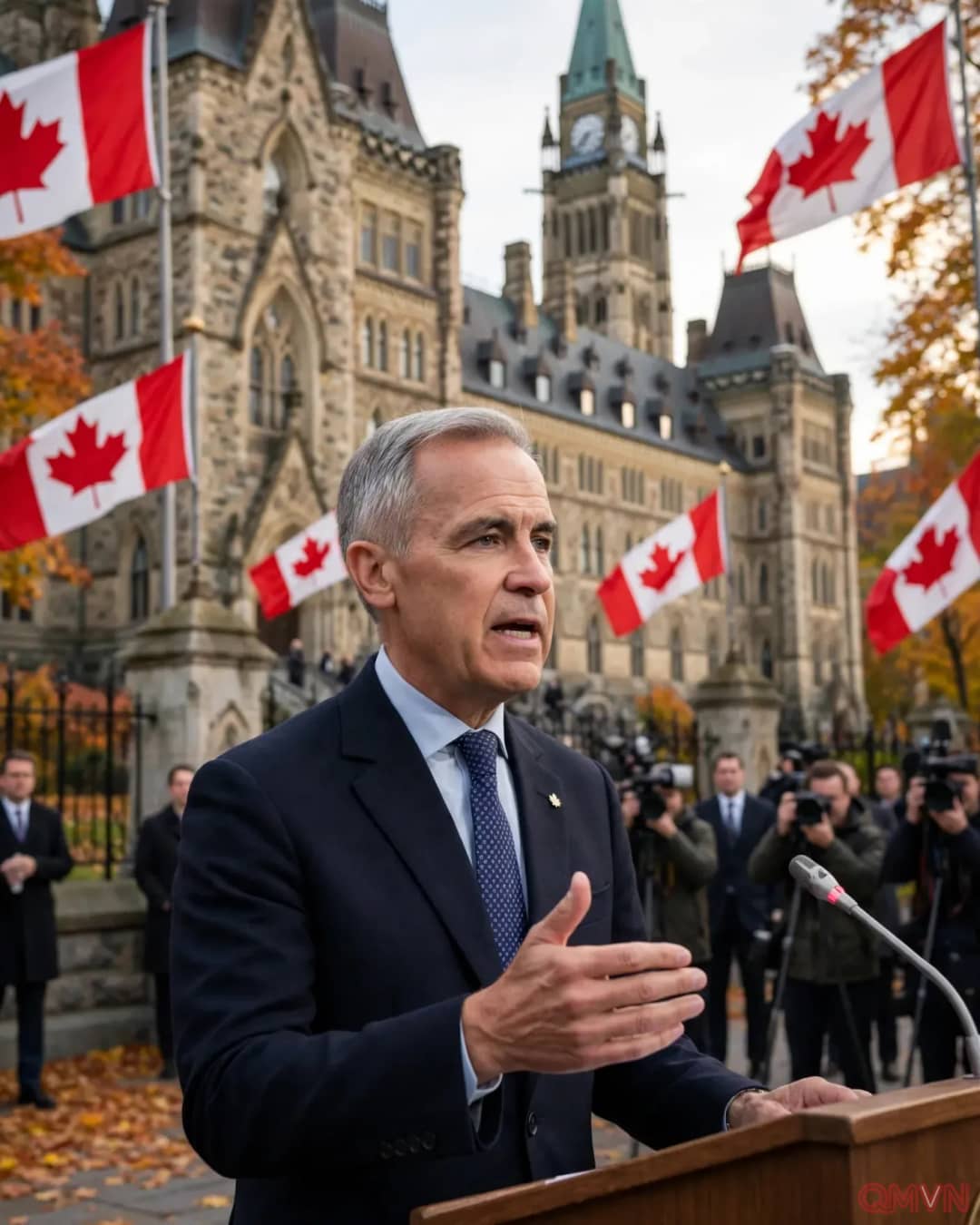
AI-generated illustration
“Masters of our Destiny”
The budget presented by Finance Minister François-Philippe Champagne affirms that Canada’s economy cannot remain dependent on the US market, echoing Carney’s message that pre-Trump tariff-free North American trade is not coming back.
Canada and the United States will not return to our old relationship.
The budget acknowledges that diversification will take time given the scale and depth of economic ties with the US.
Advertisement
300 × 250
Carney said political developments in the US are important and bilateral relations will “evolve,” but that his priority remains greater independence.
Key Elements of the Budget
The budget marks a clear break with Carney’s predecessor, Justin Trudeau, saying the new government inherited an economy with weak productivity, lagging private investment and excessive dependence on the US. Its main elements include:
The C$25 billion (US$18.3 billion) Canada Strong Fund, the country’s first sovereign wealth fund, to invest in major projects and help attract private capital.
The “Productivity Mega Deduction,” letting businesses of all sizes deduct the cost of new investments; according to the government, a company will pay roughly 60% less tax on returns from a new investment in Canada than on the same investment in the US.
C$44 billion already announced for businesses and workers hit by tariffs, including C$10 billion for workers, nearly C$13 billion in liquidity for larger businesses and C$20.6 billion to help businesses adapt.
The sectors hardest hit by US tariffs include autos, steel, aluminum and timber.
Political Reactions
Champagne said the rules Canada relied on for decades can no longer be taken for granted, insisting Canada is in a strong fiscal position with room to maneuver. By contrast, Conservative leader Pierre Poilievre called it a “credit card budget,” saying ordinary Canadians will ultimately pay for debts owed to bankers and bondholders. In Canada, governments fall if budgets are rejected; last year Carney needed opposition support and abstentions to survive, but his Liberals have since secured a parliamentary majority.
BACKGROUND OF THE EVENT.
The story begins in 2025, when President Trump imposed tariffs on Canadian goods, especially autos, steel, aluminum and lumber, while repeatedly making remarks about Canadian sovereignty that angered many Canadians. Against that backdrop, Mark Carney, a former central bank governor, took office and won an election on a message of defending the economy and national sovereignty. Since then, Canada has pushed trade diversification, deepening ties with Europe and Asia while continuing talks with Washington. The US midterm results may change the landscape, but Ottawa argues that long-term structural economic reform is needed. Supporters say this is a necessary step to reduce risk and boost productivity; critics worry heavy spending will raise deficits and public debt. The central knot is the deep integration of the two economies, which makes decoupling difficult and costly. At a deeper level lies the question of how a middle power protects its interests in a world where trade rules are changing.
USEFUL LESSONS FROM THE ARTICLE
Diversification is a vital shield against the risk of depending on a single partner.
Economic independence requires long-term vision combined with fiscal discipline.
Shifts in trade relationships must be accompanied by support for affected workers.
Subscribe to the QMVN newsletter
A daily morning digest - only stories worth reading, no spam.