Expanding LNG infrastructure
At the heart of the group’s energy business is Posco International’s Gwangyang LNG Terminal, South Korea’s first privately operated LNG import terminal. During a press tour on November 3, the company showcased its Terminal 2 expansion, worth 949.2 billion won (about $709 million), featuring two tanks 50 meters tall and 100 meters in diameter, each holding 200,000 kiloliters. Total capacity across eight tanks reached 1.33 million kiloliters, equivalent to roughly 40 days of Korea’s residential heating demand. Other highlights include:
- The tanks use Posco’s proprietary high-manganese steel, which withstands extremely low temperatures with performance comparable to 9% nickel steel at about 25% lower material cost.
- 75-centimeter-thick outer walls are engineered to withstand earthquakes and external shocks; a second pier linked by a 740-meter corridor can handle LNG carriers of up to 270,000 cubic meters.
- The terminal opens new businesses such as LNG carrier commissioning, ship bunkering and cold-energy recovery, and has space reserved for four more tanks that could raise capacity to 2.27 million kiloliters.
Automation drives battery material production
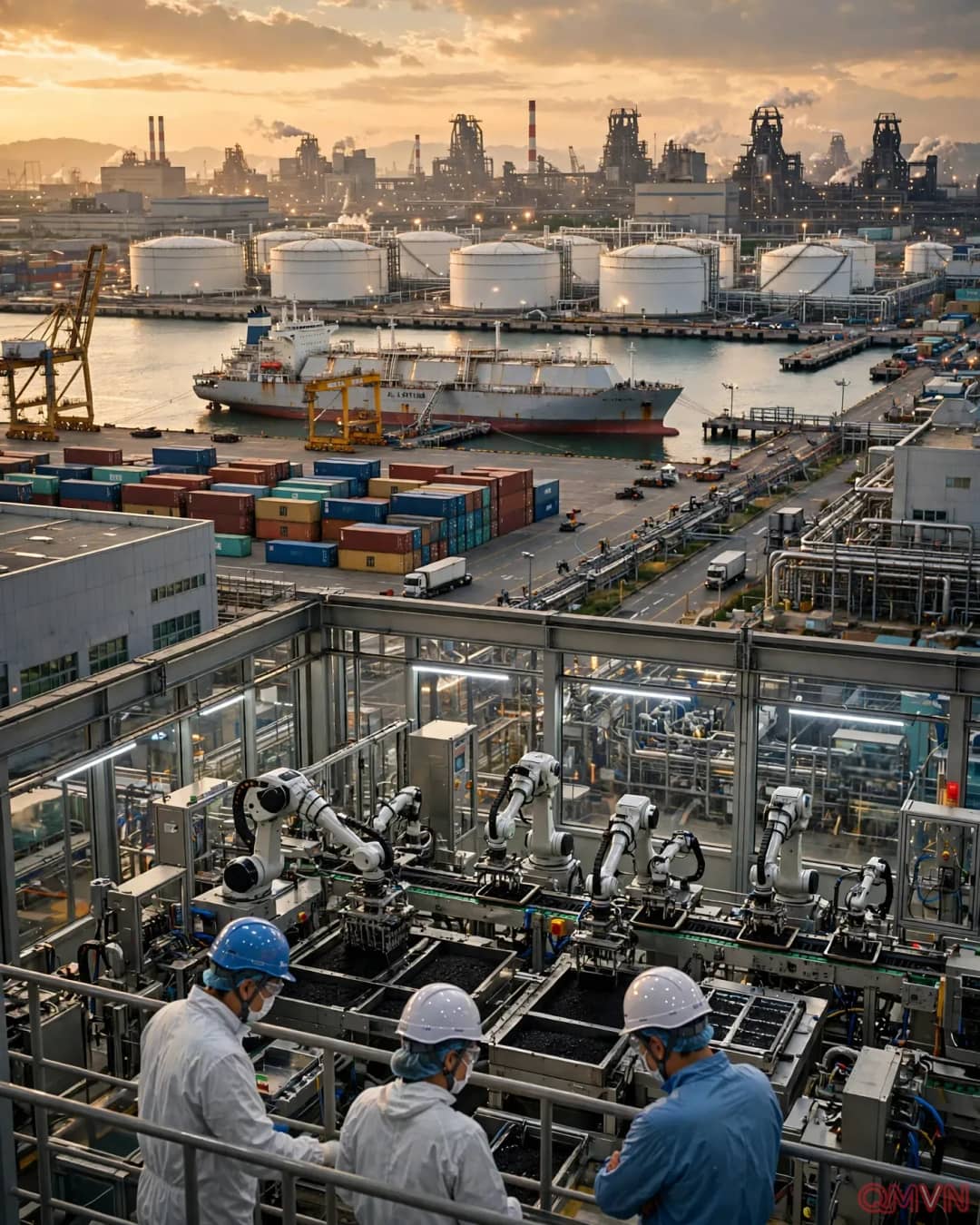
At the Yulchon Industrial Complex, Posco Future M operates a cathode plant with annual capacity of 90,000 tons, which the company describes as the world’s largest single-site facility of its kind, enough to supply batteries for about 850,000 Hyundai Ioniq 5 electric vehicles. It produces high-performance NCM, NCA and NCMA materials, plus single-crystal cathode technology that improves battery durability and thermal stability.