MAIN ARTICLE
The darkness that disappeared
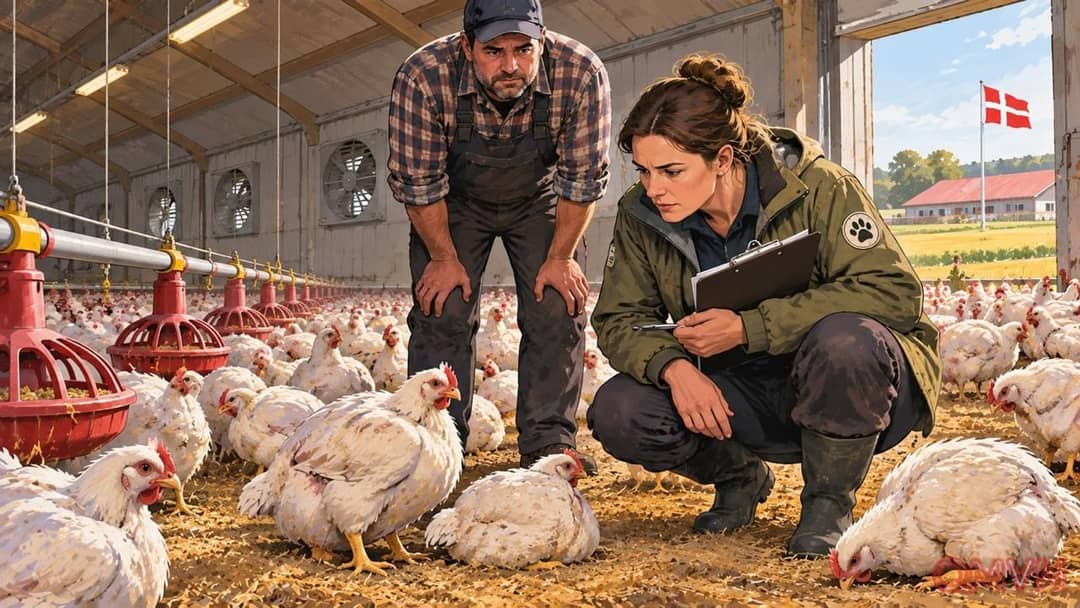
The political storm began with secretly recorded footage broadcast by TV 2 from a poultry facility operated by Christian Tvergaard in North Jutland. The documentary alleged that chickens received only three hours of darkness within a daily cycle. More light can encourage birds to continue feeding, helping them gain weight, but it also curtails rest. A seemingly technical decision about barn lighting therefore became a public question about whether the pursuit of production efficiency is overriding the animals’ basic biological needs.
European rules require at least six hours of darkness in each 24-hour cycle during the specified growing period, including one uninterrupted four-hour stretch. These requirements are intended to protect a rhythm of rest and activity, not merely to complete an administrative checklist. Tvergaard acknowledged making wrong decisions and said he had corrected the lighting programme and strengthened barn procedures. His response matters, but so does a broader question: how reliably are rules enforced before an investigation by journalists exposes potential noncompliance?
The physical cost of extraordinary growth
Ross 308, a widely used commercial broiler line, sits at the centre of the argument. Danish accounts describe birds growing from about 50 grams to two kilograms in around 33 days, while slower-growing types may take 46 to 63 days to reach a comparable weight. That performance supports inexpensive, abundant meat. Yet rapid weight gain can be accompanied by leg and skeletal problems, reduced mobility and stresses affecting internal organs, making the animal’s capacity to cope with its own growth an ethical and scientific concern.