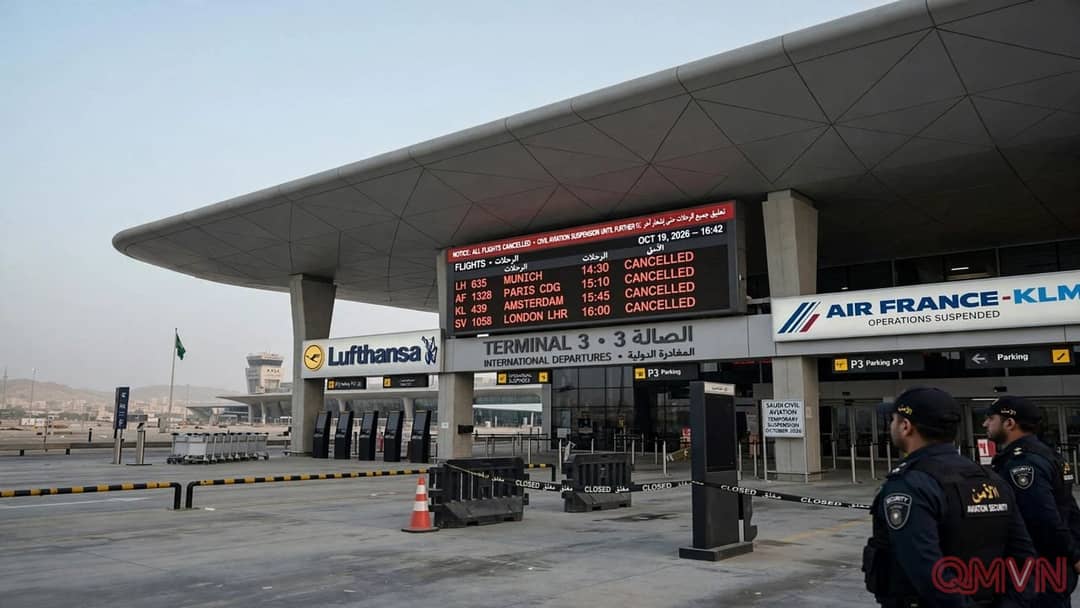
Coordinated Strikes Paralyze Saudi Arabian Aviation Hubs
Over the course of five days, Saudi Arabia's civilian aviation network became the primary theater of sustained Houthi aerial strikes. King Khalid International Airport in the capital city of Riyadh—the kingdom’s second-busiest aviation gateway after Jeddah—was struck four times. The offensive culminated in catastrophic weekend raids that claimed at least 14 lives and injured over 300 individuals, following earlier strikes on October 7 and 8 that killed an airline pilot and multiple Saudi civilians.
The aerial campaign systematically expanded beyond the capital: King Fahd International Airport in the eastern commercial hub of Dammam was hit on Sunday; an earlier raid on Abha International Airport left two dead and 28 wounded; while southern regional airfields in Jazan and Najran sustained direct hits. The widespread disruption provoked the most profound civil aviation paralysis experienced by the kingdom in years, prompting major European carriers including Lufthansa and Air France-KLM to suspend scheduled services.
Maximalist Leverage and Economic Pressure Tactics
Regional security analysts emphasize that the Houthis’ aggressive targeting of civilian airports reflects a calculated psychological and economic strategy designed to maximize public reaction and expose defensive vulnerabilities. By closing the skies above Riyadh and prompting Western governments to issue urgent travel warnings, the armed movement directly undermines the sovereign security narrative that underpins Saudi modernization.