MAIN CONTENT
A bright debut against a dark Wall Street session
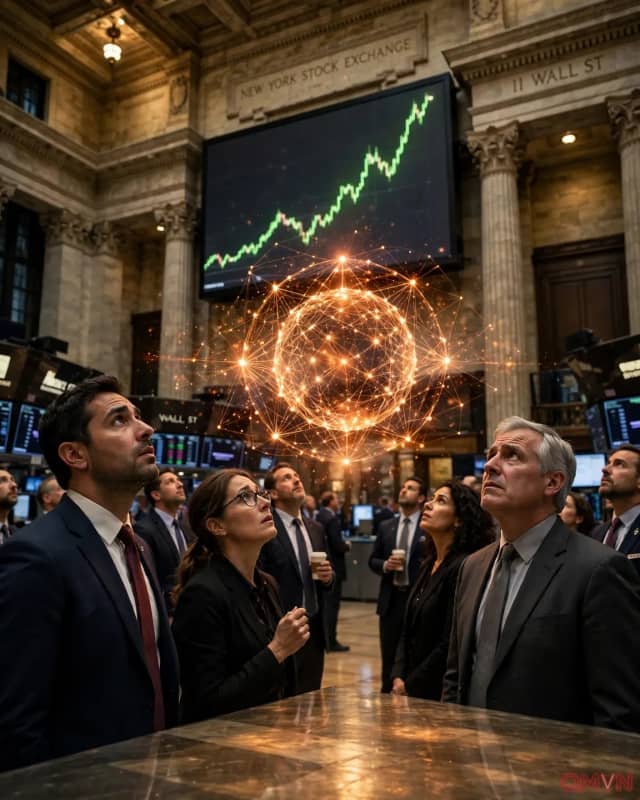
Anthropic raised approximately $81.3 billion in its IPO, valuing the company at about $1.5 trillion at the offering price. Trading under the ticker ANT on Nasdaq on November 19, shares opened at $111.50, briefly carried its market capitalization above $2 trillion and then retreated to close at $97.17. Investors allocated stock at $83 still enjoyed a substantial first-day gain, but the intraday reversal illustrated how unstable price discovery can be when a highly anticipated company first enters public markets.
The broader American market told a different story. Reuters reported that the Dow Jones Industrial Average fell about 2.19%, the S&P 500 declined 2.02% and the Nasdaq Composite lost 2.25% on November 19. One celebrated listing could not offset widespread selling in technology shares. Rather than chase the newest symbol of AI enthusiasm, market participants appeared increasingly inclined to revisit how much risk they already held.
The distance between technical promise and financial returns
Artificial intelligence has triggered enormous spending on semiconductors, servers, electrical capacity and data centres. AI developers may grow revenue rapidly, but revenue is not profit, and impressive technological capabilities do not automatically produce free cash flow.
Long-term valuations depend on computing costs, customer retention, competition, pricing power and the rate at which capital investment can be converted into sustainable earnings.
Nvidia offered an encouraging business outlook during the week, yet that was insufficient to restore confidence in the broader sector. Reuters described uncertainty after chief executive Jensen Huang’s departure, a major development for a company central to the AI-chip supply chain. Separately, possible US scrutiny of AMD’s connections with certain Chinese entities underlined another vulnerability: advanced AI businesses operate inside an environment shaped by export policy, national security and shifting regulation.
The selloff crosses the Pacific
On November 20, MSCI’s broad index of Asia-Pacific shares excluding Japan was heading for its steepest weekly drop since the height of the COVID-19 crisis in 2020, according to Reuters. Early European trading also pointed lower: Euro Stoxx 50 futures were down roughly 1.6%, while S&P 500 futures showed losses of about 0.6%. Those futures readings were snapshots of market expectations, not final closing outcomes for European or US sessions.
The transmission is understandable because the AI supply chain is international. Chips designed in one country are manufactured in another and deployed in data-centre projects across multiple continents. When investors downgrade assumptions about future profits, selling can spread from model developers to semiconductor manufacturers, cloud operators, hardware suppliers and markets with heavy technology exposure. A sector’s global reach amplifies both enthusiasm and disappointment.
What safe-haven flows say about the next test
The dollar traded near a 19-month high as investors sought liquidity and shelter. US Treasury yields eased alongside demand for government bonds. Reuters also reported increasing market conviction that the Federal Reserve might raise rates at its final policy meeting of the year. That was a market expectation, not an announced central-bank decision, and it could change with incoming data.
The next tests include Anthropic’s second trading session, whether Nvidia and AMD shares stabilize, economic releases from Germany and Britain, and the evolving outlook for US monetary policy. The fundamental question is not whether AI will continue to improve; it is whether the prices investors pay today adequately reflect the costs, competition and uncertainty of capturing its benefits. The technology can transform society while its stocks remain vulnerable to repricing.